
Media contact database: Build and Master Your Outreach
January 15, 2026
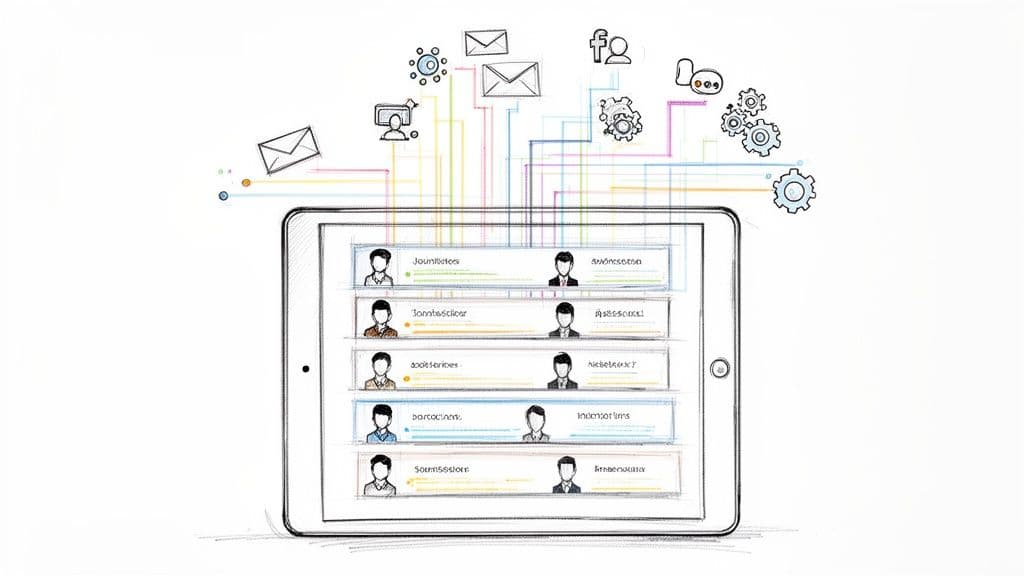
A media contact database is essentially your PR team's "little black book," but supercharged. It's a carefully organized collection of information on the journalists, bloggers, influencers, and media outlets who matter most to your brand. Think of it less like a simple spreadsheet and more like a dynamic tool for precision-targeting your PR outreach and building real relationships with the media.
Your PR Command Center
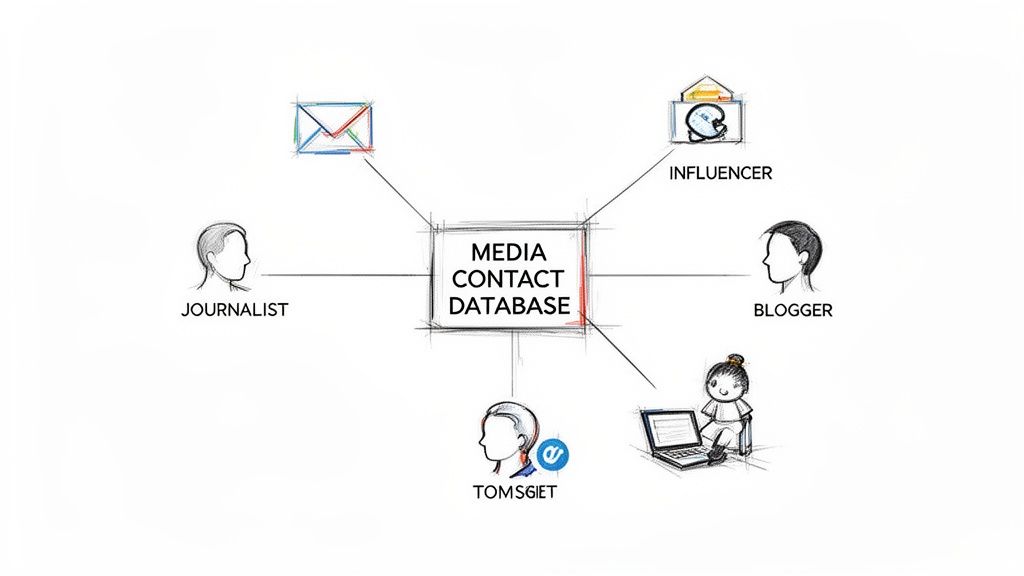
Imagine trying to navigate a new city without a map. You might get where you're going eventually, but you’ll waste a ton of time and energy on dead ends and wrong turns. That’s what it's like working from a manual, static contact list—it’s full of outdated info and leads that go nowhere.
A media contact database, on the other hand, is your strategic GPS for public relations.
It's so much more than a list of names and emails. A good database is a living system built to help you find the perfect people to share your story with. It turns your outreach from a speculative guessing game into a focused, data-driven strategy. For any startup or tech company trying to cut through the noise, this isn't just a nice-to-have; it's a must-have.
Beyond a Simple Spreadsheet
At its core, a media database exists to make sure your pitches land in the right inboxes. In the fast-paced world of modern PR, that precision means everything.
Don't just take my word for it. According to Cision’s 2023 State of the Media Report, a staggering 75% of journalists have blocked PR pros for sending them irrelevant pitches. That number tells a critical story: blasting generic emails doesn't just fail, it actively damages your reputation with the press.
A well-maintained database is your best defense against becoming one of those blocked senders. It gives you deep context on every contact, which delivers some key benefits:
- Massive Time Savings: Forget spending hours digging around for contact details. It's all right there.
- Vastly Improved Relevance: You can instantly filter contacts by their beat, industry, location, and even what they've recently written about.
- Genuine Relationship Building: The best databases let you track your interactions and personalize your communication—which is the absolute foundation of successful media relations.
A media contact database isn't about having the most contacts; it's about having the right contacts. It shifts your focus from sheer quantity to the quality of your connections, turning strangers into valued partners for your stories.
The Strategic Advantage of a Dynamic System
Let’s be honest, the old way of managing contacts in a static spreadsheet just doesn't cut it anymore. That file is out of date the second you save it. Journalists change beats, move to different publications, or leave the industry entirely.
A dynamic media contact database, especially one powered by a platform like PressBeat, is constantly being refreshed. This is the difference between pitching your new fintech app to a journalist who now covers healthcare versus one who just wrote a feature on a competitor.
Here’s a quick breakdown of why making the switch is so important:
Manual Lists vs a Dynamic Media Contact Database
| Feature | Static Spreadsheet (Manual) | Dynamic Database (e.g., PressBeat) |
|---|---|---|
| Data Accuracy | Quickly becomes outdated. High risk of bounced emails and wrong contacts. | Continuously updated with real-time information, ensuring accuracy. |
| Efficiency | Requires hours of manual research and data entry for every campaign. | Instantly searchable and filterable, saving countless hours. |
| Contact Discovery | Limited to who you already know or can find through manual searches. | Provides access to thousands of vetted contacts you can discover by beat, topic, or location. |
| Relationship Tracking | No built-in way to track pitch history, notes, or past conversations. | Integrated features for logging interactions and personalizing future outreach. |
| Scalability | Becomes unwieldy and difficult to manage as your contact list grows. | Easily scales with your PR needs, keeping all data organized and accessible. |
This level of accuracy is what separates a PR campaign that gets results from one that falls completely flat. It’s the difference between being seen as a helpful source and getting marked as spam.
Ultimately, a great database is the foundation of every single piece of media coverage you'll ever earn.
What Really Makes a Media Database Great? The Key Features to Look For
Not all media contact databases are built the same. A simple list of names and emails is one thing, but a truly valuable database is a finely-tuned engine for precision outreach. It’s the difference between using a sledgehammer and a scalpel. Knowing what features to look for is the key to getting a real return on your PR investment.
Think of it like this: a basic list is a phone book. It gives you a name and a number, but that's about it. A premium database, on the other hand, is more like a detailed briefing dossier, arming you with the context and intel you need to craft a pitch that actually lands.
The global PR market is set to hit $105.12 billion by 2025, and that growth is fueled by the need for smarter tools. When you consider that 96% of journalists prefer email pitches and a full 17% will blacklist PR pros for sloppy outreach, the quality of your data becomes non-negotiable. The best platforms are designed to help you succeed in this environment.
Detailed and Dynamic Contact Profiles
The bedrock of any great media database is the sheer depth of information it offers on each person. Going beyond a name and an email isn't just a nice-to-have; it's essential.
A high-quality profile should give you:
- Specific Beats and Topics: See at a glance what a reporter actually writes about, whether it's "B2B SaaS" or "early-stage fintech."
- Recent Articles: A live feed of their latest work provides instant context, so you know what's on their mind right now.
- Social Media Links: Get a feel for their professional voice, see what conversations they're joining on X or LinkedIn, and understand what they care about.
- Pitching Preferences: Gold dust. Some platforms even include notes on how a journalist likes to be pitched, which can make all the difference in building a relationship.
This kind of detail turns a cold email into an informed, relevant conversation.
Advanced Search and Filtering Capabilities
A massive list of contacts is completely useless if you can't find the right people when you need them. This is where powerful search and filtering tools become your best friend. A robust database lets you slice and dice your lists with surgical precision.
You should be able to filter by:
- Keywords pulled from their articles or professional bios.
- Geographic location, from a single city to an entire country.
- Publication type, whether you need a national newspaper, a niche trade journal, or a popular podcast.
- Job title, so you can easily distinguish between editors, staff writers, and freelancers.
This level of control means you can build hyper-targeted media lists for any campaign, from a local event to a major international product launch. To get a better sense of what this looks like in practice, it’s worth checking out the features of the top B2B data providers in the market.
A powerful search function is your strategic advantage. It allows you to move beyond broad categories and pinpoint the exact few journalists who are most likely to be interested in your specific story, saving you hundreds of hours.
Real-Time Data Verification and Updates
The media world is in constant motion. Journalists change jobs, switch beats, or leave the industry entirely. A static, outdated database is a direct path to bounced emails and wasted effort.
That's why real-time data verification is one of the most critical features. The best platforms are constantly scrubbing their data, flagging bad email addresses, and tracking "media moves" as they happen. This keeps your deliverability rates high and ensures your pitches actually reach the right inbox. This dedication to accuracy is what separates the amateur tools from the professional ones.
How to Build Your Media Contact Database From Scratch
Starting with an empty spreadsheet can feel a little intimidating, but building your own media contact database is one of the smartest moves you can make. It's your chance to create a perfectly tailored, high-quality asset from the ground up, ensuring every single person on your list is actually relevant to your brand.
This isn't just about data entry. It’s about being strategic. Instead of buying a massive, impersonal list full of dead ends, you're hand-picking the journalists, bloggers, and influencers who are most likely to genuinely connect with your story. It’s quality over quantity, every time.
Define Your Ideal Journalist Profile
Before you even think about finding a name, you have to know exactly who you're looking for. Think of it like creating a buyer persona, but for the media. Your ideal journalist profile is a super clear, detailed description of the perfect person to cover your company.
Start by asking yourself some pointed questions:
- What topics do they cover? Get specific. Don't just say "tech." Drill down to "early-stage B2B SaaS" or "consumer fintech."
- Which publications do they write for? Are you trying to land a feature in a major national outlet, a niche industry blog, or an influential trade journal?
- Who is their audience? Does their readership actually match your target customers? A great article in the wrong publication won't move the needle.
- What is their role? Are you looking for a staff writer, a contributing editor, or a podcast host? Each requires a different approach.
This profile becomes your North Star. It guides your entire search and stops you from wasting hours chasing down irrelevant contacts.
The whole process really boils down to three key stages: figuring out who to target, finding them, and making sure their information is correct.
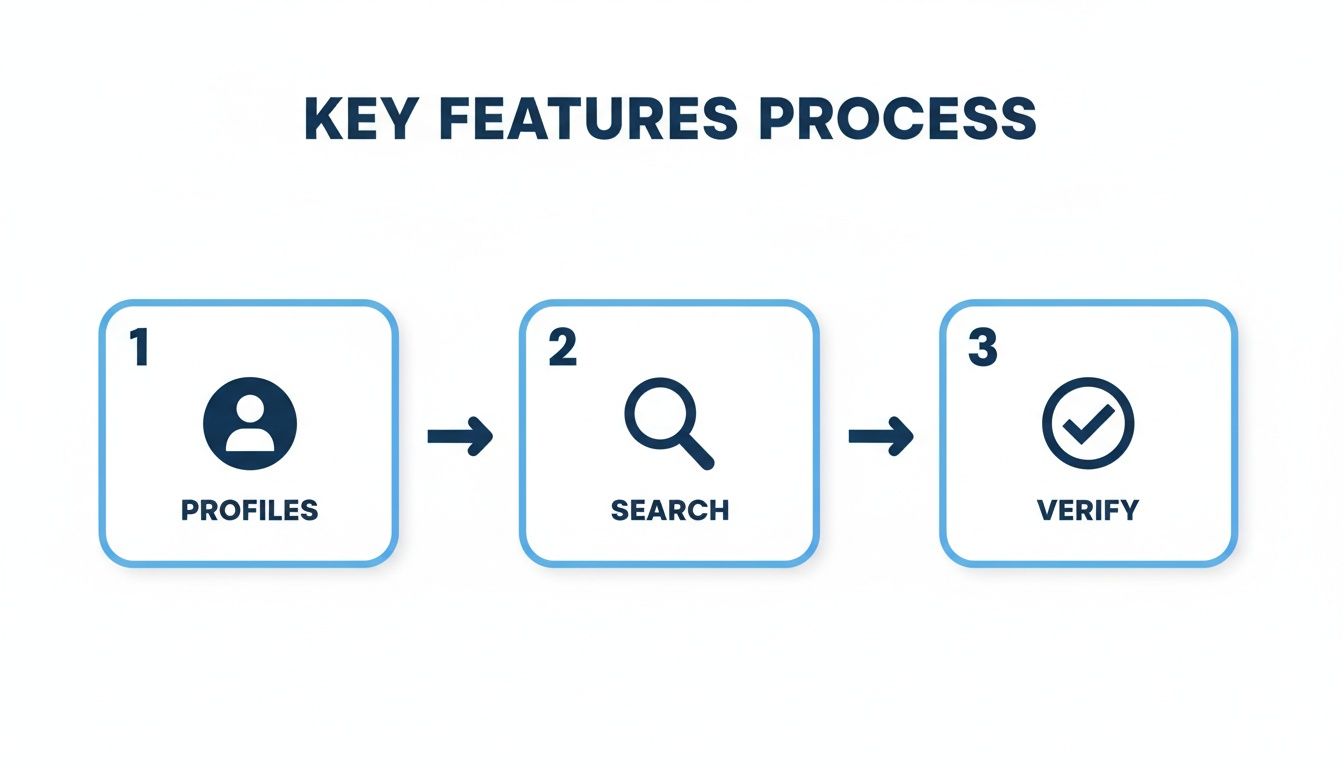
Nailing this simple three-step flow—profiling, searching, and verifying—is how you build a reliable database that actually drives results.
Hunt for Contacts in the Right Places
With your ideal profile in hand, it's time to go hunting. Your goal is to find the people who fit your criteria and are already active in your space. This is where the real detective work begins.
Here are the best places to start looking:
Analyze Competitor Coverage: Who’s already writing about your competitors? Set up Google News alerts for their brand names. Every article they land is a breadcrumb leading you straight to a journalist who is already interested in your niche.
Leverage Social and Professional Networks: Platforms like LinkedIn and X (formerly Twitter) are absolute goldmines. Use LinkedIn's search filters to find journalists by publication, title, or keywords. On X, follow industry hashtags and see who is driving the conversation. You might even build a separate social media database to track key influencers.
Use Advanced Search Operators: Go beyond a basic Google search. Use operators like
"keyword" + "journalist"orsite:publication.com "your topic"to find writers who have recently covered things you care about. This is a great way to find bylines buried deep within big media sites.
Building a list from scratch is an investment in relevance. Every contact you add manually has been vetted against your specific criteria, dramatically increasing the odds that your future pitches will be well-received and genuinely newsworthy to them.
Gather the Essential Data Points
Once you've found a promising contact, the real work starts. A useful database is so much more than a name and an email address. Each entry should be a mini-dossier that sets you up for smart, personalized outreach.
For those who want to speed things up, you can explore more technical methods. Learning about web scraping for automatically building a lead list can help populate your database quickly, but remember to always verify that data by hand.
No matter how you find the information, a good contact entry needs several key pieces of information. The table below breaks down the essentials for creating a record that will actually help you build relationships and land coverage.
Essential Data Points for Each Media Contact
| Data Point | Why It's Important | Example |
|---|---|---|
| Full Name & Title | Ensures professional and respectful communication. | Jane Doe, Senior Tech Reporter |
| Publication | Provides context for the type of stories they cover. | TechCrunch |
| Verified Email | The primary channel for pitching and your key to deliverability. | jane.doe@techcrunch.com |
| Specific Beat/Topics | Allows for hyper-relevant pitch targeting. | B2B SaaS, AI, Cloud Computing |
| Recent Articles (Links) | Gives you immediate talking points for personalization. | Link to their latest funding story |
| Social Profiles (X/LinkedIn) | Offers insight into their personality and current interests. | @janedoe |
| Notes/Interaction History | Tracks your relationship and prevents duplicate outreach. | "Pitched on 5/21, positive reply." |
Gathering this level of detail is what turns your list from a simple directory into a powerful relationship management tool. It's the foundational work that allows you to build real connections and, ultimately, secure the media coverage that matters.
How to Keep Your Media Database Accurate and Powerful
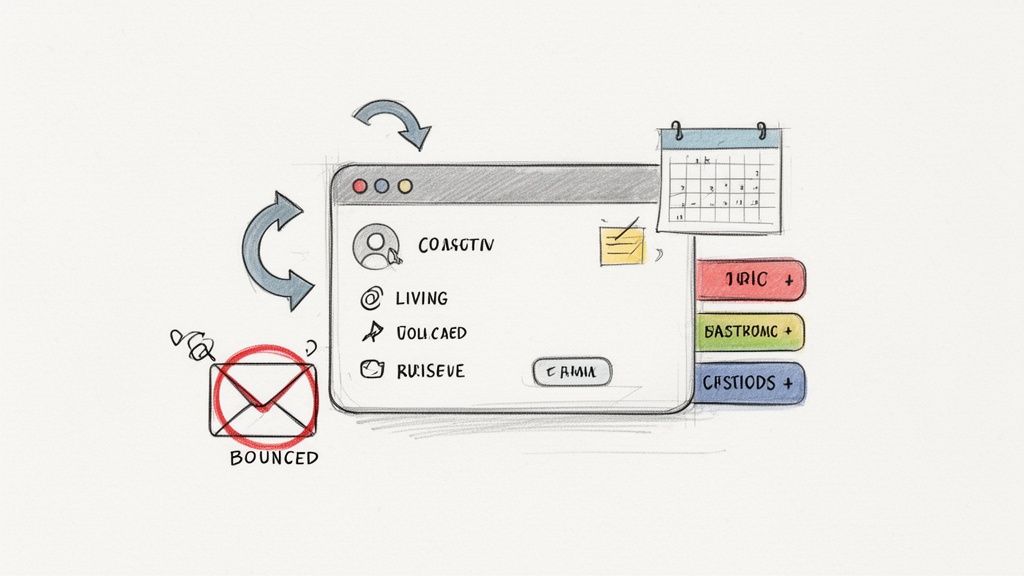
Building your media contact database is a huge accomplishment, but let’s be clear: the work has just begun. A database is a living tool, not a static document you create once and file away. Its real power comes from its accuracy, and just like fresh produce, that data has a shelf life. The moment you stop tending to it, its value starts to rot.
The "set it and forget it" mindset is a direct path to failure in public relations. Journalists are constantly on the move—they switch roles, jump to different publications, or pivot to new industries altogether. An outdated list is a guarantee of bounced emails, wasted hours, and, worst of all, damaged relationships with the very people you’re trying to connect with.
To keep your outreach engine running smoothly, you need to think of your database as a project that's never truly "finished." It requires regular attention to stay the powerful, strategic asset it's meant to be.
The Foundations of Database Maintenance
Regular maintenance is your defensive game. It's all about preventing the inevitable decay of data and ensuring every pitch you send is built on a solid foundation of accurate information. Without this, even the most brilliantly crafted story is destined for the spam folder.
Think of it like routine upkeep on a high-performance car. You wouldn't drive for years without changing the oil, right? In the same way, you can't expect your media contact database to perform at its peak without regular tune-ups.
This process boils down to a few core activities that should become a non-negotiable part of your PR workflow:
- Quarterly Data Verification: At least once every quarter, block out time to review your core contact lists. Use an email verification tool or simply go through the bounced emails from your last campaign to scrub out-of-date addresses.
- Tracking Media Moves: You have to stay on top of job changes. Set up LinkedIn alerts for your key contacts or follow industry news sites that report on personnel shifts. The second a journalist moves, update their profile.
- Pruning Inactive Contacts: If a contact hasn't engaged with your pitches or published anything relevant in over a year, it might be time to let them go. A smaller, more engaged list is always more powerful than a massive, unresponsive one.
A well-maintained media contact database is your best insurance against irrelevance. Every verified email and updated job title is a small victory that increases your pitch's chance of being seen, read, and acted upon.
Enriching Your Data for Smarter Outreach
While maintenance is about keeping your data clean, enrichment is about making it smarter. This is your offensive strategy—the work that transforms a simple directory into a powerful relationship management tool. It's about adding layers of context that allow you to send truly personalized and effective pitches.
Enrichment goes far beyond just having the correct email. It’s about understanding the human being on the other side of that inbox. This qualitative data is what helps you craft pitches that resonate on a personal level and show you’ve actually done your homework.
Here are a few practical ways to enrich your database:
- Log Every Interaction: Every single email, call, or social media DM should be noted in the contact’s profile. Track the date, the topic, and any important takeaways. This history stops you from sending the same pitch twice and helps you build on past conversations.
- Track Their Recent Work: Before you add a journalist to a new campaign, take five minutes to read their last few articles. Add the links and a few brief notes to their profile. Suddenly, you have an immediate, relevant hook for your next pitch ("I saw your piece on...").
- Note Personal Details (Respectfully): Did a journalist mention their favorite coffee shop or a book they're reading on X? Adding a small, professional note can be the key to building genuine rapport.
- Segment by Relationship Strength: Not all contacts are created equal. Create categories like "Warm Leads" (people you've actually spoken with), "Key Targets" (your A-list journalists), and "New Contacts" to tailor your outreach style and frequency. This focused approach makes sure your best efforts are aimed at your most valuable connections.
Weaving Your Database into a Modern PR Workflow
A perfectly built and maintained media contact database is a powerful engine, but it's pretty useless without someone in the driver's seat. The real magic happens when you weave this asset directly into your day-to-day PR work, turning a static list into a living, breathing system for landing media wins. It’s the critical link between having great contacts and actually securing great coverage.
Having a solid database is just step one. The next—and more important—step is building repeatable processes around it so you can move with both speed and precision. This is all about turning raw data into strategic action: crafting pitches that actually resonate, slicing up lists for laser-focused campaigns, and managing follow-ups in a way that builds relationships instead of burning bridges.
The whole point is to create a scalable system where your database isn't just a digital Rolodex, but the central nervous system of your entire outreach operation.
From Mass Blasts to Surgical Strikes
Let's be honest: the old PR playbook of "spray and pray" is dead. Journalists are drowning in pitches, and the only thing that gets their attention is relevance. Your database is the key to delivering that relevance, letting you segment your contacts with surgical precision for every announcement, story, or campaign you launch.
Think of it this way: a major product launch needs to hit a broad but carefully selected audience. A niche thought leadership piece, on the other hand, might only need to reach a handful of specific industry experts. Your database should make creating these distinct lists feel effortless.
Effective segmentation means grouping contacts based on what they have in common:
- Campaign-Specific Lists: Create a unique list for every single initiative, whether it’s a funding announcement, a new feature release, or a company milestone.
- Beat and Niche: Group journalists who live and breathe specific topics like "AI in healthcare" or "B2B SaaS." This ensures every pitch is hyper-relevant.
- Relationship Tiers: Separate your contacts into "warm leads" (people you've actually talked to before) and "cold targets." This lets you tweak the tone and approach of your outreach for each group.
This targeted approach makes a huge difference in your success rate because every single pitch is designed around the recipient's known interests.
Crafting Hyper-Personalized Pitches at Scale
Personalization is so much more than just sticking {{first_name}} in your email. Real personalization shows you've done your homework and actually respect their work. This is where all that rich data you’ve collected—their recent articles, social media chatter, and past conversations—becomes your secret weapon.
A personalized pitch demonstrates you see the journalist as an individual with specific interests, not just another name on a list. It’s the single most effective way to cut through the noise of a crowded inbox and earn a response.
Before you even think about hitting "send," your workflow should include a quick "dossier review" from your database. Look for a recent article you can genuinely compliment or a topic they've been exploring on social media that ties into your story. This context helps you craft an opening that immediately signals, "Hey, this is for you."
For example, instead of a generic opening, you could say: "I saw your recent piece in Forbes on the challenges of data security for startups and thought your perspective was spot on. Our new platform directly addresses the vulnerabilities you highlighted..." This simple step turns a cold email into a warm, informed conversation. You can find more tips on making your outreach effective in our guide to public relations software.
Systematizing Follow-Ups Without Being Annoying
There’s a fine line between being persistent and being a pest, and a well-managed database helps you walk it perfectly. A systematic follow-up strategy is non-negotiable for securing coverage, since initial emails often get buried. Your workflow needs a clear, respectful process for this.
Your database should track every single interaction, including the date of your initial pitch and any replies. This prevents embarrassing mistakes like following up with someone who already said "no thanks" or sending the exact same email three times. A good rule of thumb is one polite follow-up 3-5 business days after the initial pitch. And that's it.
Here’s a simple, effective follow-up workflow to adopt:
- Log the Initial Pitch: Immediately after sending, log the date and the angle you used in your database for that contact.
- Set a Reminder: Use your calendar or CRM to set a reminder for four days later. No guesswork needed.
- Craft a Brief Follow-Up: If you haven't heard back, send a short, polite email. Keep it to two or three sentences, just to gently bump the original message to the top of their inbox.
- Know When to Stop: Still no reply? It's time to move on. Log it in your database and focus your energy elsewhere. A lack of response is a clear signal, and respecting it keeps the door open for future stories.
Frequently Asked Questions
When you're deep in the PR trenches, questions about the tools of the trade are bound to come up. A solid media contact database is one of the most fundamental assets you can have, but building and using one isn't always straightforward. We get a lot of questions from fellow PR pros, startup founders, and marketing folks, so we’ve put together some straight-to-the-point answers.
Think of this as a quick chat to clear up the confusion around everything from costs and legal gray areas to figuring out if your efforts are even paying off. Let's get into it.
How Much Does a Media Database Cost?
This is the million-dollar question, isn't it? The honest answer is: it's all over the map. There’s no single price tag because the cost depends entirely on what you need—the provider, how many contacts you get, the bells and whistles included, and how many people on your team need access.
You’ll generally find pricing falls into one of these buckets:
- The All-in-One Powerhouses: Think of platforms like Cision or Muck Rack. They roll their database into a bigger suite with media monitoring and analytics. For that kind of power, you’re looking at $6,000 to over $8,000 a year, and sometimes a lot more for bigger companies.
- Flexible Monthly Options: Some great tools like Prowly offer more approachable monthly plans, often starting in the $250-$300 per month range. This is a fantastic route for smaller teams who don't want to be locked into a massive annual contract.
- Free (or Almost Free) Tools: You'll also find platforms like Qwoted that offer a free, though limited, database. These can work for one-off projects or if you're just dipping your toes in, but they won't have the horsepower or deep data of the paid options.
The real way to think about it is cost versus time. Sure, building a list from scratch doesn't cost money upfront, but the hundreds of hours you'll sink into manual research? That time has a price. A paid subscription often pays for itself surprisingly quickly.
Is It Legal to Use a Media Contact Database?
Yes, using a media contact database for PR is perfectly legal, as long as you play by the rules. Regulations like GDPR and CCPA are on everyone's mind, but they're mostly aimed at stopping unsolicited spam to consumers. Reaching out to a journalist about a relevant story is typically considered a legitimate business interest.
But—and this is a big but—that legality comes with responsibility. You can't just blast out a generic pitch to a thousand people. The journalist’s contact info is there with the professional expectation that you’ve done your homework and are sending something that actually fits their beat. If you start spamming, you’re not just burning bridges; you're straying into a compliance gray area.
How Do I Know If My Database Is Successful?
Success isn't measured by how many names you have on your list. A truly great database is one that actually helps you get results. It's an active tool, not just a digital address book.
To know if yours is working, you need to look at a few key things:
- Open and Reply Rates: This is your first and most immediate feedback. Are people opening your emails? That means your subject lines are working. Are they replying? That means your pitch is hitting the mark with the right person.
- Conversion to Coverage: At the end of the day, this is what it's all about. How many of your pitches turn into actual articles, interviews, or brand mentions? This is the clearest sign that your database is connecting you with the right people.
- Deliverability and Bounce Rate: A low bounce rate (aim for under 2-3%) is a sign of a clean, healthy list. If you're seeing a lot of bounces, your data is old, and it's time for a major cleanup.
- Relationship Quality: This one is harder to measure but just as important. A good database helps you turn cold contacts into warm ones—journalists who know your name and are actually happy to hear from you. This is where the real magic of PR happens.
Ultimately, a successful media contact database is the engine that consistently puts your stories in front of the right journalists and helps you land incredible media coverage.
Ready to stop guessing and start getting guaranteed press coverage? PressBeat uses AI to build the perfect media list for your brand, crafts hyper-personalized pitches, and manages outreach automatically. See how you can secure features in top publications without the cost of a traditional PR agency. Discover PressBeat today.