
Your Ultimate Guide to a Media Contacts Database
January 12, 2026
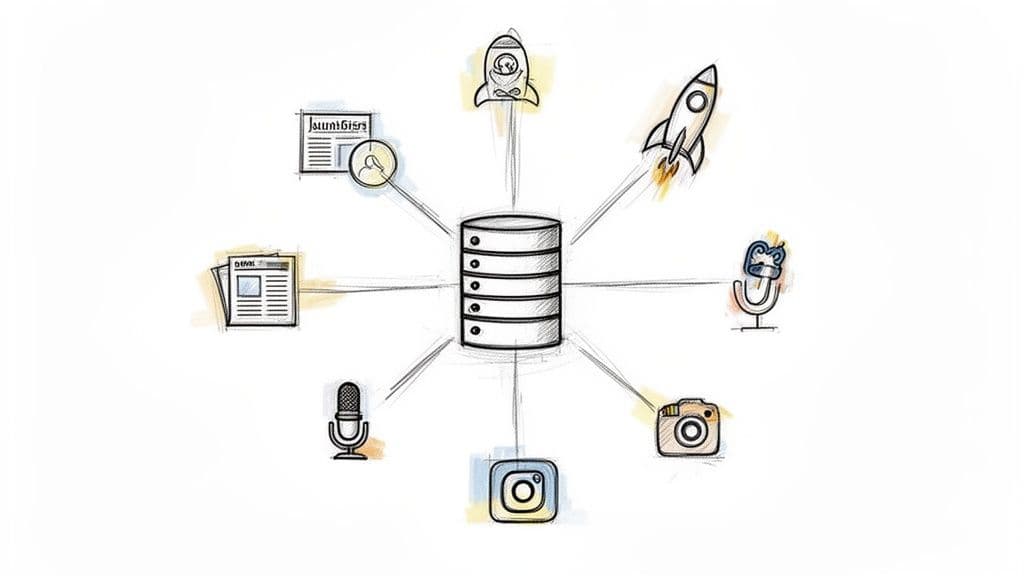
Let's be honest, trying to get press for your startup can feel like shouting into the void. You know you have a great story, but how do you find the right people to tell it? This is where a media contacts database comes in, and it’s a lot more than just a fancy address book.
What Is a Media Contacts Database?
Think of it as your PR team's secret weapon. It’s a highly specialized, searchable directory packed with journalists, editors, bloggers, and influencers. Instead of a messy, outdated spreadsheet, you get a living, breathing tool that points you directly to the people who can amplify your message. It's less like a phone book and more like a purpose-built CRM, but for managing relationships with the media, not customers.
For a startup fighting for attention, this is a game-changer. The old "spray and pray" method of blasting a press release to hundreds of random email addresses? That’s a fast track to getting your domain blacklisted. A good database lets you be surgical. You can find the exact reporter who covers your niche, has written about your competitors, or is obsessed with the very problem your product solves. That level of precision is what separates a pitch that gets deleted from one that lands a feature in TechCrunch.
Moving Beyond Basic Spreadsheets
So many startups begin their PR journey with a spreadsheet. It makes sense at first—it’s free and it gets the job done... for a little while. But that spreadsheet quickly becomes a massive time-sink. Who has time for endless manual data entry? Worse, journalist information goes stale incredibly fast.
A professional media contacts database is built to solve these exact headaches. Here’s what you get:
- Real-Time Updates: Journalists are constantly on the move—new jobs, new beats, new contact info. A quality database keeps up with these changes for you, so you're not pitching someone who left their role three months ago.
- Powerful Search and Filtering: Need to find reporters covering "AI in healthcare" based in San Francisco? Or maybe someone who recently mentioned a specific competitor? You can drill down with filters to build hyper-targeted lists in minutes.
- Integrated Outreach Tools: Many of these platforms let you send personalized emails, see who opened them, and schedule follow-ups right inside the tool. Everything stays in one organized place.
- Richer Profiles: You often get much more than an email. Think social media handles, recent articles, and even specific pitching preferences. This is the gold you need to craft a pitch that truly connects.
The real value here isn't just the data itself. It's about buying back your time and empowering you to build genuine relationships. You can finally stop digging for contacts and start focusing on crafting a compelling story.
This guide is all about helping you make that leap from chaotic, manual outreach to a smarter, more strategic system. With the right media contacts database, you can connect with the right journalists, personalize your approach at scale, and earn the kind of media attention that actually drives growth.
The Anatomy of a High-Quality Database
Let's be honest: not all media databases are created equal. Some are powerful engines for PR, while others are little more than glorified, out-of-date spreadsheets. The real difference isn't just the number of contacts crammed inside; it's the depth, accuracy, and usefulness of the information you get for each person.
Think of it like this: a cheap, low-quality list is like PR junk food. It might give you a bunch of names and emails that look impressive at first, but they offer no real substance for your outreach. A high-quality database, on the other hand, is the nutritious meal that actually fuels a successful, personalized pitch.
This diagram really nails how a media database acts as the essential bridge between your story and the right journalists.
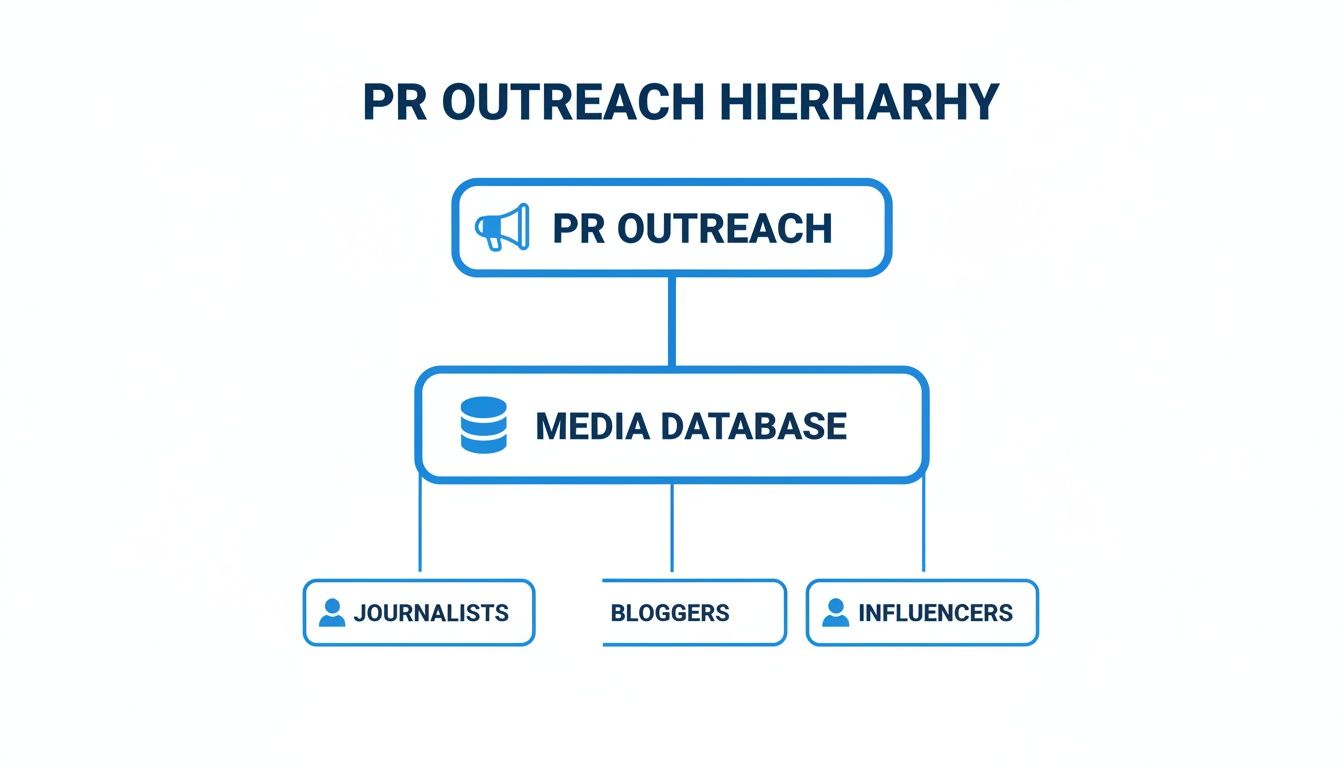
Without this layer of organized intelligence, you're just throwing things at a wall and hoping something sticks—a scattered and deeply inefficient process.
Beyond a Name and Email
A truly effective media contacts database goes way beyond a simple name and email address. It arms you with the intel you need to understand who you're pitching, what they actually care about, and how they prefer to be contacted. This is what turns a cold, generic email into a welcome, relevant conversation.
A modern database provides a rich profile for every contact, turning a simple list into a strategic tool. Here's a look at the kind of information that really matters.
Essential Data Fields in a Modern Media Database
| Data Field | Description | Why It Matters for Your Pitch |
|---|---|---|
| Specific Beat Coverage | The journalist's niche area of focus, like "B2B SaaS funding rounds" or "consumer fintech apps." | This is your targeting bullseye. It stops you from pitching a crypto story to a hardware editor. |
| Recent Articles | A feed of their latest published work. | This is a goldmine. It shows you exactly what topics are on their mind right now, giving you the perfect hook. |
| Preferred Contact Method | How they like to receive pitches (email, DM, phone). | Respecting this simple preference is the first step to building a good relationship. Don't be the person who calls a writer who hates phone calls. |
| Social Media Profiles | Links to their professional social accounts (like X/Twitter or LinkedIn). | Social media offers a real-time glimpse into their personality and professional interests. For more on this, check out our guide on building a social media database. |
In short, a great database doesn't just give you a list of people. It gives you a reason to contact them and the right way to do it.
A great database doesn't just give you a list of people to contact. It gives you a reason to contact them and the right way to do it, dramatically increasing your chances of success.
Key Signals of a Quality Database
When you're shopping around for a platform, you have to learn to spot the signs of a good one. Big, flashy numbers about the total number of contacts can be incredibly misleading. Sure, the industry has exploded in scale—modern platforms like CisionOne boast over 850,000 unique contacts—but size isn't everything. Raw numbers mean nothing if the data is junk.
Today's best databases are all about combining smart, AI-driven journalist matching with real-time verification and ethical outreach tools.
Here are the critical quality signals to look for:
- High Data Accuracy: The provider should be able to guarantee a low email bounce rate. A high bounce rate isn't just annoying; it signals stale data and can get your company's domain flagged as spam.
- Frequent Updates: The media world moves at a dizzying pace. Journalists switch jobs, change beats, and go freelance constantly. If a database isn't updated daily (or at the very least, weekly), it's already obsolete.
- A Clear Verification Process: Ask them how they verify their information. The top-tier platforms use a mix of sophisticated tech and actual human researchers to confirm that contact details and job titles are correct.
- Rich, Actionable Profiles: Does the profile for a journalist give you their recent articles, social links, and specific beat? Or is it just a name, outlet, and a generic email? You need context to pitch well.
Ultimately, the anatomy of a truly superior database is defined by its ability to deliver accurate, relevant, and deep intelligence. This focus on quality over sheer quantity is what allows PR teams to stop guessing and start building the meaningful connections that lead to great coverage.
Building Your Own Database Versus Buying Access
When it comes to PR, every startup hits a fork in the road. Do you painstakingly build your own media list from scratch, or do you invest in a professional media contacts database? It’s the classic build-versus-buy dilemma, and your choice will have a huge impact on your team's time, speed, and the results of your outreach.
Think of it this way: building your own database is like trying to assemble a high-performance engine piece by piece. You get total control, and every contact is hand-picked. But it’s a grueling, time-consuming process of researching, verifying, and constantly updating details as journalists inevitably move around.
Buying access, on the other hand, is like getting the keys to a brand-new, fully-serviced sports car. You can hit the ground running immediately. There's no assembly required; you can filter through thousands of verified contacts and let the service handle the updates. This frees up your team to focus on what actually moves the needle: crafting compelling stories and building relationships.

The Case for Building Your Own Media List
Let's be real—if you're an early-stage startup with more time than money, building a list yourself can be a smart move. It forces you to get your hands dirty, to truly understand your niche and pinpoint the exact journalists and creators who shape the conversation in your industry.
The process is a grind, but it's straightforward:
- Manual Research: You'll live on Google News, X (formerly Twitter), and LinkedIn, hunting for reporters covering relevant topics.
- Contact Hunting: Then comes the detective work—scouring publication mastheads, author bios, and using email finder tools to track down an actual email address.
- Data Entry: Finally, you'll meticulously organize everything in a spreadsheet: names, outlets, beats, and links to recent work.
This hands-on approach gives you complete control. You're building a list with your specific goals baked in from the start, which can help forge stronger initial connections. But don't underestimate the sheer manual labor involved. It's a constant, never-ending task.
The Power of Buying Database Access
Investing in a subscription to a professional media database is really an investment in efficiency, scale, and accuracy. Newsrooms are lean, and a good journalist’s inbox is a war zone. A purchased database ensures your contact info is up-to-date, which means fewer bounced emails and less time wasted pitching people who changed beats six months ago.
A professional database isn't just a list; it's an intelligence tool. It gives you immediate access to updated profiles, pitching preferences, and search filters that are impossible to replicate manually at scale.
This completely changes your workflow. Instead of spending days pulling together a small, targeted list, you can generate one with hundreds of relevant contacts in minutes. That kind of speed is a game-changer when you have a funding announcement or product launch that can't wait.
Comparing Build vs. Buy Head-to-Head
So, which path is right for your startup? It really comes down to your resources, timeline, and PR ambitions. Let’s put them side-by-side.
| Aspect | Building Your Own Database | Buying Database Access |
|---|---|---|
| Initial Cost | Low. Mostly sweat equity. Your main cost is time, plus maybe a few small tool subscriptions. | High. You'll need a budget for a monthly or annual subscription. |
| Time Investment | Extremely High. It’s a constant cycle of research, verification, and maintenance. | Low. Get instant access and start pitching. The focus shifts to strategy, not data entry. |
| Data Accuracy | Variable. It’s only as good as your last manual check and gets stale fast. | High. Reputable vendors guarantee low bounce rates with real-time updates. |
| Scalability | Limited. Expanding to new markets or industries is a slow, manual slog. | Excellent. You can instantly access a global pool of contacts and filter by any niche. |
| Advanced Features | None. A spreadsheet can't offer smart filtering, outreach analytics, or integration. | Robust. Comes packed with powerful search, tracking, and even AI-powered suggestions. |
In the end, while building a list yourself is certainly possible, it saddles your team with a heavy administrative load that distracts from high-impact PR work. For any startup serious about rapid growth and consistent media coverage, buying access to a professional media contacts database almost always delivers a far greater return on investment.
How to Evaluate Media Database Vendors
Choosing a media contacts database is a serious investment for any startup. Get it right, and you’ll supercharge your PR. Get it wrong, and you’ll just be wasting time and money. With so many vendors out there making flashy promises, it's easy to get lost in the noise.
The key is to look past the sales demos and dig into what actually matters. Think of it like hiring someone for a critical role. You wouldn't just glance at their resume; you'd interview them, check references, and really test their skills. You need to do the same with a database provider to make sure they’re the right fit for your PR goals.
Data Accuracy and Update Cadence
Let's be blunt: the single most important factor is data quality. An outdated or inaccurate database isn't just useless—it's actively harmful. It wastes your team's time, hurts your sender reputation with bounced emails, and guarantees your pitches land in a digital black hole.
A journalist’s inbox is a warzone. Pitching them at an old email address is the fastest way to get your domain flagged and your messages ignored forever.
When you're talking to a vendor, don't be afraid to ask the tough questions.
- What’s your guaranteed email bounce rate? Any reputable company should be able to promise a rate well under 5%. If they hesitate or quote anything higher, it’s a massive red flag that their data is stale.
- How often is the data updated? The media world moves at lightning speed. You need a vendor who updates contacts in near real-time, or at the very least, daily. Tools like Muck Rack are known for keeping their finger on the pulse with highly accurate, current information.
- What’s your verification process? Dig into how they confirm details. The best platforms use a smart mix of technology and actual human researchers to make sure every contact is correct.
A media contacts database is a living tool, not a static list. If the vendor can't give you clear, confident answers about their data hygiene and update frequency, walk away.
Search Capabilities and Platform Usability
Having a million contacts means nothing if you can't find the handful that matter to you. The platform’s search and filtering tools are what separate a powerful resource from a glorified, overpriced spreadsheet. A clunky, confusing interface will grind your entire PR workflow to a halt.
When you get a demo, put it through its paces. Use real-world scenarios for your startup. Can you quickly find journalists who recently wrote about your niche, cover a specific city, and work for a publication with a high domain authority?
Look for an interface that just makes sense. If you and your team can’t build a laser-focused media list in a few minutes, the tool is going to cause more headaches than it solves. The goal is to spend your time writing personalized, compelling pitches—not wrestling with the software. For more on the tools that can support your efforts, check out our complete guide to public relations software.
Vendor Evaluation Checklist
Use this checklist to compare different media contacts database providers and make an informed decision for your startup.
| Evaluation Criteria | What to Look For | Red Flags to Avoid |
|---|---|---|
| Data Quality & Accuracy | Guaranteed bounce rate <5%; real-time or daily updates; clear, multi-step verification process. | Vague answers on data hygiene; high bounce rates; infrequent updates (monthly or quarterly). |
| Search Functionality | Advanced filters (topic, location, publication type, recent articles); intuitive keyword search. | Basic, limited search options; clunky interface that requires complex steps to build a list. |
| Platform Usability | Clean, modern user interface (UI); easy list-building and exporting; positive user reviews. | Outdated design; slow load times; a steep learning curve that requires extensive training. |
| Contact Depth | Profiles with social media links, recent articles, beat information, and preferred contact methods. | "Bare-bones" profiles with just a name, outlet, and a generic email address. |
| Pricing Transparency | Clear, upfront pricing; scalable plans that grow with you; clear definition of what's included. | Hidden fees; restrictive user or export limits; pressure to sign a long-term contract immediately. |
| Customer Support | Dedicated account manager; responsive support via chat/email/phone; comprehensive help docs. | Poor online reviews about support; slow response times during the sales process; no direct support line. |
By systematically running each potential vendor through this checklist, you can cut through the marketing fluff and focus on the factors that will genuinely impact your startup's PR success.
Demystifying Pricing Models
Pricing for these platforms is all over the map. You can find basic tools for a few hundred dollars a month or enterprise systems like Cision that run into the tens of thousands per year. It's absolutely critical to understand what you’re paying for and watch out for hidden costs.
You'll typically run into a few common pricing models:
- Per-User Licenses: You pay a fee for every person on your team who needs access. This model can get expensive fast as you scale.
- Contact Export Limits: Some plans put a cap on how many contacts you can pull or how many lists you can create each month.
- All-in-One Platform Fees: Many vendors now bundle the database with other tools—like media monitoring or press release distribution—into a single subscription.
Always demand a detailed pricing sheet and get clarity on exactly what’s included in each tier. Make sure the plan you choose fits how you'll actually use it and gives you room to grow. Ultimately, the decision comes down to ROI. The right media contacts database should pay for itself many times over in high-quality press coverage.
Integrating a Database into Your PR Workflow
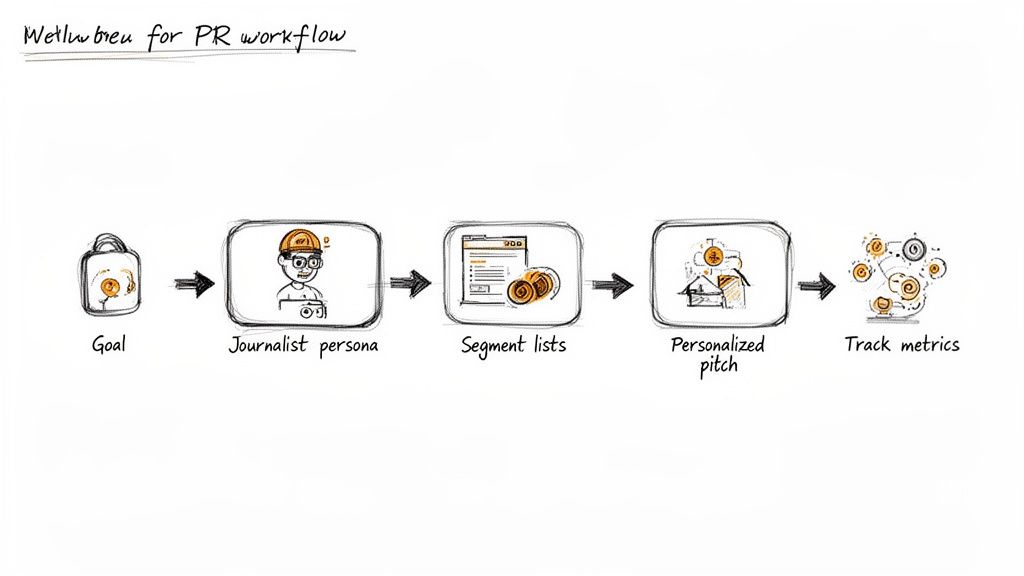
Getting your hands on a powerful media contacts database is a bit like having a garage full of high-performance car parts. You’ve got all the raw potential, but you won't get anywhere until you assemble it all into a working engine. Turning that raw data into consistent, high-impact media coverage is all about how you integrate the database into your day-to-day operations.
This isn’t about just pulling massive lists and blasting out emails. It's about building a smart, repeatable system that shifts your team from reactive pitching to strategic relationship-building. A well-designed workflow makes every single outreach effort intentional, measurable, and tied directly to your startup's biggest goals.
Define Your Campaign Goals First
Before you even dream of searching for a single journalist, you have to know what winning looks like. Are you trying to drive sign-ups for a new product? Build your CEO's reputation as a go-to expert? Or maybe you're announcing a huge funding round? Each of these goals demands a completely different set of media targets.
Think of clear goals as your north star. They keep you from getting distracted by vanity placements in irrelevant outlets and keep your team laser-focused on coverage that actually moves the needle. For instance, a goal to generate 10 qualified leads from an article is worlds more effective than a fuzzy objective like "getting press."
Create Your Ideal Journalist Personas
With your goals locked in, it’s time to figure out exactly who can help you get there. This goes way beyond a simple job title. A journalist persona is a detailed sketch of your perfect media contact, almost like a buyer persona you'd create for a marketing campaign.
Start by thinking through these key details:
- Publication Type: Are you targeting a major tech outlet, a super-niche industry blog, or a local business journal?
- Specific Beat: Who covers "early-stage SaaS" or "AI in fintech"? Get granular.
- Audience Demographics: Does their readership look like your ideal customer?
- Writing Style: Do they prefer deep, analytical pieces or quick-fire news updates?
Building personas like this turns your massive media contacts database into a curated gallery of ideal partners. It’s the essential first step to building media lists that are both targeted and incredibly relevant.
The goal is to stop thinking about "pitching journalists" and start thinking about "partnering with specific writers" who share an interest in your story and audience. This subtle shift in mindset makes all the difference.
Segment Lists for Hyper-Personalization
Now that you know who you're looking for, you can use the database’s filters to build your outreach lists. The single biggest mistake startups make is lumping everyone into one giant, generic list. Don't do it. Instead, your strategy should be to create multiple small, hyper-segmented lists.
While journalist engagement on social media is growing—with 55% now using it to interact with their audience—email remains king. A staggering 96% of journalists prefer receiving pitches via email. In fact, a notable 17% would blacklist a PR pro for unsolicited contact on social media, which just goes to show why having accurate email data is non-negotiable.
Here are a few ways you can segment your lists intelligently:
- Segment by Beat: Group together journalists who all cover the exact same niche, like "cybersecurity for small businesses."
- Segment by Recent Coverage: Create a list of reporters who have written about your direct competitors in the last three months.
- Segment by Location: If you have a local announcement, build a list of tech reporters in that specific city or region.
This level of segmentation is what unlocks personalization at scale. It lets you tailor your pitch and angle to each small group, which massively boosts your relevance and your chances of getting a reply. To really nail your outreach, it's worth studying the best practices for crafting the perfect email for media outreach.
Track Everything and Optimize
Finally, any solid workflow needs a feedback loop. Many modern databases come with built-in outreach tools to track open rates, click-throughs, and replies. This data is pure gold. For a deeper dive into the nuances of reaching out, check out our guide on how to contact journalists.
If a pitch sent to one segment is getting zero traction, dig in and find out why. Is the subject line weak? Is the angle falling flat? Use these insights to A/B test different approaches and constantly improve your strategy. When you treat your PR outreach less like art and more like a science, you create a predictable engine for media success.
Legal and Ethical Rules for Media Outreach
In public relations, your reputation isn't just a nice-to-have; it's the currency you trade on. How you use a media contacts database is a direct reflection of that reputation. While these tools are incredibly powerful, they come with serious legal and ethical responsibilities. Ignoring them can burn bridges with journalists and sink your startup’s credibility before you even leave the harbor.
Think of it this way: are you a welcome guest in a journalist’s inbox or an uninvited pest? Navigating these rules isn't about memorizing legal textbooks; it’s about operating with genuine respect for the people you’re contacting.
Understanding Key Data Privacy Laws
You don’t need a law degree, but you absolutely need a working knowledge of the major data privacy regulations. These laws dictate how personal information, which includes a journalist's professional contact details, can be gathered, saved, and used.
- GDPR (General Data Protection Regulation): This EU law set the global gold standard for data protection. It demands a valid reason for using personal data and gives people the right to know how their info is being handled. For your PR work, this means providing a dead-simple way for journalists to opt out of your emails.
- CCPA (California Consumer Privacy Act): This law grants California residents more control over their personal data. Much like GDPR, it’s built on transparency and the right to say "no, thanks." If you have California-based contacts, the CCPA applies to you.
Staying compliant isn't just about dodging fines—it's the bare minimum of professionalism journalists have come to expect. Going beyond the letter of the law and understanding broader data privacy considerations is crucial for building the trust your outreach depends on.
The Golden Rules of Ethical Outreach
Legal compliance is the floor, not the ceiling. Great PR is built on ethical habits that create mutual respect and lay the groundwork for real, long-term relationships. Just because you have a journalist's email address doesn't mean you have an open invitation to spam them.
The real measure of your outreach isn't just getting a response; it's earning the right to pitch that journalist again in the future. Burning a contact with a lazy, generic email is a shortsighted mistake.
Following a clear code of conduct turns your outreach from a numbers game into a strategic exercise in relationship building. Here are the rules that are simply non-negotiable:
- Always Provide Value: Before hitting send, stop and ask: "Is this genuinely useful or interesting to this specific journalist and their audience?" If the answer isn't a clear "yes," that draft belongs in the trash.
- Respect the Opt-Out: Don't bury your unsubscribe link. Make it obvious and honor every request immediately. Pestering someone who has asked you to stop is not just bad form; it's a fast track to getting your entire domain blacklisted.
- Personalize Authentically: Use the data in your media contacts database to prove you’ve done your homework. Mention a recent article they wrote or a topic they're passionate about. Show them they aren't just another name on a list.
- Be Transparent: Always be upfront about who you are and the company you're representing. Tricky subject lines and vague introductions are instant red flags for any experienced reporter.
When you master these principles, your startup stops being another source of inbox noise and starts becoming a professional, trustworthy, and valuable resource for the media.
Frequently Asked Questions
Jumping into the world of PR tools can feel overwhelming, so let's clear up a few common questions. Here are some straight answers about media databases to help you make the right call for your startup.
How Much Does a Media Contacts Database Cost?
You'll find prices all over the map, ranging from a couple of hundred dollars to well over $10,000 a year. A simple, standalone list of contacts will be on the lower end, while a full-blown platform that includes outreach tools and analytics will command a higher price.
The real question isn't just about the cost, but the return. Think about the value of landing a single great story in a top publication. A good database should pay for itself many times over by helping you secure the kind of press coverage that actually moves the needle for your business.
How Often Is the Data Updated?
In public relations, a contact that's even a few months old can be completely useless. Journalists switch beats, move to new publications, or go freelance all the time. Because of this, the best databases are updated continuously—we're talking daily, if not in near real-time.
A database that's only refreshed quarterly or annually is a recipe for bounced emails and wasted effort. Always ask a vendor how they verify their data and how often it's updated. If they can't give you a clear, confident answer, walk away.
Can I Use a Database for International PR?
Of course. In fact, it's one of the best ways to scale your PR efforts globally. Many of the top-tier platforms have extensive international contacts, which is a massive advantage for startups looking to expand into new markets in Europe, Asia, or beyond.
Before you commit, make sure the vendor's coverage aligns with your roadmap. Ask for a breakdown of their contacts by country or region to ensure you're getting the access you need to make a splash on the world stage.
Ready to stop guessing and start getting noticed? PressBeat uses AI to connect you with the right journalists, crafting personalized pitches that earn you predictable press coverage. See how PressBeat can amplify your story today.