
8 Perfect PR Pitch Example Templates to Secure Coverage in 2026
January 9, 2026
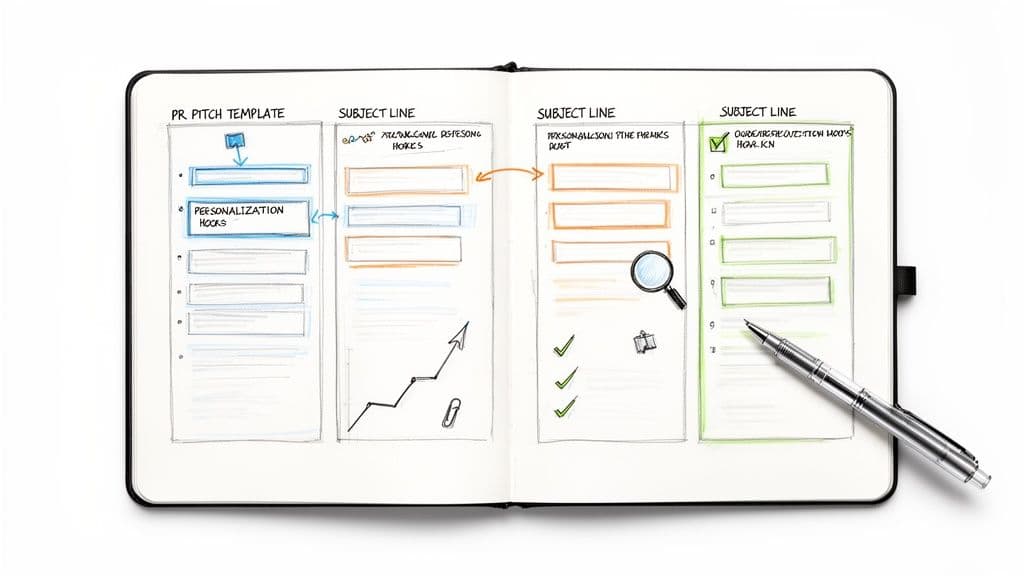
Getting your story into a top-tier publication can feel like an impossible task. You spend hours crafting what you think is the perfect email, hitting send, and then... silence. The hard truth is that most journalists are inundated with hundreds of pitches every single day. Generic templates and spray-and-pray tactics are deleted on sight. To break through the noise, you need more than just a compelling story; you need a strategic, highly personalized approach that respects a journalist's time and aligns perfectly with their beat.
This guide moves beyond theory and provides a tactical playbook. We have curated eight battle-tested pr pitch example templates, each designed for a specific business milestone, from product launches and funding rounds to thought leadership and crisis communications. You won't just get a template to copy and paste. We will deconstruct exactly why each pitch works, offering a deep strategic analysis, actionable takeaways, and a behind-the-scenes look at the psychology of a successful pitch. The goal is to equip you with replicable methods so you can stop guessing and start getting published.
For those looking to refine their initial outreach even further, exploring resources on AI-powered cold outreach scripts can help craft more compelling messages from the start. We will also touch on how modern PR platforms like PressBeat can automate the tedious discovery and personalization process, ensuring your authentic message lands with maximum impact. Forget the cold emails; it’s time to learn how to pitch with precision.
1. The Game-Changer: Product Launch Press Pitch
A product launch pitch is your company's grand entrance onto the media stage. This type of pitch is meticulously crafted to announce a new product, a significant feature update, or a public beta. Its primary goal is to convince journalists that your launch is not just another update, but a noteworthy event that their audience needs to know about. This is a classic pr pitch example that, when executed well, can define your product's market entry.
The core of a successful product launch pitch is its focus on the "why now?" and "why does this matter?" It moves beyond simply listing features and instead tells a compelling story about the problem your product solves, the market gap it fills, and the vision behind its creation. This approach is favored by innovative tech companies like Slack and Figma, who used targeted pitches to secure foundational press coverage that catapulted them into the spotlight.
Strategic Breakdown & Why It Works
This pitch works because it transforms a company announcement into a relevant news story for a specific journalist. Instead of a generic blast, it's a targeted message that respects the reporter's time and beat.
- Problem-First Narrative: It leads with the problem your target audience faces. This immediately hooks the journalist by establishing relevance and context before you even mention your product.
- Unique Value Proposition (UVP): It clearly articulates what makes your product different and better than existing solutions. Is it faster, more intuitive, or does it solve a previously unsolvable problem?
- Founder-Led Vision: Including a powerful, human quote from a founder adds personality and credibility. It shows the passion and strategic thinking behind the product, making the story more compelling.
Actionable Takeaways for Your Launch
To make your product launch pitch stand out, integrate these tactics:
- Offer an Exclusive: Give one high-value journalist an exclusive or an embargoed preview. This incentivizes them to write a more in-depth story.
- Personalize Beyond the Name: Reference a specific article the journalist wrote about a competitor or a similar market trend. Explain how your product launch adds a new chapter to that story. For a deeper dive into structuring these emails, explore these powerful pr email templates.
- Provide a Media Kit: Include a link to a comprehensive media kit with high-resolution images, logos, founder bios, and a detailed fact sheet. This makes the journalist's job easier.
- Time It Right: Send your pitch 1-2 weeks before your official launch date to give reporters enough lead time to craft their story.
2. Funding Round Announcement Pitch
A funding round announcement pitch is a strategic communication tool used to publicize a significant capital injection, such as a Series A, B, or C round. Its goal is to generate positive media coverage that validates the company's trajectory, attracts talent, and builds market credibility. This type of pitch targets business, finance, and tech journalists who cover the startup ecosystem, venture capital, and market trends. This is a powerful pr pitch example that turns a financial milestone into a compelling public narrative.
The essence of a strong funding pitch is storytelling backed by numbers. It's not just about the dollar amount; it's about the story the funding enables. It answers critical questions: Why did prestigious investors bet on this team and vision? What market problem is being solved? And how will this capital accelerate growth and innovation? Companies like Stripe and Canva have masterfully used these pitches to frame each funding round as a new chapter in their industry-defining journey.
Strategic Breakdown & Why It Works
This pitch succeeds because it leverages the credibility of investors to tell a story of growth and future potential. It packages an internal milestone into a newsworthy event that signals market confidence and momentum.
- Investor Validation as a Hook: Leading with the names of reputable investors (like Sequoia Capital or Andreessen Horowitz) immediately signals importance and captures a journalist's attention.
- Data-Driven Narrative: The pitch isn't just a vision statement. It includes hard metrics like user growth, annual recurring revenue (ARR), or notable customer logos to substantiate the company's traction.
- Future-Focused Story: It clearly outlines how the new capital will be used. This provides the "so what?" by connecting the funding to concrete plans for product development, market expansion, or hiring.
Actionable Takeaways for Your Announcement
To ensure your funding announcement lands with impact, incorporate these tactics:
- Lead with Prestige: Place the funding amount and lead investor's name in your subject line and first sentence for immediate impact.
- Include an Investor Quote: A strong quote from the lead investor explaining their thesis and conviction adds a powerful third-party endorsement to your story.
- Offer Exclusive Interviews: Provide a top-tier publication with exclusive access to interview both your founder and the lead investor. This creates a high-value opportunity they won't want to miss.
- Tailor by Publication: Customize your pitch for different media types. For a tech outlet like TechCrunch, focus on product innovation. For a business publication like the Wall Street Journal, emphasize market size and financial trajectory.
3. Thought Leadership Expert Pitch
A thought leadership pitch shifts the focus from your product to the invaluable expertise of your company's leaders. This type of pitch is designed to position your founders or executives as go-to experts in their field, making them available for interviews, expert commentary, or bylined articles. Its primary goal is to build credibility and influence by contributing unique insights to broader industry conversations. This strategic pr pitch example helps build a long-term media presence beyond company announcements.
The essence of a great thought leadership pitch lies in its relevance and unique perspective. It doesn't promote a product; it offers a new way of thinking about a current trend, a challenge, or the future of an industry. This approach is mastered by leaders like NVIDIA's Jensen Huang, who shapes the narrative around AI and computing, and Airbnb's Brian Chesky, who uses essays to discuss the future of travel and connection. Their insights become the story, solidifying their status as visionaries.

Strategic Breakdown & Why It Works
This pitch succeeds because it provides journalists with a valuable resource: a credible expert who can offer fresh analysis and compelling quotes. Instead of asking for a story about your company, you are offering to help a journalist enrich their own reporting.
- Timeliness and Relevance: It connects your expert's insights directly to a breaking news story or a trending topic. This makes your pitch immediately useful.
- Unique Point of View: It clearly states your expert’s specific, often contrarian, take on a subject. This signals to the journalist that they will get a unique quote, not just a generic statement.
- Proven Credibility: The pitch quickly establishes the expert's credentials and experience, giving the journalist confidence in their authority on the subject.
Actionable Takeaways for Your Pitch
To successfully position your executive as a thought leader, use these tactics:
- Pitch News-Driven Angles: Monitor the news cycle. When a relevant story breaks, send a pitch within 48 hours offering your expert's unique perspective on the event.
- Provide Specific Story Ideas: Don’t just offer your expert for "commentary." Propose 2-3 specific, compelling angles or op-ed topics they can speak to, demonstrating you’ve done your homework. To truly establish yourself or your brand as a leader, it's essential to also consider developing a robust thought leadership content strategy.
- Create a Speaker Bio/Kit: Include a link to a concise bio highlighting their expertise, previous media appearances, and key talking points. This makes it easy for a journalist on a deadline to vet them. Learn how to refine this approach with our guide to a thought leadership content strategy.
- Reference Their Past Sources: Gently note how your expert can offer a different viewpoint than sources the journalist has quoted in the past, showing you understand their coverage and can add new value.
4. The Power-Pairing: Partnership and Strategic Alliance Pitch
A partnership announcement pitch highlights a new collaboration between two or more companies. This type of pitch is crucial for B2B companies aiming to showcase ecosystem growth, integrations, or strategic alliances that deliver greater customer value. Its primary goal is to frame the partnership as a significant industry event that benefits customers and signals market maturity. This is a classic pr pitch example for demonstrating momentum and expanding your audience reach.
The core of a strong partnership pitch is its focus on the "so what" for the end-user. Instead of just announcing a corporate relationship, it tells a story about how the combined forces solve a bigger, more complex problem for their shared customer base. This approach is frequently used by major tech players like Salesforce and Slack or the countless software companies integrating with Zapier, who use these announcements to reinforce their platform's value and ecosystem strength.
Strategic Breakdown & Why It Works
This pitch succeeds because it leverages the credibility and audience of both partners to create a story that is bigger than either company could tell alone. It shifts the focus from a company-centric announcement to a customer-centric solution.
- Customer-Benefit Lead: It opens by defining the tangible benefit for the customer. This immediately answers the journalist's "why should my readers care?" question before delving into corporate specifics.
- Joint Narrative: The pitch clearly articulates the strategic fit and mutual enthusiasm. It explains why these two companies specifically are partnering and what unique value their combined strengths create.
- Proof of Concept: It moves beyond the theoretical by providing specific use cases or early customer wins. This gives the journalist a concrete story to tell, making the partnership more relatable and newsworthy.
Actionable Takeaways for Your Partnership
To ensure your partnership announcement gets the attention it deserves, implement these tactics:
- Offer Joint Interviews: Provide access to key stakeholders from both organizations, such as product leads or VPs of partnerships. This gives the story more depth and credibility.
- Lead with the "Why": Start your pitch by clearly explaining what this partnership actually accomplishes for customers. For example, "This integration saves marketing teams 10 hours a week by..."
- Target Overlapping Beats: Use PR tools to find journalists who have previously covered both your company and your partner's company or industry. This ensures maximum relevance.
- Provide a Joint Media Kit: Create a shared resource folder with logos from both companies, approved quotes from both CEOs, and screenshots or a video showing the integration in action.
5. Award and Recognition Announcement Pitch
An award or recognition announcement pitch is a highly effective way to leverage third-party validation for media coverage. This pitch is designed to announce that your company, product, or leadership has received a significant industry award, certification, or ranking. Its goal is to translate this accolade into a news story that reinforces your company's credibility, momentum, and market leadership. This is a powerful pr pitch example for building brand authority.
The strength of this pitch lies in its ability to provide journalists with a clear, verifiable news hook. Instead of just claiming your company is a leader, an award from a reputable source like Gartner, Deloitte, or Inc. Magazine proves it. The pitch connects this specific achievement to broader industry trends, such as innovation, rapid growth, or exceptional workplace culture, making it newsworthy for a wider audience.
Strategic Breakdown & Why It Works
This pitch works because it leverages external credibility as its foundation. A journalist can immediately see the news value in a company being recognized as a leader, making the story easier to justify and write.
- Third-Party Validation: The pitch leads with the award, immediately establishing credibility. It’s not you saying you're great; it's a respected organization saying it.
- Contextual Significance: It goes beyond the announcement by explaining what the award signifies. For example, a "Best Workplace" award is framed as a story about leading the way in post-pandemic work culture.
- Data-Driven Proof: It often includes specific metrics that led to the win, such as revenue growth for a "Fast 500" list or high customer satisfaction scores for a G2 ranking. This adds a layer of concrete data to the narrative.
Actionable Takeaways for Your Announcement
To maximize the impact of your award announcement pitch, use these strategies:
- Lead with the 'Why': Don't just state the award. Explain what it represents in your subject line and opening sentence (e.g., "Named Leader in Customer Satisfaction," not "We Won an Award").
- Target Niche and Local Press: Vertical industry publications and local business journals are often highly receptive to these announcements as they signal leadership within their specific coverage areas.
- Provide Full Context: Include a link to the official award page or list and explain the methodology or criteria. This helps the journalist understand the award's prestige and significance. You can explore how to bundle these assets effectively using tools from platforms like PressBeat.
- Prepare a Leadership Quote: Have a quote ready from your CEO that connects the award to the company's mission and thanks the team or customers. This adds a human element and makes the story more compelling.
6. Company Milestone and Achievement Pitch
A company milestone pitch is designed to transform an internal achievement into a newsworthy event. This type of pitch announces significant landmarks like reaching a major user count (e.g., 1 million users), hitting a key revenue figure ($100M ARR), achieving profitability, or celebrating a major anniversary. Its goal is to demonstrate momentum, market validation, and a strong growth trajectory, reinforcing your company's narrative of success. This pr pitch example is crucial for building credibility and attracting investor and customer interest.
The power of a milestone pitch lies in its ability to tell a story of progress and impact. It goes beyond the raw number to explain what that achievement signifies for the industry, your customers, and the company's future. Companies like Notion, which celebrated its 10 million user milestone, and Canva, which announced its unicorn status, have masterfully used these moments to secure top-tier business and tech press, solidifying their positions as market leaders.
Strategic Breakdown & Why It Works
This pitch is effective because it provides a clear, quantifiable signal of success that is easy for journalists to understand and report on. It anchors your story in a hard data point, making it more compelling than a simple qualitative update.
- Data-Driven Newsworthiness: It leads with a concrete number or achievement. This immediately establishes the story's significance and gives the journalist a clear headline and hook.
- Contextualizes the Milestone: It connects the number to a larger story. Instead of just stating "we hit X users," it explains how that growth reflects a shift in the market or solves a critical customer need, providing deeper narrative value.
- Founder-Led Reflection: Including a quote from a founder reflecting on the journey adds a human element. It provides insight into the challenges overcome and the vision for the future, which is often more compelling than the number itself.
Actionable Takeaways for Your Milestone
To craft a milestone pitch that gets noticed, use these strategies:
- Show the Trajectory: Don't just present the final number; provide historical context. Show the growth rate (e.g., "we doubled our user base in six months") to illustrate momentum.
- Connect to Customer Value: Frame the milestone around its impact on customers. How does reaching profitability allow you to invest more in product development? How does a larger user base improve the network effect for everyone?
- Tailor the Angle: The significance of your milestone will vary by publication. For a tech blog, focus on product-led growth; for a business journal, emphasize revenue and market expansion.
- Offer Exclusive Insights: Provide key journalists with an exclusive interview to discuss the strategy behind the achievement and what it means for the company’s next steps. This adds value beyond the initial press release.
7. The Crisis Response and Transparency Pitch
A crisis response pitch is one of the most delicate and high-stakes communications a company can issue. Unlike proactive pitches, this is a reactive measure designed to address negative news, manage a public-facing issue, or respond to significant criticism. Its goal is not to generate positive press but to control the narrative, demonstrate accountability, and rebuild trust with the public and media. This sensitive pr pitch example is crucial for navigating turbulent times and protecting a brand's long-term reputation.
The core of an effective crisis pitch is radical transparency and a clear commitment to action. It must directly confront the issue without defensiveness or corporate jargon. This approach has been critical for companies like Uber when addressing workplace culture issues or for tech giants responding to data privacy concerns. The pitch must convey that the company understands the gravity of the situation and is taking concrete, measurable steps to rectify it.
Strategic Breakdown & Why It Works
This pitch works by shifting the company's role from a defensive entity to a responsible actor. It's a targeted communication that provides journalists with the necessary facts and context to report on the company's response accurately, rather than leaving them to rely on speculation or third-party criticism.
- Lead with Acknowledgment: The pitch immediately acknowledges the problem and expresses accountability. This disarms criticism and shows the company is not trying to hide or downplay the issue.
- Focus on Concrete Actions: It moves swiftly from acknowledgment to action. By detailing specific steps, timelines, and who is responsible, the company provides a tangible framework for its response, making the commitment credible.
- Provide Direct Access: The pitch offers direct access to leadership or relevant experts for comment. This transparency signals confidence and a willingness to face tough questions, which is often valued by serious journalists.
Actionable Takeaways for Your Response
To craft a crisis response pitch that helps manage the narrative effectively, integrate these critical tactics:
- Coordinate Internally First: Before any external communication, ensure your legal, executive, and communications teams are fully aligned on the message and the facts.
- Be Specific and Factual: Avoid vague promises. State exactly what happened (as much as can be shared), what you are doing to fix it, and when you will provide updates.
- Choose Recipients Wisely: Target journalists known for fair, in-depth, and balanced reporting. A mass blast can backfire; a targeted approach to respected reporters is more effective.
- Prepare a Central Information Hub: Create a link to a press statement or a dedicated webpage with all relevant information, official statements, and contact details. This makes it easy for journalists to get the correct information. For more in-depth strategies, review these crisis communication best practices.
8. Data-Driven Research and Industry Insights Pitch
A data-driven pitch leverages original research, industry surveys, or proprietary data analysis to create a story that journalists can't find anywhere else. Instead of announcing a product, you are offering reporters exclusive access to novel insights and trends. This type of pitch positions your company as a thought leader and an authority in your field. It's a powerful pr pitch example for B2B and SaaS companies looking to provide tangible value to the media landscape.
The goal is to move beyond self-promotion and become a source of credible, newsworthy information. By conducting rigorous research, you create a unique asset that can fuel media coverage for months. Companies like McKinsey, with its State of AI reports, and Buffer, with its annual social media trend analysis, have mastered this approach, turning internal data into industry-defining news that secures top-tier placements.

Strategic Breakdown & Why It Works
This pitch works because it provides journalists with the raw material for a compelling story: new data. Reporters are constantly searching for fresh angles and credible statistics to support their articles, and your research delivers exactly that.
- Creates Genuine News: Original data isn't an announcement; it's a discovery. It provides a legitimate reason for a journalist to write a story, as you are revealing something previously unknown.
- Establishes Authority: By publishing insightful research, you are not just selling a product; you are contributing to the industry's knowledge base. This builds immense credibility and brand trust.
- High Value and Low Risk for Journalists: A well-researched report with clear methodology is a safe and valuable story for a reporter to cover. It offers a strong factual basis that audiences appreciate.
Actionable Takeaways for Your Research Pitch
To turn your data into a media magnet, follow these strategic steps:
- Focus on Novel Insights: Pitch the single most surprising or counterintuitive finding from your research in your subject line and opening sentence to immediately grab attention.
- Visualize the Data: Create high-quality charts, graphs, and infographics that make your key findings easy to understand and share. This provides visual assets journalists can use directly.
- Offer Expert Access: Propose an exclusive interview with the lead researcher or an executive who can provide deeper context and commentary on the data's implications.
- Tailor the Angle: Don't send the same generic pitch to everyone. Pull out different data points or insights that are most relevant to each journalist's specific beat or audience.
8 PR Pitch Examples Comparison
| Pitch Type | 🔄 Implementation Complexity | ⚡ Speed / Efficiency | ⭐ Expected Effectiveness | 📊 Typical Results / Impact | 💡 Ideal Use Cases / Quick Tip |
|---|---|---|---|---|---|
| Product Launch Press Pitch | High — requires coordinated timing, assets, and embargoes | Moderate — prep-intensive, time-sensitive window | ⭐⭐⭐⭐ — high news value for new products | 📊 Drives signups/downloads, product coverage, SEO value | 💡 Ideal for VC-backed startups; lead with the problem, offer demos/exclusives |
| Funding Round Announcement Pitch | Moderate — investor coordination and verification needed | Moderate–Fast — quick once funding details are finalized | ⭐⭐⭐⭐ — strong interest from business/venture press | 📊 Boosts credibility, recruitment, and inbound leads; wide business coverage | 💡 Best for growth-stage companies; include metrics and investor quotes |
| Thought Leadership Expert Pitch | Moderate — ongoing prep and expert availability | Slow — builds authority over time, steady placements | ⭐⭐⭐ — strong for long-term reputation and depth | 📊 Generates bylines, interview opportunities, sustained visibility | 💡 Use for executive visibility; offer unique perspectives and media training |
| Partnership and Strategic Alliance Pitch | High — cross-company approvals and aligned messaging required | Moderate — dependent on partner coordination | ⭐⭐⭐ — broad reach when partners' audiences overlap | 📊 Expanded reach, validation via partner networks, B2B media pickup | 💡 Lead with customer benefit; align quotes and use cases from both parties |
| Award and Recognition Announcement Pitch | Low — straightforward announcement and supporting details | Fast — high-velocity distribution and quick placements | ⭐⭐–⭐⭐⭐ — depends on award prestige | 📊 Quick credibility wins, local/vertical pickups, easy volume placements | 💡 Target relevant journalists and contextualize award significance |
| Company Milestone and Achievement Pitch | Low–Moderate — requires metric verification and context | Moderate — flexible timing, repeatable opportunities | ⭐⭐⭐ — demonstrates momentum and business health | 📊 Reinforces narrative, attracts investors/customers, supports recruiting | 💡 Show growth rates and context; tailor angle by publication |
| Crisis Response and Transparency Pitch | Very High — legal review, sensitive messaging, cross-stakeholder coordination | Very Fast & Careful — urgent distribution but high scrutiny | ⭐⭐⭐ — can mitigate damage if credible and specific | 📊 Shapes narrative, rebuilds trust or limits reputational harm | 💡 Lead with acknowledgment, coordinate with legal, provide timelines and evidence |
| Data-Driven Research and Industry Insights Pitch | High — rigorous methodology, data prep, visual assets required | Slow — time-intensive production, long-term payoff | ⭐⭐⭐⭐ — high journalist interest for novel insights | 📊 Deep coverage, backlinks, long-term SEO and thought leadership assets | 💡 Focus on novel findings, provide visuals and embargo options for top-tier outlets |
From Pitch to Publication: Automating Your PR Success
We’ve dissected a wide array of PR pitch examples, from the high-stakes funding round announcement to the nuanced thought leadership outreach. Across every scenario, a clear pattern emerges: success isn't just about what you say, but how, when, and to whom you say it. The difference between a pitch that gets deleted and one that sparks a conversation lies in a triad of strategic pillars: relevance, personalization, and persistence.
A generic, one-size-fits-all email blast is the fastest route to the spam folder. As we saw in the product launch example, tying your news to a journalist's recent coverage or specific beat is non-negotiable. Similarly, the thought leadership pitch demonstrated that offering unique, data-backed insights, not just opinions, transforms you from a self-promoter into a valuable source. Each example reinforces the idea that your pitch is a value proposition, not just an ask.
Recapping the Core Principles of a Winning Pitch
Mastering the art of the pitch requires internalizing a few key takeaways from the examples provided. Think of these not as rules, but as a strategic framework to build your outreach upon.
- Subject Lines are Your First Impression: They must be concise, compelling, and immediately signal value. A subject line like "Exclusive: [Company Name] Launches AI-Powered Tool to Solve [Journalist's Focus Area] Problem" is infinitely more effective than "Press Release: New Product."
- The Hook is Everything: The first one or two sentences must grab the reader. Whether it’s a personalized compliment, a surprising statistic from your new report, or a direct connection to their latest article, this opening determines if they keep reading.
- Clarity Trumps Jargon: Journalists are busy. Your pitch must be scannable and easy to understand. Use bullet points for key features or data points, and clearly state your "ask" or the story angle you're proposing. Avoid buzzwords and corporate-speak at all costs.
- Follow-Up is a Science: Persistence pays off, but annoyance backfires. A well-timed, value-added follow-up (like sharing a new customer testimonial or a relevant industry stat) can re-engage a journalist without being pushy.
Ultimately, a strong pr pitch example is more than a template; it's a lesson in strategic communication. It teaches you to think like a journalist, anticipating their needs and providing a story that serves their audience. This mindset shift is what elevates your outreach from a simple request to a collaborative partnership.
The Bridge from Craft to Execution
Having the perfect pitch crafted is a monumental step, but it's only half the battle. The operational side of PR, the sheer volume of work, is often what holds companies back. Manually identifying hundreds of relevant journalists, painstakingly researching each one for a personal hook, and then tracking every email and follow-up is an immense resource drain. This is where modern PR technology becomes a game-changer.
Imagine having a system that does the heavy lifting, acting as your 'PR agency as software.' Platforms like PressBeat use AI to instantly surface the most relevant journalists from a global database, ensuring your message lands in the right inbox. It moves beyond simple keyword matching, analyzing their recent work and beat to find the perfect fit.
This automation allows you to focus your energy on what truly matters: refining your story, building genuine relationships, and preparing for media interviews. By leveraging technology to handle the scale and logistics of outreach, you transform your PR efforts from a time-consuming, unpredictable process into a strategic, scalable engine for growth. You can move from simply hoping for press coverage to methodically and predictably securing it, ensuring your groundbreaking news gets the attention it deserves.
Ready to turn these examples into real-world results? PressBeat takes the guesswork out of outreach by leveraging AI to connect you with the most relevant journalists and guaranteeing publication. Stop pitching into the void and start building a predictable PR engine by exploring PressBeat today.