
A PR Plan Template for Startups That Drives Real Media Coverage
January 4, 2026
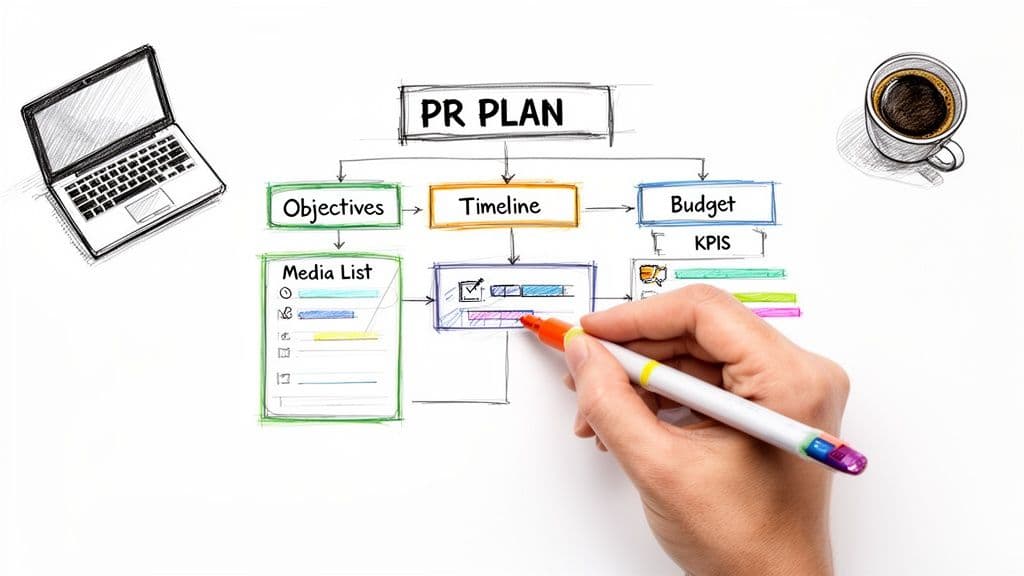
A good PR plan template is your strategic blueprint. It’s what takes you from blindly firing off emails into the ether to running a finely tuned machine that generates predictable media coverage. Honestly, it's the single biggest difference between hoping for a lucky break and executing a targeted campaign that actually hits your business goals.
Why Your Startup Absolutely Needs a PR Plan
Diving into media outreach without a strategy is one of the fastest ways to burn through time, money, and morale. Too many startups fall into the trap of thinking PR is just about "getting press." That mindset misses the entire point. The real goal is to intentionally and consistently shape how the world sees your company.
For any startup, a solid PR plan is the bedrock for building an online presence that gets results. It’s how you control those critical first impressions online and turn one-off announcements into a real engine for growth.
Getting Past the "Spray and Pray" Approach
Let's be real: the media world is noisy. In fact, tens of thousands of press releases are blasted out every single day, a number that's doubled since 2018. It’s a flood of information.
And the results of that flood? Data shows that a dismal 2-3% of press releases ever get picked up by the media. But here’s the kicker: precision targeting—the kind a good plan gives you—can boost those pickup rates by a whopping 67%.
That’s why a structured plan is a must. It forces you to make sure every single email, social media post, and announcement has a specific, measurable reason for existing.
A PR plan isn't just a document; it's a strategic filter. It forces you to ask 'why' before you ask 'who' to pitch, ensuring every action ties back to a core business objective.
This kind of clarity helps your team focus its limited resources on the stuff that actually moves the needle.
Tying PR Directly to Your Business Goals
One of the biggest mistakes I see is when PR is treated like its own little island, completely disconnected from the rest of the business. A proper PR plan forces you to bridge that gap and link your outreach directly to tangible business outcomes.
Suddenly, your PR efforts stop being about vanity metrics and start actively supporting your most important company milestones.
Think about how it connects:
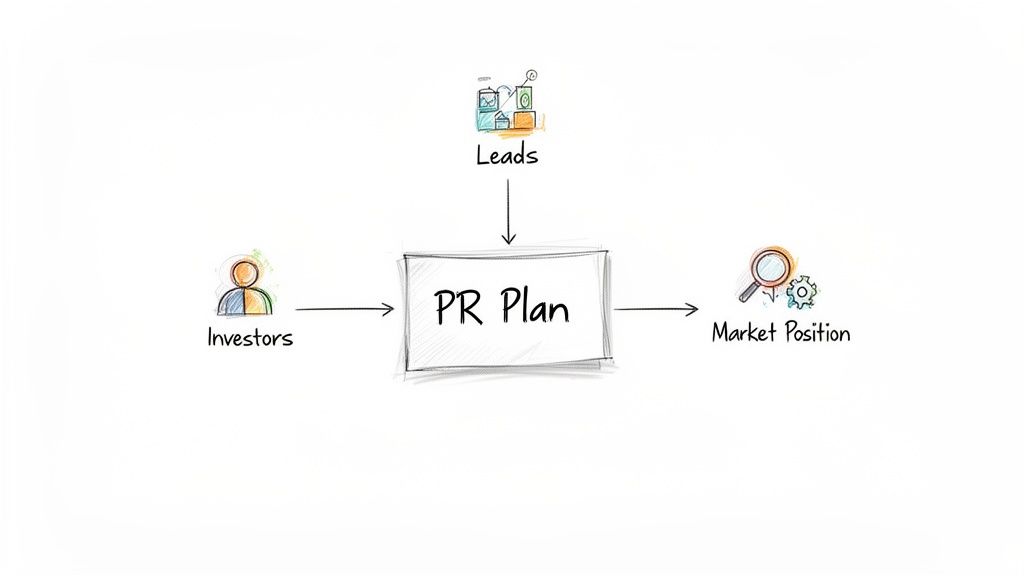
- Driving Leads: A well-placed feature in a top industry publication can send a wave of qualified traffic to your site, stocking your sales pipeline with people who are actually ready to talk.
- Boosting Investor Confidence: When you're constantly showing up in the right places with a positive story, it builds incredible credibility. That kind of social proof makes you a much more attractive bet when it's time to raise your next round.
- Winning the Talent War: In a tight hiring market, being known as an industry innovator or a fantastic place to work is a huge advantage. PR helps you build that reputation and attract the best people.
- Owning Your Market Position: Strategic PR is how you carve out your space in the market. It helps you stand out from the crowd and cements your brand as the expert in your field.
When you define these connections from the very beginning, your plan becomes a roadmap for growth, not just a list of tasks. This is what separates the startups that make a lasting impact from the ones that fizzle out.
To pull all this together, your PR plan needs a few core components. Think of these as the essential chapters in your strategic story.
Core Components of an Effective PR Plan
| Component | Purpose | Key Action |
|---|---|---|
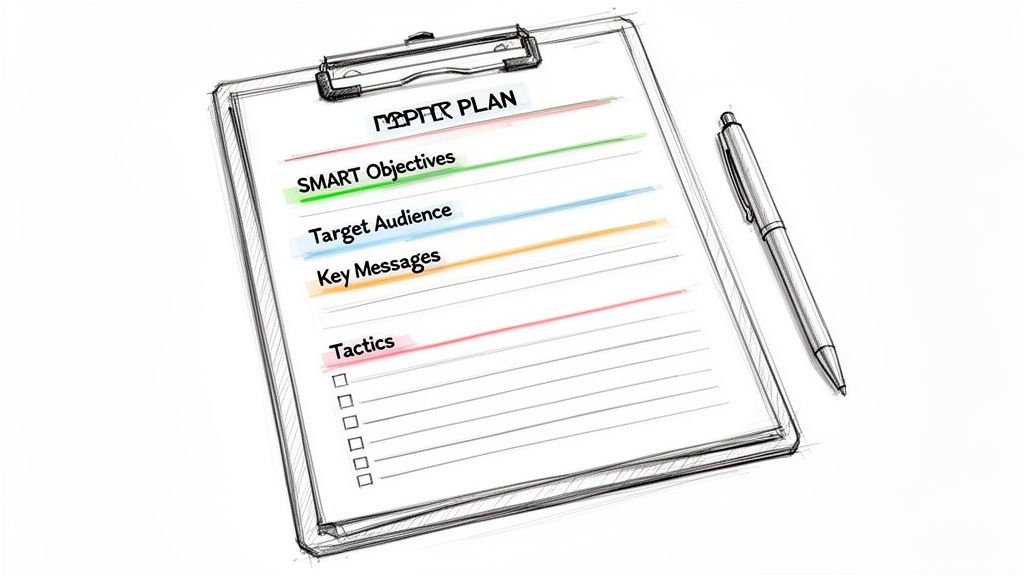
| Objectives & KPIs | Defines what "success" looks like and how you'll measure it. | Set SMART goals (e.g., "Secure 5 Tier-1 media placements in Q3"). |
| Target Audience & Media | Identifies who you need to reach and which journalists cover them. | Create detailed personas and a prioritized media list. |
| Key Messages | Crafts the core narrative and value propositions you want to communicate. | Develop a messaging matrix with talking points for different audiences. |
| Tactics & Activities | Outlines the specific actions you'll take (e.g., pitching, bylines). | Choose tactics that align directly with your objectives and target media. |
| Timeline & Calendar | Schedules all activities and ensures consistent momentum. | Build a content and outreach calendar mapping to key company milestones. |
| Budget & Resources | Allocates the necessary funds and personnel for execution. | Itemize costs for tools, freelancers, or wire services. |
Each of these sections builds on the last, creating a comprehensive and actionable strategy that will guide your team from planning to execution and, ultimately, to measurable results.
Alright, let’s transform this section. A great PR plan is more than just a document; it's the living, breathing playbook that turns your startup's story into front-page news. Here’s how you can take our template and make it your own.
Building Your PR Plan With Our Free Template
A strategy without a plan is just a daydream. This is where we get our hands dirty and turn those big-picture goals into a practical, day-to-day playbook using our downloadable PR plan template. Don't just see it as a document to fill out and forget—think of it as the strategic tool that will build real, measurable momentum for your brand.
Let's walk through each key section, not with generic advice, but with the kind of in-the-trenches experience that helps you make this template truly work for you.
Define Your Objectives With Precision
Your PR objectives are the "why" behind every single pitch and press release. A vague goal like "get more press" is basically useless because you can't measure it. Instead, your objectives have to be directly tied to tangible business outcomes.
This is where the SMART framework comes in handy—it gives your goals some actual teeth.
- Specific: Who, what, where, and why?
- Measurable: How will you track progress and know you've won?
- Achievable: Is this realistic with your current team and budget?
- Relevant: Does this actually help a bigger business objective?
- Time-bound: When does the clock run out on this goal?
Let’s see how this works in the real world. A fintech startup getting ready for its next funding round could set an objective like this: "Secure 3 feature articles in Tier 1 tech and finance publications (think TechCrunch, Forbes, and Axios Pro) within Q3 to build investor credibility ahead of our Series A fundraising outreach." Now that is a powerful objective. It's specific, measurable, clearly relevant to a core business need, and has a firm deadline.
Identify Your Target Audiences and Media
One of the biggest mistakes I see startups make is thinking their only audience is their customer. That's a huge blind spot. Your PR plan has to account for every group whose opinion can make or break your success.
Your audiences probably include a mix of these:
- Potential Customers: The people who will actually buy your product.
- Investors: Current and future VCs, angels, and financial backers.
- Potential Hires: The A-team talent you need to attract.
- Industry Peers: Other companies and key influencers in your space.
For each of these groups, you have to figure out the media they actually consume. Our PR plan template has a dedicated section for building out a targeted media list. And please, don't just list publications; dig deeper and find the specific journalists who cover your beat. A reporter who lives and breathes enterprise SaaS won't give your new consumer app the time of day, no matter how clever your pitch is.
Craft Your Core Key Messages
Your key messages are the foundation of your entire story. They’re the simple, memorable, and consistent ideas you want people to associate with your brand. These messages need to be woven into every single thing you do—from a funding announcement to a casual CEO interview.
For a B2B AI startup, a solid set of key messages might look like this:
- The Problem: "Manual data entry costs businesses over $500 billion annually in lost productivity."
- Our Solution: "Our platform automates 95% of this grunt work, freeing up teams to focus on actual growth."
- Our Differentiator: "Unlike other tools that require a complex, months-long setup, our AI integrates with existing workflows in under an hour."
See how that works? The messages are punchy, backed by data, and spell out the value proposition. They become the talking points your whole team can use, making sure everyone is telling the same compelling story. You can check out more examples in our guide on crafting a complete PR strategy to see how different messages fit together.
Your key messages are not a tagline. They are the strategic soundbites that answer the question, "So, what do you actually do and why should I care?" before it's even asked.
Choose Your PR Tactics Wisely
Now that you've got your objectives, audiences, and messages nailed down, you can finally pick the right tactics to bring the plan to life. This isn't about doing everything at once; it's about choosing the activities that will give you the biggest bang for your buck.
Here are a few core tactics and when they make the most sense:
- Earned Media Pitching: This is classic PR—pitching unique story ideas directly to journalists. It’s perfect for big news like product launches, funding rounds, or major company milestones. Success here is all about building real relationships and offering genuine news value, not just spamming reporters.
- Contributed Articles (Bylines): This involves writing thought leadership articles under your founder's or an executive's name for industry publications. It's an incredibly powerful way to build credibility and position your company as the expert in its field. The focus is less on your product and more on sharing valuable, hard-won insights.
- Speaking Opportunities: Getting your leaders on panels, at conferences, or on relevant podcasts is a fantastic way to reach niche, highly engaged audiences. This tactic is especially great for building the personal brands of your key people.
Your PR plan template should help you map these tactics to your timeline. For example, you might go heavy on earned media pitching for a launch in Q1, then pivot to a contributed article strategy in Q2 to build on that momentum. This kind of strategic sequencing is what turns a bunch of random activities into a cohesive, powerful PR campaign.
Mastering Modern Media Outreach
Alright, you’ve got your strategy mapped out. Now for the fun part: turning that plan into actual media coverage. This is where the art of the pitch comes in, and let's be clear—blasting out a generic press release and hoping for the best is a recipe for disappointment. Success in modern PR is about being surgical, personal, and respectful of a journalist's time.
The reality is, reporters are absolutely swamped. Think about it: a staggering 49% get hit with up to 50 pitches a week. That’s a firehose of requests, which is exactly why 89% of PR pros have ditched the old newswire approach in favor of personalized, one-to-one emails. The data backs this up, too. Targeted releases, especially when sharpened with AI-driven personalization, see a 67% better pickup rate. It just works.
Build a Media List That Actually Works
Your outreach is only ever as good as your contact list. Manually scraping websites for emails is a soul-crushing waste of time. A much smarter approach is to find the journalists who are not just on the right beat, but who are actively writing about your space right now.
This is where real-time media monitoring tools come in handy. You can instantly find reporters who just covered a competitor, wrote about your core technology, or explored the exact problem your startup is solving. That "recency" signal is pure gold. It tells you who’s already dialed in and looking for the next angle.
When building your list, zero in on these factors:
- Recent Coverage: Have they published something relevant in the last 30-60 days? This is a huge indicator of interest.
- Audience Fit: Is their readership made up of your target customers? Your future investors? Make sure it aligns.
- Outlet Tier: Know who you're pitching. Is it a top-tier national paper, a niche industry blog, or a local news outlet? Prioritize based on what you’re trying to achieve with this campaign.
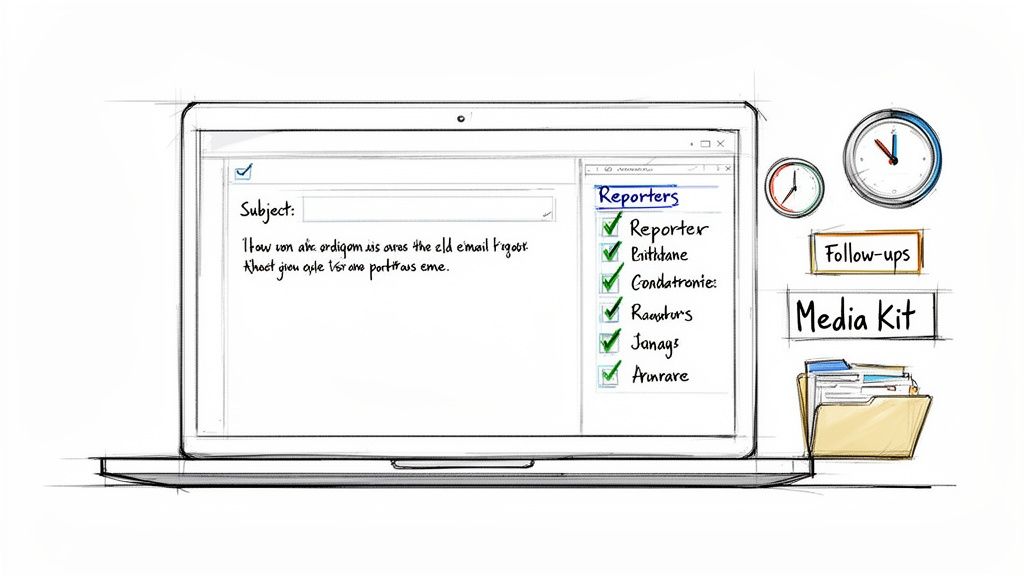
With the right tools, you can track everything in one place—opens, replies, and published stories. This moves your outreach from a guessing game to a data-driven strategy, showing you in real-time which angles and journalists are responding.
Craft a Pitch That Gets Opened
So you've got your list. Now for the moment of truth: the pitch. A journalist’s inbox is a battlefield, and your subject line is the only weapon you have to survive the first cut.
To really nail this, it pays to understand the latest cold email best practices. Keep your subject line short, intriguing, and honest. Ditch the clickbait and give them a real reason to open it.
A few formulas that consistently work for me:
- The Data Hook: "New Data: [Your Industry] Sees [Surprising Statistic]"
- The Exclusive: "Exclusive Story for [Publication Name]: [Your Big News]"
- The Relevant Tie-In: "Following your story on [Recent Article Topic]"
The first sentence of your email is just as crucial. Prove you've done your homework. Mention a recent article they wrote, a comment they made on social media, or a theme they cover often. This one small act of personalization immediately lifts you out of the pile of 90% of generic pitches that get deleted on sight. For a deeper dive, check out our guide on how to write pitches that journalists actually want to read.
A great pitch isn't about you; it's about their audience. Frame your story as a compelling piece of news for their readers, not just an announcement about your company.
Automate Follow-Ups (Without Being Annoying)
Let’s be honest: most pitches get ignored on the first send. It’s not personal. A polite follow-up is often what gets the conversation started. But trying to manually track who you need to nudge and when is a logistical nightmare.
This is where automated-yet-personalized follow-up sequences are a lifesaver. You can set up a short series of two or three emails that only go out if the journalist hasn't replied.
A simple three-touch sequence could look like this:
- Initial Pitch: The main email with your core story.
- Follow-Up 1 (3 days later): A gentle nudge. "Just wanted to resurface this in case it got buried. Is this a potential fit for your readers?"
- Follow-Up 2 (1 week later): Offer something new. "Circling back one last time. We also have our CEO available to comment on [related trend]."
The key is to keep it brief and professional. If you don’t hear back after a couple of tries, it’s time to move on. Using automation ensures you’re persistent without ever crossing the line into becoming a pest.
Build an Indispensable Media Kit
When a reporter is finally interested, they're almost always on a tight deadline. The last thing they want is to waste time hunting down your logo or digging for executive headshots. A well-organized, easy-to-access media kit makes their job a thousand times easier.
This should be a simple link—hosted on your website or in a cloud folder—that has everything they could possibly need.
What to Include in Your Media Kit:
- Company Overview: A clean, one-page "About Us" with key facts, your mission, and your founding story.
- Executive Bios & Headshots: High-resolution photos and brief bios for your key leaders.
- Logos & Brand Assets: Your company logo in various formats (PNG, SVG) with clear brand guidelines.
- Product Visuals: High-quality screenshots, GIFs, or short videos that show your product in action.
- Past Press: A list of links to previous coverage to establish credibility.
A solid media kit is a simple but incredibly effective tool. It removes friction from the reporting process and boosts your chances of getting the story published—accurately and on time.
Setting Your Budget and Measuring Real PR Success
Let’s be honest: proving that PR is actually working can feel like trying to catch smoke. How do you translate a fantastic feature in a top-tier publication into a number your CFO will actually care about? It's a common struggle, but it doesn't have to be.
This section is all about demystifying PR measurement and budgeting. My goal is to help you report on your efforts with the same data-driven confidence as your paid marketing colleagues.
First things first, you need a clear picture of where your money is going. For a startup, the budget can swing wildly depending on how you approach PR. It's absolutely crucial to weigh the costs against the potential outcomes to find the right fit for your current stage of growth.
PR Budget Models for Startups
I've seen startups succeed with all sorts of models, but they generally fall into one of three buckets. Here’s a quick breakdown to help you decide which path makes the most sense for you right now.
| Approach | Typical Monthly Cost (USD) | Key Benefits | Best For |
|---|---|---|---|
| DIY Tools | $100 - $500 | Low cost, high control, and direct learning experience. | Early-stage startups with more time than money, testing the waters of PR. |
| Freelancer | $2,000 - $6,000 | Industry expertise, established media contacts, and more flexibility than an agency. | Startups needing focused, project-based help for a launch or funding round. |
| Retainer Agency | $8,000 - $20,000+ | Full strategic support, a dedicated team, and extensive resources. | Well-funded scale-ups aiming for aggressive, sustained market presence. |
Once you’ve got a budget nailed down, the real work begins: proving its worth. This means we have to move past outdated and frankly misleading metrics like Advertising Value Equivalency (AVE). Modern PR is about tracking tangible impact on the business, not some made-up number based on theoretical ad costs.
Key Performance Indicators That Actually Matter
To show that your PR is succeeding, you need to track metrics that tie directly back to your business objectives. This is how you demonstrate ROI and justify putting more resources into your public relations efforts.
Here are the KPIs that should be on every PR pro’s dashboard:
- Media Mentions: This is your foundation. Tracking the volume and quality of your coverage is a direct measure of brand visibility. Are you popping up in Tier 1 publications that your customers read, or just obscure blogs? Quality over quantity always wins.
- Share of Voice (SoV): This is where things get competitive. SoV compares your media presence to that of your direct rivals. If your SoV is climbing, it's a clear sign you’re successfully capturing more of the conversation in your industry.
- Sentiment Analysis: It’s not just about getting mentioned; it’s about how you’re being talked about. Was the coverage positive, neutral, or negative? Consistently positive sentiment is one of the strongest indicators of a healthy brand reputation.
- Website Referral Traffic: This one is non-negotiable. Using your web analytics, you can see exactly how much traffic each article sends to your site. A feature that drives hundreds of qualified visitors is an undeniable win you can take straight to the leadership team.
- Backlinks and Domain Authority: Don't forget the long-term SEO value. High-quality backlinks from reputable news sites are like gold for your search rankings. They directly boost your website's authority, helping you rank higher for important keywords long after the initial buzz has faded.
The ultimate goal is to connect a specific PR activity, like a product launch campaign, to a tangible business outcome, like a measurable spike in demo requests or trial sign-ups. That’s how you prove ROI.
Building a Simple and Effective PR Dashboard
You don’t need an overly complicated system to track your success. A simple spreadsheet or a dedicated tool can create a surprisingly powerful dashboard. The real key is to consistently map your PR activities to the KPIs they influence.
For a more comprehensive look at what to include and how to structure it, our guide on effective public relations reporting offers some great, detailed insights.
For instance, when you issue a press release, you're not just crossing your fingers for pickups; you're investing in a channel that delivers. On average, press releases can generate a compelling ROI of 100-175% over 90 days. This is why 25% of businesses issue over 10 of them annually to capitalize on this. A data-driven pr plan template focuses on channels journalists trust, and a staggering 89% of them view press releases as the most credible source of information from a company. You can find more insights on the state of press release distribution in 2025.
By focusing on these modern, tangible metrics, your PR reporting becomes a powerful strategic tool. It transforms public relations from a "nice-to-have" expense into a measurable growth engine, earning it a permanent and respected seat at the strategy table.
Your First 90 Days From Plan to Published
A brilliant strategy document is just a piece of paper until you put it into practice. Theory is great, but a timeline makes it real. Let’s walk through a practical 90-day calendar to bring your PR plan template to life, turning your goals into actual media coverage in just one quarter.
Think of the next three months as a focused sprint designed to build momentum. Each month gets its own theme and a set of core tasks that build on the last. This isn't about trying to boil the ocean; it's about sequencing your work for maximum impact and learning as you go.
This simple visual breaks down the core stages, moving you from planning to launch and, finally, to measurement.
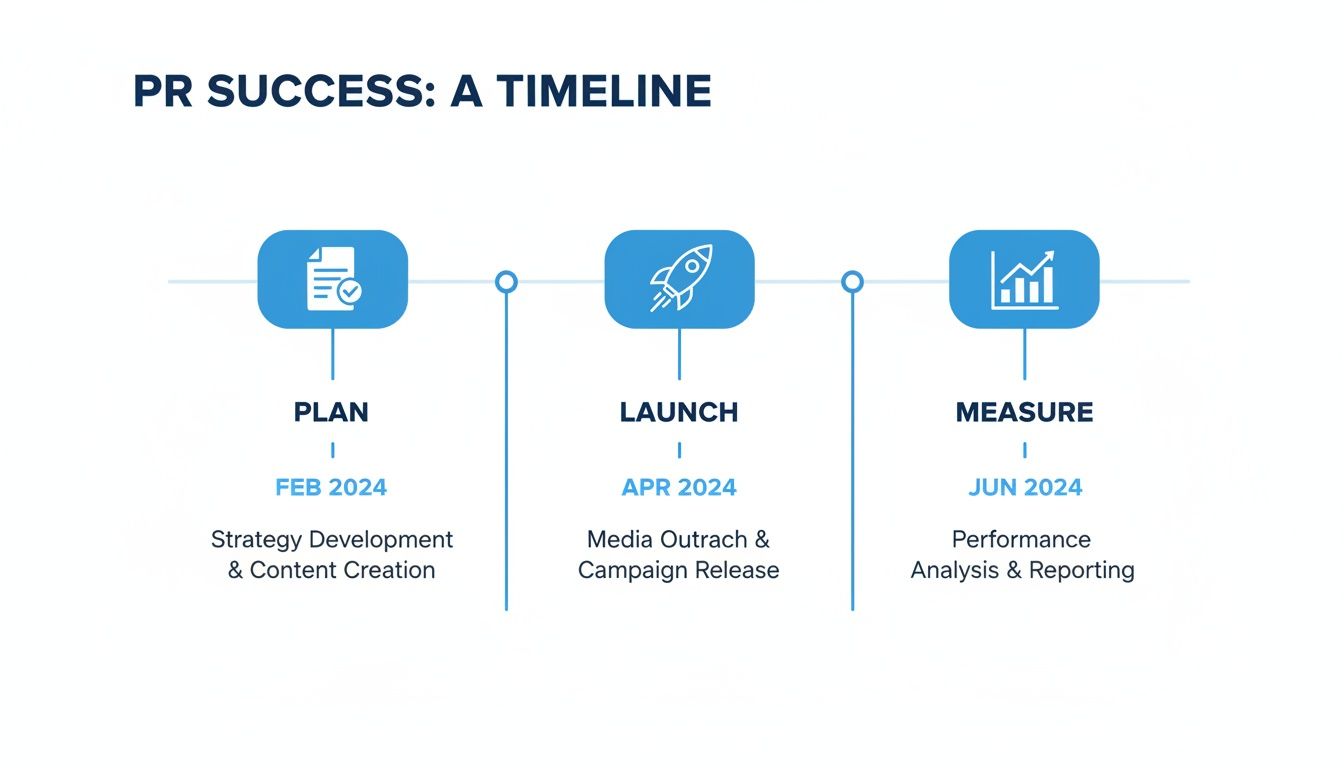
Following this flow ensures your execution is grounded in solid strategy, and that your next moves are informed by what actually works.
Month 1: The Foundation
Your first 30 days are all about preparation. This is where you finalize the strategy and pull together all the assets you'll need for outreach. I’ve seen so many teams rush this part, and it almost always leads to sloppy, ineffective pitching down the line. Get your foundation right, and the next two months will go infinitely smoother.
Here’s what to focus on this month:
- Finalize the PR Plan: Lock in your objectives, key messages, and target audiences. Get your entire team on the same page with the core strategy.
- Build Your Media Kit: Pull together a professional, easy-to-access media kit. It should include high-resolution logos, executive headshots and bios, a company one-pager, and any relevant product images or videos.
- Create Your Initial Media List: Based on your plan, start building a targeted list of 25-50 journalists and publications. Your best bet is to prioritize reporters who have recently covered your industry or even your direct competitors.
By the end of Month 1, you should have a signed-off plan and all your core materials ready. You haven't sent a single pitch yet, but you’re fully armed and ready for what comes next.
Month 2: The Launch
With all your prep work done, it's time to get your first outreach campaign off the ground. This is where you start talking to journalists and putting your story out there. The trick is to start with a single, focused, newsworthy angle—not trying to tell your entire company story at once.
Your to-do list for this month includes:
- Launch Your First Campaign: Pick a compelling story. This could be a new feature launch, a significant company milestone, or a unique piece of data you've collected that you can build a thought leadership story around.
- Manage Responses and Follow-Ups: As you send out personalized pitches, you have to stay on top of responses. Answer questions quickly, handle requests for interviews, and be ready to provide more info at a moment's notice.
- Secure Your First Wins: The big goal here is to land that first interview, feature, or mention. Even a small placement in a respected industry blog is a huge victory that starts building credibility.
Don't get discouraged if you don't land a feature in TechCrunch right out of the gate. The real goal of Month 2 is to start conversations, build relationships, and get that first piece of coverage on the board.
Month 3: The Analysis and Pivot
The last month of your 90-day sprint is all about learning and iterating. You now have real data from your first campaign, so you can analyze what worked, what fell flat, and how to sharpen your approach going forward.
This month, you’ll be focused on:
- Analyze Campaign Results: Dig into your outreach data. Which subject lines had the best open rates? Which story angles got the most replies? Use this info to understand what actually resonates with journalists in your space.
- Nurture New Relationships: Follow up with any reporters who showed interest, even if they didn't end up covering your story. A simple "thank you" and an offer to be a resource for them in the future goes a long way.
- Plan Your Next Story: Based on your analysis, start sketching out your next campaign. Now you can approach it with valuable insights that will make your next round of outreach even more effective.
Answering Your Top PR Plan Questions
Putting together your first real PR plan is a huge step, but it often brings up more questions than answers. Even with a solid template in hand, the "what ifs" and "how oftens" can start to pile up. I get it. Let's walk through some of the most common questions I hear from startups and marketing teams trying to get their PR off the ground.
How Often Should I Update My PR Plan?
Think of your PR plan as a living, breathing document—not something you write once and file away. As a general rule, you should give it a proper, in-depth review every quarter. That’s the right rhythm to make sure your plan still lines up with your company's latest business goals, product updates, and whatever your competitors are up to.
Of course, some things can’t wait for a quarterly review. You'll want to update your plan immediately if something big happens, like:
- You just closed a new round of funding.
- A new C-suite leader joins the team.
- You're making a major shift in your product or business strategy.
While your big-picture goals might hold steady for six months or even a year, your day-to-day tactics, media lists, and story ideas need to be much more flexible.
What's the Biggest Mistake Startups Make in PR?
Hands down, the most common pitfall is trying to be everywhere at once. So many startups fall into the trap of creating a plan that targets everyone—from top-tier reporters at The Wall Street Journal to hyper-niche industry bloggers, all at the same time. This "spray and pray" approach is a recipe for getting ignored.
Your first PR wins will come from focus, not volume. Pick one or two core audiences and a small, curated list of publications they actually read. That’s where you can make a real splash.
Securing one great feature in a publication your ideal customers trust is worth more than sending 500 generic pitches that go straight to the trash folder.
Can I Really Do PR Myself Without an Agency?
Yes, you absolutely can, especially in the early days. A good PR plan template gives you the structure you need to get started. You can begin by doing your own journalist research, building relationships organically, and tracking your outreach in a simple spreadsheet.
But let's be honest—that DIY approach gets overwhelming fast. As your efforts grow, PR platforms can be a game-changer. They offer the kind of automation and media intelligence that was once only available to big agencies, but without the hefty price tag and long-term contracts. It’s the perfect way to run a professional-level campaign right from your own office.
How Long Until I See Real Results From PR?
PR is a marathon, not a sprint. That said, you should start seeing positive signs within the first 90 days. "Results" don't always mean a feature story right out of the gate. Early wins can be a journalist emailing you back with interest, getting your first introductory call on the calendar, or even just seeing reporters you're targeting mention your company on social media.
Landing that first official media placement can take anywhere from a few weeks to a few months. It all depends on how newsworthy your story is, how interested the journalist is, and what their publication's schedule looks like. The secret is consistency. Keep executing your plan patiently and persistently, and the results will follow.
Ready to stop guessing and start getting guaranteed media coverage? PressBeat is the AI-powered platform that turns your PR plan into predictable press. We handle the research, pitching, and follow-ups so you can focus on building relationships and telling your story.
Learn more and book a demo at https://pressbeat.io.