
How to Send a Media Release That Gets Real Coverage
January 6, 2026
Before you even think about hitting 'send,' you need a story. A real story—one that a journalist will actually want to read. This starts with a headline that grabs them, a first paragraph that delivers the news instantly, and a body that respects their incredibly limited time.
The sweet spot? A tight, 300-500 word document that screams value and makes it dead simple to find your photos and videos.
Crafting a Release That Actually Gets Read
Let's be honest, the old-school, formal press release templates are gathering dust for a reason. Today, a media release is a sharp, strategic tool built for one thing: to get noticed, understood, and acted upon in seconds.
With tens of thousands of releases flooding the internet daily, the average pickup rate is a brutal 2-3%. To beat those odds, you have to build your release for a journalist’s overflowing inbox, not for a corporate archive.
This isn't just about announcing your news. It’s about making a reporter’s job easier by handing them a complete, compelling story package.
Hitting All the Right Notes
A great media release isn't a wall of text; it's a carefully structured narrative. Each piece has a job to do, guiding the reader from the high-level hook down to the essential details.
To help you get it right every time, here’s a breakdown of the key elements that make a media release truly effective.
Key Elements of a High-Impact Media Release
| Component | Purpose | Pro Tip |
|---|---|---|
| Headline | Grab attention instantly. This is your single best shot at getting a click. | Use a strong, active verb and focus on the most newsworthy angle. Keep it under 100 characters. |
| Lead Paragraph | Deliver the core news upfront. This should summarize the entire story. | Answer the five Ws (Who, What, When, Where, Why) in the first 1-2 sentences. No fluff. |
| Body Paragraphs | Provide supporting details, context, and evidence for your claims. | Keep paragraphs short (2-3 sentences). Use data, stats, and real-world impact to build credibility. |
| Quotes | Add a human voice and unique perspective to the story. | Attribute quotes to key people (CEO, expert). Make them sound authentic and insightful, not like corporate-speak. |
| Boilerplate | Offer a quick, standardized overview of your company. | This is your "About Us" section. Keep it concise and consistent across all communications. |
| Contact Info | Make it easy for a journalist to reach a real person for follow-up. | Include a name, email, and direct phone number. Avoid generic "info@" email addresses. |
Getting these components right transforms your announcement from a simple pitch into a valuable resource for journalists.
Brevity is Your Best Friend
Don't just take my word for it. Recent data shows that 74% of journalists still prefer receiving news via media releases. But the key is that they value brevity above all else.
Sticking to a word count between 300 and 500 words is non-negotiable. It’s not just about saving them time; it forces you to be disciplined, cut the jargon, and focus only on what truly matters. This discipline is what dramatically boosts your chances of actually being read.
You can see these principles in action by checking out this sample news release format.
A great media release doesn't just inform; it empowers. By providing a concise, well-structured story with easy-to-access assets, you transform your announcement from a pitch into a resource, making you a trusted source for future stories.
And when you’re putting together your media kit, don't forget the power of professional visuals. If you need to upgrade your team's photos, consider using a free professional headshot generator to make sure everyone looks their best.
Ultimately, your ability to deliver a sharp, memorable story in a compact package is what will separate you from the noise and earn you that coveted media coverage.
Finding the Right Journalists and Distribution Channels
You could write the most compelling media release in the world, but if it lands in the wrong inbox, it’s just digital noise. The old "spray and pray" method—blasting a generic email to a massive, impersonal list—is a surefire way to get ignored, or worse, blacklisted.
Today, success is all about precision, not volume. Your job is to be a matchmaker, connecting your story with the specific journalists who are actively looking for it. It's about finding the people who will genuinely care about what you have to say.
Before you even think about building a list, you need to be brutally honest with yourself: is this story actually newsworthy? This simple flowchart is a great gut check.
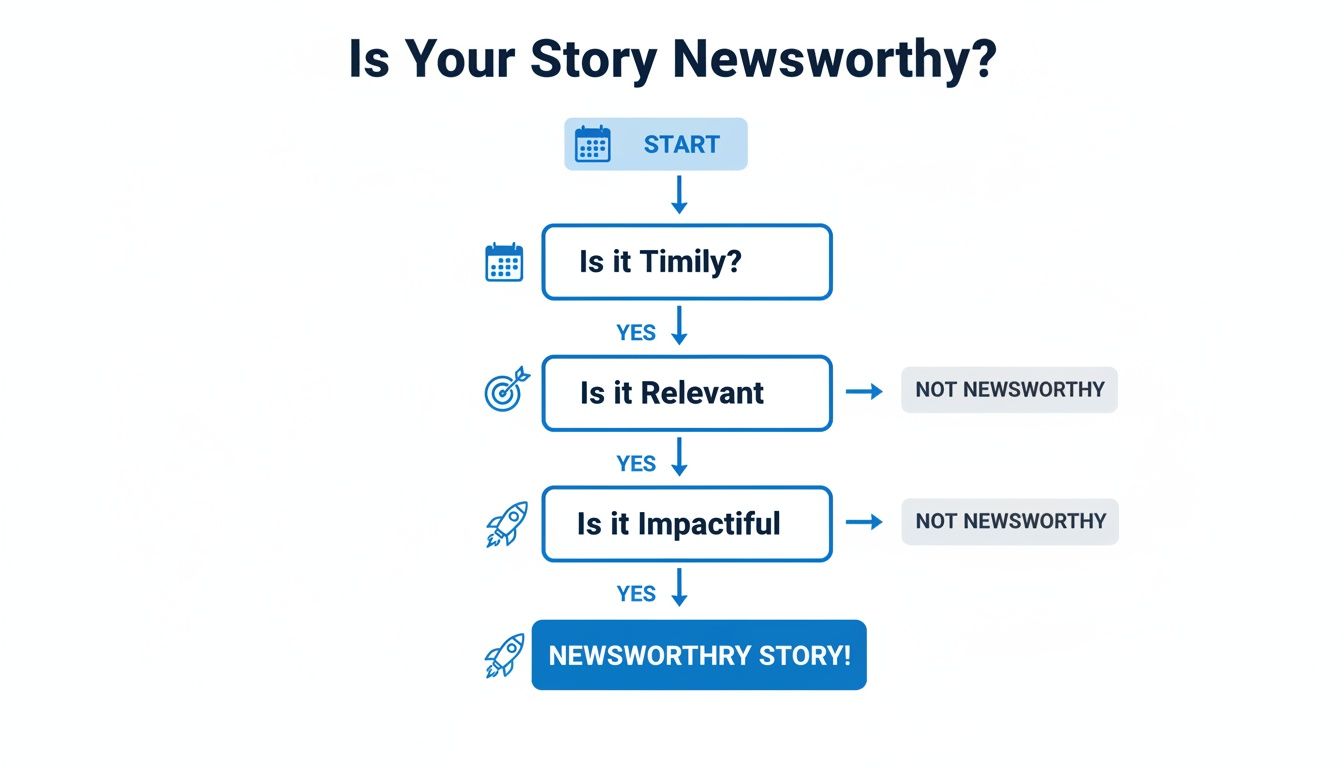
As you can see, the path to coverage is clear. Your story needs to be timely, relevant to that journalist's audience, and impactful enough to cut through the clutter. If you can’t check all three boxes, it’s probably best to head back to the drawing board.
Building Your Targeted Media List
Think of your media list as the foundation of your entire outreach campaign. A small, hyper-relevant list of ten carefully chosen journalists will always beat a generic list of one hundred. Always.
Start by digging into who covers your specific industry or niche. Look for reporters who have written about your competitors, similar technologies, or market trends that tie into your announcement. This initial homework is non-negotiable; it shows you respect their time and are familiar with their work.
Here are a few practical ways to find the right people:
- Social & Search Sleuthing: Use platforms like X (formerly Twitter) and LinkedIn. Search for keywords related to your industry and see which journalists are part of the conversation. Many are very active and share their latest articles.
- Competitor Recon: Who covered your competitors’ latest product launch or funding round? Those reporters are already familiar with your space and are prime targets.
- Media Databases: Tools like Muck Rack or Cision can be a good starting point, but never trust them blindly. Always manually verify that a journalist is still covering the beat you're pitching.
Choosing the Right Distribution Channel
Once you’ve got your list, how are you actually going to get your media release into their hands? Each channel serves a different purpose, and the right choice really depends on your goals, your budget, and the story itself.
The global PR industry is projected to hit $112.98 billion in 2025, and while the tools have changed, the media release remains a cornerstone. Traditional newswires syndicate your story for broad visibility, but direct, personalized outreach often drives much more meaningful results. Modern platforms like PressBeat offer a hybrid approach, automating personalized pitches to high-authority outlets while giving you full transparency.
Below is a quick breakdown of the most common options to help you decide.
Media Release Distribution Channel Comparison
This table offers a comparative look at the primary distribution methods, helping you align your choice with your campaign goals and budget.
| Channel | Best For | Typical Cost | Key Advantage |
|---|---|---|---|
| Direct Email Pitch | Highly targeted stories for specific, high-value journalists. | Low (Time-intensive) | Maximum personalization and relationship-building. |
| Newswire Service | Broad announcements, financial news, or reaching a massive audience. | High ($400 - $3,000+) | Wide syndication and credibility with search engines. |
| AI Pitching Platform | Scalable, personalized outreach with guaranteed results. | Moderate (Subscription) | Combines precision targeting with automation and analytics. |
Ultimately, there's no single "best" channel. The most effective strategies often involve a mix of approaches. For example, you might use a newswire for a major funding announcement to get broad syndication while also sending highly personalized pitches to your top-tier media contacts to secure exclusive interviews.
For a deeper dive into making that initial connection, our guide on how to contact journalists lays out actionable steps and templates. Just remember, your choice of distribution should directly support your goal of earning meaningful coverage, not just sending another email into the void.
Mastering Your Pitch Email and Follow-Up Strategy
Your media release holds the story, but the pitch email is your handshake. It's that quick, sharp introduction that decides if a journalist even bothers to open your release or just sends it straight to the trash. Getting this right isn't about fancy graphics; it's about showing respect, being crystal clear, and making their job a little easier.
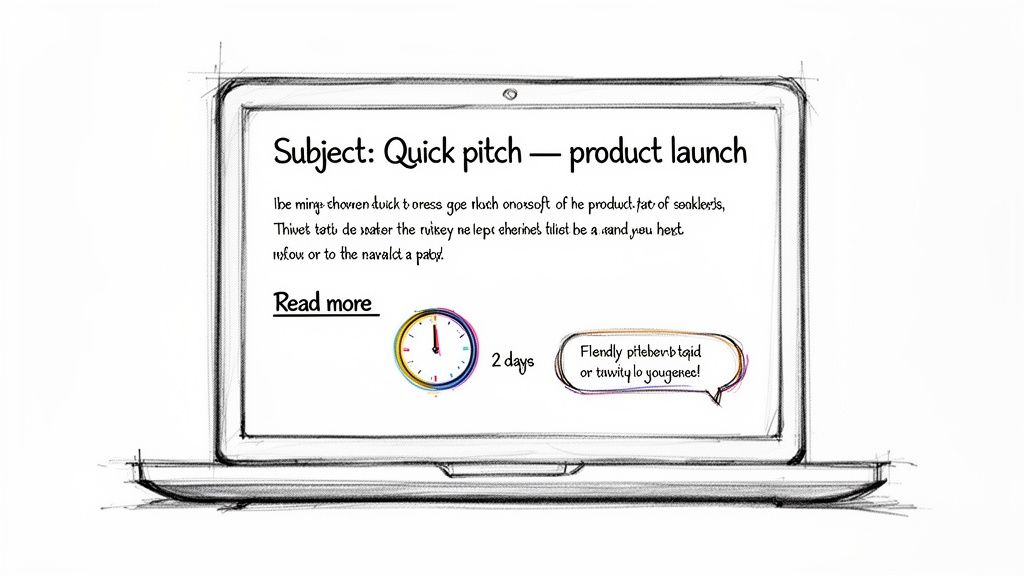
A sloppy pitch can kill a great story before it even has a chance. The real goal is to frame your news so well that the reporter can't help but want to know more. This all starts with a subject line that gets their attention without sounding like an ad.
Crafting the Perfect Pitch Email
Think fast. Your email needs to be scannable and get straight to the point because a journalist might only give it five seconds of their time. Every single word has to count.
Kick things off with a personalized greeting and one sentence that proves you know who they are and what they write about. A quick reference to a recent article or their specific beat shows you've done your homework and aren't just blasting out a generic email to a purchased list.
Then, hit them with the hook of your story in one or two punchy sentences.
- Bad Example: "We are thrilled to announce the launch of our new software."
- Good Example: "Following up on your coverage of AI in HR, I have news of a new platform that automates employee onboarding in under 10 minutes—a process that typically takes companies days."
See the difference? The good example ties your news directly to their work, making it immediately relevant. Once you've hooked them, paste the full text of your media release below your email signature. Don't use attachments. They often get flagged by spam filters and are a security headache for many newsrooms. If you're looking for inspiration, checking out a good media pitch email template can give you some solid ideas.
Your email isn't the story; it's the movie trailer for the story. Keep it short, sharp, and personal to earn their attention.
Navigating the Follow-Up with Grace
Knowing how to send a release is one thing, but knowing when and how to follow up is a true art. It's a delicate balance that requires a lot of patience. Coming on too strong or being pushy is the fastest way to burn a bridge with a journalist.
The golden rule here is to wait at least two to three business days before you even think about following up. This gives them a reasonable amount of time to get through their inbox without feeling like you're breathing down their neck.
When you do follow up, your email should be even shorter than your first one. A simple, polite nudge is all it takes.
- Keep the same subject line, just let your email client add "Re:"
- Restate your hook in a single sentence.
- Politely ask if they had a chance to consider your story.
- Wrap up by offering more details or an interview with an expert.
If you don't get a reply after one follow-up, it’s usually best to let it go. Pestering them beyond this point crosses the line into annoying and can damage your reputation for any future pitches. To really dig into making sure your emails are landing in the right place, this comprehensive guide on email deliverability is a lifesaver. It’s essential to make sure your carefully crafted pitches are actually being seen.
When to Send Your Media Release (and How to Use an Embargo)
Knowing what to send in a media release is only half the battle. Knowing when to send it can be the difference between making headlines and getting ignored. Timing is everything, and a little strategy here goes a long, long way.
Think about it: sending your big news on a Friday afternoon is practically a death sentence. It’s almost guaranteed to get buried in the weekend scramble or completely missed as reporters are trying to clock out. You need to hit their inbox when they're actually hunting for stories.
Finding the Sweet Spot in a Journalist's Day
So, when is that magic window? While there’s no single answer that works 100% of the time, years of experience in the trenches have shown us some clear patterns.
Most journalists are planning out their day first thing in the morning. If you send your release before they’ve even had their coffee, it’ll just get lost in the overnight email avalanche. Send it too late in the afternoon, and they’ve already locked in their stories for the day.
Here’s what generally works best:
- Best Days: Tuesday, Wednesday, and Thursday are your prime pitching days. Mondays are a whirlwind of weekly planning meetings, and on Fridays, everyone's focus is already on the weekend.
- Best Times: Aim for that mid-morning slot between 10:00 AM and 12:00 PM. There's a second good window that opens up right after lunch, around 1:00 PM to 2:00 PM.
And please, pay attention to time zones. If you’re in California pitching a writer in New York, make sure your send time hits their local morning window, not yours. It’s a small detail that shows you’ve done your homework.
Getting the timing right isn't about trying to trick an algorithm. It's about respecting a journalist's time and workflow. When you send your story at a moment they're most likely to be receptive, you show you're a pro, and that immediately boosts your chances.
The Embargo: A High-Stakes Tool
An embargo is essentially a "gentleman's agreement" with a journalist. You're giving them the news early with the explicit request that they don't publish it until a specific date and time. It's a powerful tool, but it's built entirely on trust and should be used with extreme caution.
So, why would you use one? An embargo gives key reporters a head start, allowing them to dig in and prepare a much more detailed, thoughtful story for a big, coordinated launch. This is perfect for things like a major product reveal, a company merger, or a sensitive financial announcement. A tech company, for example, might share details of its new phone with a few trusted journalists under embargo until the moment the CEO unveils it on stage.
If you decide to use one, you have to be crystal clear. State it right in your email subject line and again at the very top of your release.
- Subject Line Example: EMBARGOED: [Your Company] Secures $50M in Funding for AI Health Tech
- Release Header: EMBARGOED: FOR IMMEDIATE RELEASE ON THURSDAY, OCTOBER 24, 2024, AT 9:00 AM ET
Just remember, playing the embargo card is a big deal. It tells a reporter your news is important, but if they break it, that relationship is likely torched forever. Save it for truly massive announcements where a coordinated, impactful launch is non-negotiable.
So, your media release is out in the wild. Great. But the job isn't done—in fact, the most important part is just beginning. Getting a story placed feels like a win, but if you can't connect that win to actual business results, it’s just a vanity metric. It's time to prove the real value of your work.
You have to shift your focus from simply counting the number of articles to measuring the quality and impact of that coverage. Let’s be real: a single, well-placed feature in a major industry publication is worth infinitely more than a hundred mentions on no-name blogs. This is how you turn PR from a line item expense into a growth driver.
Ditching Vanity Metrics for Real-World Impact
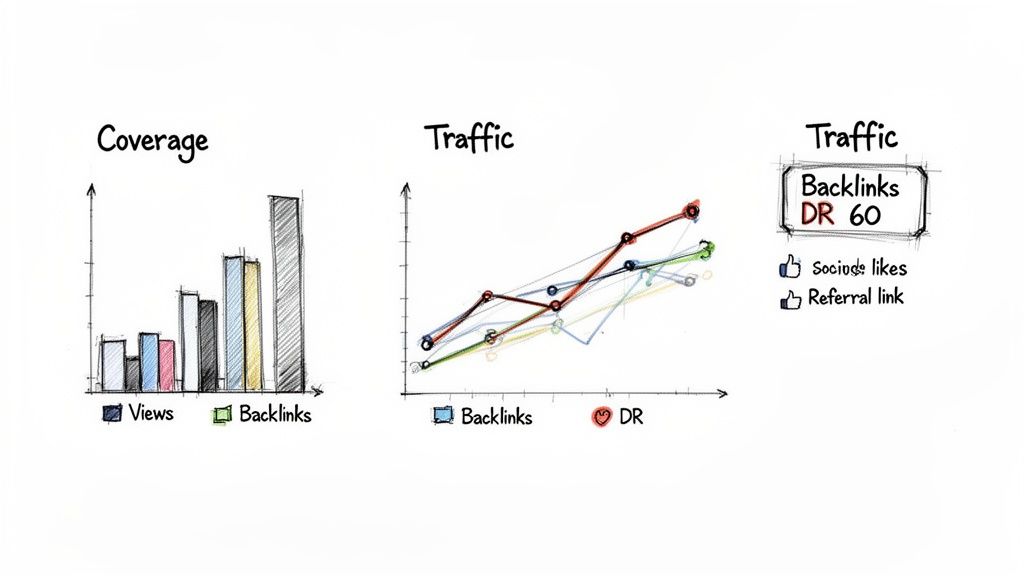
To get a true sense of your campaign's performance, you need a mix of metrics that show immediate buzz and long-term value. Forget about old-school "media impressions" and start tracking what actually moves the needle.
Here’s what I focus on:
- Outlet Domain Rating (DR): This is a core SEO metric from tools like Ahrefs that tells you how authoritative a website is. A backlink from a DR 70+ outlet is gold—it sends a powerful signal to Google that your site is credible.
- Referral Traffic: Jump into your website analytics. How many people are clicking through from the article to your site? This is a direct line from your PR efforts to potential new customers.
- Backlink Quality: Did the publication actually link to your website? And was it a "dofollow" link? Dofollow links pass SEO authority, directly boosting your site's ranking potential over time.
- Social Media Engagement: Look at the shares, likes, and comments on the publication's social posts about your story, as well as on your own channels. This is a great indicator of whether your message is truly resonating.
The Right Tools for the Job
Trying to track every mention by hand is a recipe for a headache. Modern PR tools can put this whole process on autopilot, giving you a clear, real-time dashboard of your campaign's health. For example, a platform like PressBeat can show you everything from email open rates to confirmed placements, so you're never guessing about your progress.
The numbers don't lie. The global Press Release Distribution Software market is a $4.1 billion industry, but a staggering 97-98% of releases sent through wires go nowhere. That’s because mass-blasting doesn't work. We know that targeted, personalized pitches boost pickup rates by 67%. Tools that help you track what’s working allow you to double down on effective strategies. For a deeper dive into these numbers, you can read the full research about the distribution software market.
Measuring PR success isn't just about counting clips. It's about understanding how earned media drives tangible business outcomes like website traffic, lead generation, and improved search engine rankings. When you can connect a media placement to a spike in sign-ups, you've proven real ROI.
Your Media Release Questions, Answered
Even the most seasoned pros have questions when it's time to send out a new announcement. Getting the small details right isn't just about ticking boxes; it's about building your reputation and making a journalist's life easier, which dramatically increases your chances of getting noticed.
Let's clear up a few of the most common sticking points I see all the time.
Media Release vs. Newswire: What's the Real Difference?
This is a big one, and the confusion is understandable.
Think of it this way: the media release is the actual story you've written. It's the announcement, the product. A newswire service is just one possible delivery truck for that product. You pay them to blast your release out to a massive, syndicated network.
While newswires have their place for certain things (like SEC filings or major corporate announcements), they're often overkill and lack the personal connection that lands you a feature story. A direct, personalized pitch to a hand-picked list of journalists almost always yields better, more meaningful coverage.
I Sent My Pitch. How Long Should I Wait to Follow Up?
Give it a minute. Seriously. Journalists are swimming in hundreds of pitches a day. Your amazing story is just one of many emails they're trying to get through.
The professional courtesy is to wait at least 2-3 business days before you even think about following up.
A follow-up isn't a demand. It's a gentle nudge. Keep it short, reference the original email, and politely ask if they had a chance to see it. Your goal is to be a helpful resource, not another name clogging their inbox.
And whatever you do, don't pick up the phone unless you have a genuine, pre-existing relationship. A cold call follow-up is a surefire way to get your email address blacklisted.
Can I Just Attach My Release and Photos to the Email?
Please don't. In fact, this is one of the biggest rookie mistakes you can make.
First, many newsrooms have aggressive spam filters that automatically block or quarantine emails with attachments from unknown senders. Your pitch might never even arrive. Second, even if it does, you're making a busy reporter download files just to see what you're pitching. It's an unnecessary hassle.
Here’s the right way to do it:
- Paste the full text of your media release into the body of your email, just below your personal pitch and signature.
- Link to a media kit. Create a folder in Google Drive or Dropbox with your high-res photos, logos, videos, and any other assets. Then, just include a single, clean link to that folder.
This approach is safer, more professional, and gives reporters everything they need in a single click. It shows you know what you're doing and respect their time.
Ready to get your story in front of the right journalists without the guesswork? PressBeat uses AI to automate personalized pitches to high-authority outlets, guaranteeing you get the coverage you deserve. See how it works at https://pressbeat.io.