
Plain Text Emails vs HTML Which Wins for Journalist Outreach
December 12, 2025

The core of the matter is this: plain text emails are all about deliverability and authenticity, while HTML emails are built for branding and visual punch. When it comes to press outreach, the personal, one-to-one feel you get from a plain text email consistently wins, making sure your pitch actually lands in a journalist's main inbox, not their spam or promotions tab.
Understanding the Great Email Debate
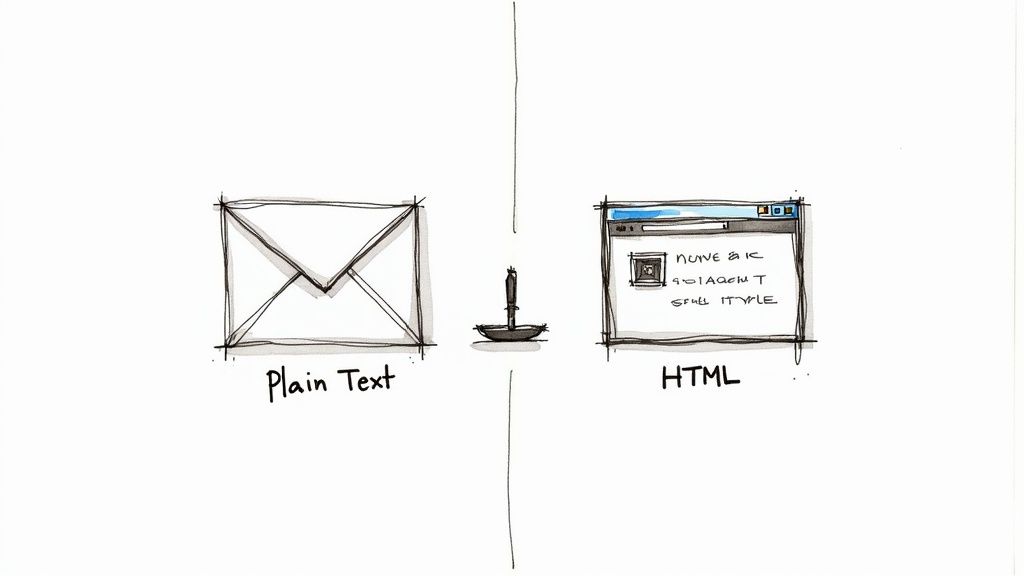
Deciding between plain text and HTML isn't just about looks. It's a strategic move that directly affects whether your press pitch gets seen, opened, and seriously considered. The format you choose sends a clear signal to both email filters and the very journalists you’re trying to connect with.
An HTML (Hypertext Markup Language) email is what you probably picture when you think of marketing messages. It’s built with code that supports:
- Visual Elements: Think logos, images, and custom brand colors.
- Styled Text: Different fonts, sizes, and formatting like bold or italics.
- Interactive Components: Nicely formatted hyperlinks and polished call-to-action (CTA) buttons.
On the flip side, a plain text email is exactly what it sounds like—a message with zero formatting. It’s just simple text, looking exactly like a personal note sent from one person to another. This bare-bones approach has some serious upsides in the PR world.
For PR pros, authenticity is currency. A plain text email feels like a direct, personal conversation. A heavily designed HTML email, on the other hand, can instantly feel like a mass marketing blast, often causing it to be deleted on sight.
Key Differences in Plain Text vs HTML for Press Pitches
Grasping the core distinctions between these two formats is crucial for building an outreach strategy that actually works. What you're trying to achieve, who you're talking to, and the story you're telling will all influence your choice.
Here's a quick breakdown of the strategic trade-offs when you're pitching the press.
| Feature | Plain Text Email | HTML Email |
|---|---|---|
| Primary Goal | Deliverability & Personal Connection | Branding & Visual Engagement |
| Spam Filter Risk | Low (fewer trigger elements) | High (images, complex code, tracking) |
| Journalist Perception | Personal, direct, authentic | Promotional, corporate, automated |
| Tracking Ability | Limited (link clicks only) | Advanced (open rates, click maps) |
| Best Use Case | Initial cold pitches, personal follow-ups | Press releases, newsletters, event invites |
This table gives you the high-level view, but the nuances are what really matter.
For a more technical look at why messages get filtered and the common mistakes people make, you can dig deeper into the plain text vs HTML email debate. While HTML definitely has its moments, the foundation of successful journalist outreach is building real relationships. That journey almost always starts with an email that feels genuine.
Why Deliverability Is King in Journalist Outreach
In PR, you can craft the most compelling, newsworthy pitch ever written, but it's completely worthless if it never lands in a journalist's inbox. This is where email deliverability isn't just a metric—it's everything. It’s the gatekeeper that decides if your pitch gets a fair shot or gets banished to the digital wastelands of spam and promotions folders.
The entire plain text emails vs HTML debate really boils down to this single, critical issue. While HTML emails can look polished and professional, their very structure often works against them. Email providers like Gmail and Outlook use incredibly sophisticated algorithms to shield users from spam, and these systems are naturally wary of the complex elements common in HTML.
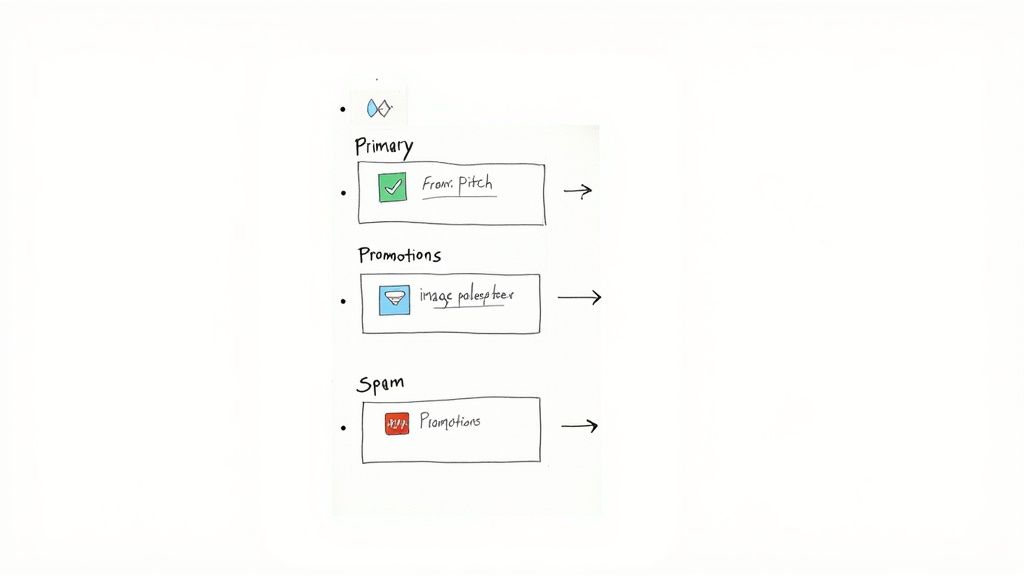
How HTML Triggers Spam Filters
Think of an HTML email as a package with a lot of extra wrapping, tape, and ribbons. Spam filters have to inspect every single layer, and each one increases the chance of something looking suspicious. This is precisely where plain text gets its edge.
Spam filters often raise red flags for these common HTML features:
- Embedded Images and Trackers: Those tiny tracking pixels that measure open rates? They’re a hallmark of marketing emails and a fast track to the Promotions tab, not the primary inbox.
- Complex Code: Messy or bloated HTML code is a major red flag. Spam filters often see it as a potential security risk or, at best, a sign of a mass-marketing blast.
- Custom Fonts and Styling: They might look good, but custom styles add extra code that can inflate your email's spam score, directly harming its chances of getting delivered.
- Promotional Language: Button text like "Buy Now" or "Limited Time Offer" is practically a neon sign for spam filters, immediately signaling that your pitch is a sales message.
Plain text emails? They have none of that baggage. Their simplicity makes them look like a personal, one-to-one message—exactly the kind of communication that inbox filters are designed to prioritize.
The core principle is simple: The more your email looks like a personal note from a colleague, the higher its chances of getting delivered. The more it resembles a glossy marketing brochure, the more likely it is to be filtered out before a journalist ever sees it.
The data backs this up decisively. One in-depth analysis of cold outreach emails found that plain text messages hit the primary inbox 73% of the time. HTML emails, on the other hand, only made it 34% of the time.
This means plain text was far less likely to be diverted to Promotions (19% vs. 41%) or Spam (8% vs. 25%). That’s a staggering 115% improvement in successful inbox placement—a game-changer for any PR campaign.
Prioritizing Arrival Over Aesthetics
At the end of the day, your goal with press outreach is to start a conversation. That conversation can't begin if your email doesn't arrive. Trading visual flair for superior deliverability isn't a compromise; it's a strategic decision to focus on what actually gets results.
Sending a plain text email signals that your message is about substance, not sizzle. It shows respect for a journalist's time by getting straight to the point without distracting designs. This minimalist approach is the bedrock of any media relations effort that aims to build real, authentic connections.
To ensure your pitches consistently hit their mark, it's worth exploring broader mastering email deliverability strategies. By making sure you get seen first, you give your story the chance it deserves to be heard.
Decoding How Journalists Engage with Emails
Getting past spam filters is just the first hurdle. The real challenge is capturing a journalist's attention and getting them to act. This is where the choice between plain text emails vs HTML becomes so critical, as it directly shapes how a journalist sees, reads, and ultimately responds to your pitch.
Think about a journalist's inbox for a moment—it's a battlefield. They are bombarded with hundreds of emails a day, and they’ve developed a razor-sharp instinct for spotting mass marketing emails. Polished HTML designs, with custom fonts, logos, and slick layouts, often scream "promotional blast" and trigger an immediate "delete."
Plain text, on the other hand, slips through that filter. It feels personal and direct, like a message from a colleague, not an automated system. That simple, unadorned format signals that your email is about substance, not a sales pitch. This psychological edge can make all the difference.
The Power of a Focused Message
HTML emails, with their multiple links, buttons, and images, can unintentionally scatter a reader's attention. A busy journalist doesn't have the time to hunt through a cluttered design to find the actual news. That visual noise creates friction, making it harder for them to grasp the core of your story.
This is where plain text really shines. It forces you to be sharp and concise. By stripping away all the distractions, you can guide the journalist to a single, clear call-to-action—whether that's replying for an interview or clicking one link to your press kit. This direct approach respects their time and makes it incredibly easy for them to understand what you need and act on it.
The less a journalist has to think about navigating your email's design, the more time they can spend considering the value of your story. Simplicity doesn't just improve readability; it respects their time.
The data backs this up, too. A huge HubSpot study analyzing over 2.3 million emails found that plain text emails blew HTML out of the water. Plain text emails saw an average click-through rate (CTR) of 4.1%, while HTML emails with images only managed 2.8%. That’s a 42% jump in performance, all because the format keeps the user focused on one clear action. If you're interested in the details, you can see the full research on email engagement.
Building Trust Through Authenticity
In PR, your relationships are everything, and trust is the currency you trade in. Every interaction you have with a journalist either builds or weakens that trust. An HTML email, especially one loaded with tracking pixels to monitor opens, can feel invasive and a bit cynical to a media professional. They know these marketing tricks.
A plain text email sends a different message. It communicates respect for their privacy and signals a genuine interest in starting a conversation. It feels less like a transaction being tracked and more like a real, professional outreach. That subtle shift in tone can be the very thing that convinces a journalist to hit "reply" instead of "archive."
Of course, mastering this approach is about more than just the format; it's about crafting a message that truly connects. For a deeper dive into building those crucial relationships, take a look at our guide on how to contact journalists effectively. In the end, your choice of format says a lot about your intention. HTML is designed to broadcast a message; plain text is built for conversation. And in media relations, it’s the conversation that gets results.
Personalization vs. Tracking: The Big PR Trade-Off
When you're deciding between plain text and HTML for your press outreach, you’re really weighing two critical things against each other: genuine, one-on-one personalization versus detailed, data-driven tracking. It’s a classic tug-of-war. Your choice here directly shapes how you connect with journalists and how you figure out what’s actually working.
Plain text is your secret weapon for making an email feel personal. It looks like you sat down and typed out a message just for that one journalist. In a world of automated outreach, that feeling is gold. It’s not a marketing blast; it’s a conversation starter, and that's exactly what you need to build the trust for a great media pitch.
Then you have HTML emails, which are built from the ground up for analytics. They’re packed with tracking tools that plain text just can't offer. This puts PR pros in a tough spot: do you go for the authentic vibe that gets a personal reply, or do you choose the hard data that helps you sharpen your strategy for the next campaign?
The Raw Power of Plain Text
The real magic of plain text is its simplicity. It’s stripped of all the fancy formatting, so it looks and feels exactly like an email a colleague would send you. In a journalist's inbox, which is a battlefield of noise and clutter, that simple, direct approach can make all the difference.
Without logos, brand colors, or flashy buttons, your pitch itself has to do all the heavy lifting. The strength of your story and the quality of your writing become the main event. For a lot of journalists, that’s a welcome sign of respect—you're not wasting their time with fluff.
Choosing plain text is a deliberate move. You're trading deep analytics for a much better shot at coming across as a real person, which can do wonders for your reply rate.
The downside? You're flying blind on the data front. With plain text, you can really only see if someone clicked a link. You have no idea who’s opening your emails, which means you’re missing a huge piece of the puzzle.
The Data-Driven Insights of HTML
On the flip side, HTML emails open up a whole world of analytics. The key player here is the tracking pixel—a tiny, invisible image embedded in your email. When the recipient opens your message, their email client loads that pixel, which pings your server and marks the email as "opened."
This single piece of code unlocks a treasure trove of data. You can measure essential metrics like:
- Open Rates: Find out exactly what percentage of your list is even looking at your pitch.
- Click-Through Rates: See which links are getting the most attention from your contacts.
- Engagement Time: Some tools can even give you a rough idea of how long someone spent reading your email.
This is the kind of information that turns good campaigns into great ones. You can figure out which subject lines are hitting the mark, the best time of day to send your pitches, and how different journalists on your list behave.
Multipart MIME: The Best of Both Worlds?
Thankfully, this doesn't have to be a black-and-white decision. There's a clever technical solution called multipart MIME (Multipurpose Internet Mail Extensions) that offers a pretty elegant compromise. It essentially bundles both an HTML and a plain-text version of your email into a single send.
The recipient’s email client then does the work, automatically picking the best version to show. If they're using a modern client like Gmail or Outlook, they'll see the full HTML version. But if they're on a device with images turned off or using a bare-bones email reader, it defaults to the clean, simple plain-text version.
This hybrid approach gives you maximum compatibility. You get to use HTML's powerful tracking features while still having a reliable plain-text fallback to ensure your message gets through and looks good for everyone. It’s a smart way to hedge your bets and mitigate the downsides of each format.
When to Use Each Email Format in Your PR Strategy
Alright, let's get practical. The real question isn't which format is "better" in the plain text vs. HTML debate—it's about which one is right for the job at hand. Making the right call based on your audience, goal, and message is what separates a PR campaign that gets results from one that ends up in the trash folder. It’s all about matching the format to the context.
This decision tree breaks it down nicely, giving you a clear guide for when to lean into plain text for that personal touch versus using HTML for more branded communications.
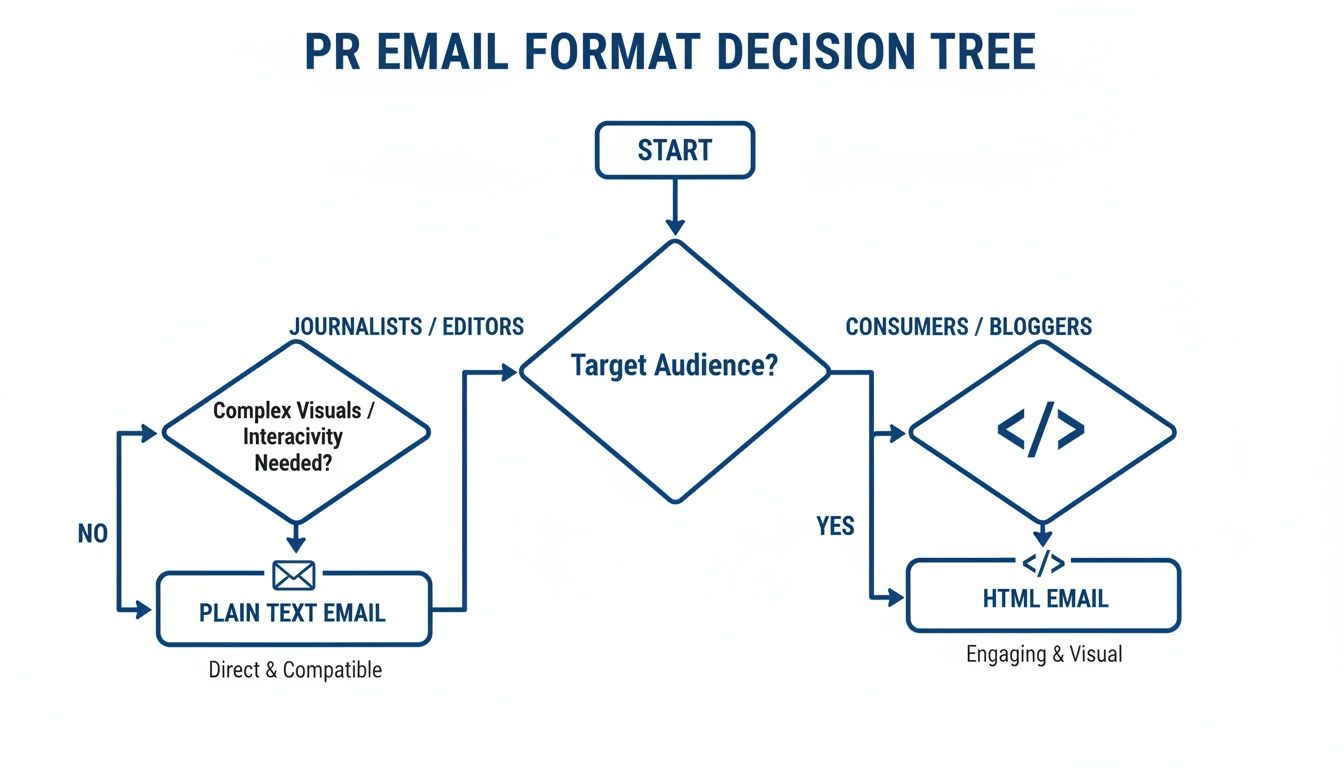
The key takeaway is simple but powerful: when your main goal is to build a direct relationship and get a reply, plain text is almost always your best bet.
Go with Plain Text for Personal Connection and High Stakes
Think of plain text as your default for any outreach that needs to feel personal, urgent, and genuinely human. It shines in situations where building rapport and trust is everything.
You'll want to choose plain text when you are:
- Sending Initial Cold Pitches: This is the big one. A plain text email looks and feels like a one-to-one message, which massively increases the odds a busy journalist will actually open it instead of immediately flagging it as a marketing blast.
- Pitching Top-Tier Journalists: High-profile editors and reporters are drowning in slick, over-designed emails. A simple, direct, and respectful plain text pitch cuts through that noise. It signals that you value their time and intelligence.
- Following Up on a Previous Pitch: A follow-up should be a gentle, personal nudge, not an automated reminder. Using plain text keeps that conversational feeling alive, which is crucial for maintaining a good relationship even if they pass on the story.
- Crisis Communications or Urgent Updates: When you need to get critical information out fast and with zero friction, plain text is the most reliable tool. It guarantees maximum deliverability and has no distracting elements to get in the way of your core message.
The rule of thumb is this: if the success of your email hinges on getting a personal reply from one specific person, plain text gives you the best possible shot. Its stripped-down nature forces your message to be the star of the show.
By removing that corporate gloss, you create a space for a real connection to happen. And that’s the foundation of all great media relations.
Use HTML for Broader Communication and Branding
While plain text is the undisputed champ of personalized outreach, HTML definitely has its place in a modern PR toolkit. It becomes the ideal format when your goal shifts from one-to-one connection to broadcasting information, reinforcing your brand, and presenting visually rich content.
Consider switching to HTML for these situations:
- Distributing Official Press Releases: When sending a formal press release to a wide media list, an HTML format lets you embed your company logo, use brand colors, and format quotes properly. It presents the information in a professional, official package.
- Sending Media Newsletters: If you send out a regular newsletter for your media contacts, HTML is a must. It allows you to create an engaging, scannable layout with images, headlines, and clear sections that make the content much easier to digest.
- Inviting Journalists to Events: For webinars, press conferences, or product launches, an HTML email can showcase event branding, include compelling visuals, and feature a bold call-to-action button (like "RSVP Now") that drives registrations way more effectively than a simple link.
- Sharing Digital Press Kits: A well-designed HTML email can act as a beautiful and organized gateway to your digital press kit. You can use visuals and structured links to guide journalists directly to headshots, B-roll, and other essential assets.
To make the decision even clearer, here’s a quick guide mapping specific PR scenarios to the right email format.
Choosing Your Email Format: A Situational Guide
This framework helps you decide between plain text and HTML based on what you're trying to accomplish with your outreach.
| Outreach Scenario | Recommended Format | Strategic Rationale |
|---|---|---|
| Initial pitch to a new journalist | Plain Text | Aims for a personal, one-to-one feel to cut through inbox noise and build an initial connection. This maximizes the chance of a reply. |
| Sending a formal press release | HTML | Reinforces brand identity with logos and brand colors. Allows for structured, easily scannable formatting for official announcements. |
| Following up on a pitch | Plain Text | Maintains the conversational, personal tone of the initial outreach. Feels like a gentle nudge rather than an automated reminder. |
| Media event invitation (webinar, etc.) | HTML | Uses visuals and a clear call-to-action (CTA) button to drive registrations. Conveys the event's branding and professionalism. |
| Crisis communication or urgent alert | Plain Text | Ensures maximum deliverability and clarity. The no-frills format communicates urgency and focuses solely on the critical message. |
| Sending a media newsletter | HTML | Organizes diverse content (articles, updates, links) into a visually engaging and easy-to-read format, improving reader experience. |
Ultimately, winning the plain text emails vs HTML game isn't about picking a side and sticking to it. It’s about building a flexible PR strategy where the format is deliberately chosen to serve the mission of that specific email.
How to A/B Test Your Press Outreach Emails
So, how do you really settle the plain text vs. HTML debate for your specific media contacts? You stop guessing and start testing. Assumptions are a risky game in PR, but A/B testing gives you hard data on what actually grabs a journalist's attention and earns a reply.
At its core, A/B testing (or split testing) is a simple experiment. You create two versions of the same email—one plain text, one HTML—and send them to two different halves of a list to see which one performs better. It’s a direct head-to-head competition for engagement.
The whole process kicks off with a clear, testable hypothesis. Don't just test for the sake of it; know what you're trying to prove.
Example Hypothesis: "Our initial cold outreach to tech editors will get a 15% higher reply rate with a plain text email because it feels more personal and less like a marketing blast than the branded HTML version."
A hypothesis like this focuses your test and gives you a concrete benchmark for success.
Setting Up Your A/B Test
The golden rule of any A/B test is to isolate one variable. In this case, it’s the format (plain text vs. HTML). Everything else—the subject line, the sender's name, the actual pitch, and your call-to-action—must be absolutely identical in both emails. Any other changes will muddy your results.
Here’s a simple breakdown for running a clean test:
- Segment Your List: Take a chunk of your media list and randomly split it into two equal groups. Make sure each group is large enough to give you statistically significant results and has a similar mix of journalists or outlets.
- Create Your Emails: Write your pitch. Version A is your plain text email. Version B is the HTML version. I’ll say it again: the copy has to be exactly the same.
- Define Your Metrics: Before you even think about hitting send, decide what a "win" looks like. Open rates are one thing, but for PR, the real money is in reply rates and click-through rates. Those are the metrics that show genuine interest.
- Launch and Wait: Send both versions at the exact same time. This eliminates the "time of day" variable from your results. Then, give it some time. You’ll want to wait at least 48-72 hours to let people open, read, and respond before you start digging into the numbers.
Interpreting the Results
Once the dust has settled, it’s time to compare the results against the metric you defined earlier. Did the plain text email pull in more replies, just like you hypothesized? Or maybe the slick branding in the HTML version got more journalists to click through to your press kit.
The insights you gather here are gold. They allow you to stop guessing and start making strategic decisions for your next big campaign. You might find that top-tier journalists at major publications prefer the personal touch of plain text, while bloggers and influencers are more likely to engage with a visually rich HTML email.
The goal is to learn and refine your approach with every send. For a full rundown of what to track, check out our guide to help you measure public relations and its true impact. This kind of data-first thinking turns your outreach from a shot in the dark into a reliable, results-driven engine.
Still Have Questions About Email Formats for PR?
Even after weighing the pros and cons, I find people still have a few lingering questions when they're in the trenches, deciding between plain text and HTML for a big campaign. Let's clear those up so you can move forward with confidence.
Can I Still Track My Emails If I Use Plain Text?
You can, but it’s a different game. With plain text, you can absolutely track link clicks. This is a huge signal—it tells you a journalist was interested enough to check out your press kit, your client's website, or a specific article.
What you give up is open tracking. Plain text emails can't support the tiny, invisible pixel that HTML emails use to register an "open." It's a trade-off, for sure. You're sacrificing that one specific metric for a massive boost in deliverability and that authentic, personal feel that gets you out of the spam filter and into a busy journalist's main inbox. For that first critical pitch, that’s a trade I’ll make every time.
Doesn't Multipart MIME Just Solve This Whole Debate?
It's a clever technical fix, but it's not a magic wand for your PR strategy. Multipart MIME bundles both an HTML and a plain-text version into a single email, letting the recipient's email client decide which one to show.
Here's the catch: most modern email clients, like Gmail and Outlook, are designed to show the "nicer" version. They'll almost always default to displaying the HTML. So, even with a plain-text fallback, you're still running the same risk of getting flagged as promotional and shunted off to a folder where it will never be seen.
So, Are HTML Emails Ever a Good Idea for PR?
Absolutely! They just have a different job to do. Think of HTML as your tool for broader, more branded communications, not your personal one-to-one pitch.
They are perfect for things like:
- Media Newsletters: When you need to organize a lot of information with clear headlines, images, and links for easy scanning.
- Event Invitations: Nothing beats a visually appealing invite with branded buttons to grab attention and drive registrations.
- Official Press Releases: Sending out an official release with your company's logo and professional formatting reinforces your brand's legitimacy.
It all comes down to context. If you're sending a personal pitch hoping for a personal reply, stick with plain text. If you're broadcasting to a wider list where visual appeal and branding are key, HTML is your friend. It’s simply about picking the right tool for the job at hand.
Ready to get your story in front of the right journalists without getting lost in their spam filter? PressBeat uses an intelligent, personalized approach to make sure your pitches actually land in the primary inbox and get noticed. Discover how PressBeat guarantees media coverage.