
Crafting Public Relations Pitches That Actually Land Coverage
December 23, 2025

A PR pitch is your direct line to a journalist, a carefully crafted story idea designed to earn media coverage for your brand. While the goal is building awareness and credibility, the reality is that most pitches are dead on arrival—impersonal, irrelevant, or just plain bad timing. They simply get buried in an avalanche of emails.
Why Most Public Relations Pitches Fail

Let’s get real for a minute. Landing media coverage is tough, and it's getting tougher every year. The problem isn't a lack of good stories; it's a massive disconnect between how companies pitch and how journalists actually work.
The vast majority of pitches are deleted without a second thought. They fail not because the news isn't interesting, but because the approach is fundamentally broken. To get anywhere, you first have to grasp the insane pressure journalists are under. Newsrooms have shrunk, deadlines are relentless, and their inboxes are a war zone.
The Modern Journalist's Inbox Is A Battlefield
The scale of this problem is hard to overstate. Journalists respond to a mere 3% of the pitches they receive. Let that sink in. Out of every 100 emails you send, 97 are likely disappearing into the void.
Why? Sheer volume is a big part of it. About a quarter of journalists get hammered with over 100 pitches every single week. You can find more details on the current PR landscape trends on avaansmedia.com.
This constant firehose of outreach has created a relevance crisis. The number one reason journalists reject pitches is because they have nothing to do with what they cover. This problem has only gotten worse with the rise of "spray and pray" tactics, leaving everyone frustrated.
The hard truth? Silence doesn't mean a journalist is mulling it over. It almost always means your pitch was the wrong fit from the start, and they don't have time to explain why.
But this isn't about getting discouraged. It's about being smarter. Understanding the world from the journalist's side of the screen is the secret to crafting pitches that actually get noticed. Your job is to become a clear signal in a sea of static.
Winning vs Losing Pitches At A Glance
Here's a breakdown of the key elements that separate a successful pitch from one that gets ignored, based on direct journalist feedback.
| Element | Winning Approach (Top 3%) | Failing Approach (Bottom 97%) |
|---|---|---|
| Personalization | Mentions a recent article, shows genuine familiarity with their work. | Uses a generic "Dear Sir/Madam" or a vague compliment. |
| Relevance | Connects the story directly to the journalist's specific beat and audience. | Pitches a tech story to a food writer. Completely off-base. |
| Conciseness | Gets to the point in under 200 words. Clear, scannable, and respects their time. | Rambles on for multiple paragraphs with dense blocks of text. |
| Value Proposition | Offers exclusive data, a unique expert, or a fresh angle on a trending topic. | Asks "Can you cover my company?" without offering anything in return. |
The difference is stark. A failing pitch screams, "Look at me!" while a winning one whispers, "I've got your next great story." The rest of this guide is about making sure you're doing the latter, every single time.
The Anatomy Of A Pitch That Gets Opened
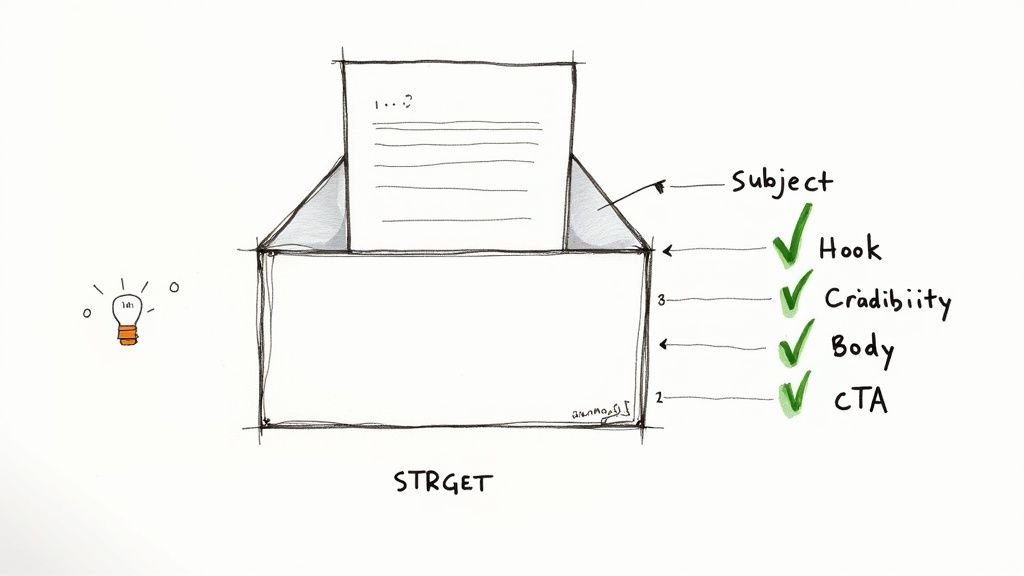
If you want your PR pitches to actually cut through the noise, you have to think like an architect. Every single component needs a purpose, starting with the very first thing a journalist sees.
Nail The Subject Line
Think of your subject line as a digital handshake. It’s not just a title; it’s the gatekeeper that decides whether your email gets opened or immediately deleted. Forget trying to be clever or mysterious—clarity and relevance are what win here.
A great subject line is basically a micro-summary of the value you're offering. So, instead of a generic "Exciting Company News," try something like, "New Data: [Industry] Consumer Behavior Shifts Post-Pandemic." You're giving a busy journalist a concrete reason to click, signaling right away that this email is worth their time and relevant to their beat.
Here are a few formulas I’ve seen work time and time again:
- Data-Driven: "[NEW DATA] 75% of Gen Z Prioritize Sustainability Over Brand Name"
- Story Angle: "Story Idea: How Local Tech is Solving [Community Problem]"
- Exclusive Offer: "Exclusive: First Look at [New Product Category] for [Publication Name]"
See the difference? Each one promises a real story, not just a thinly veiled promotion. This simple shift in framing can make a huge impact on your open rates.
A subject line’s job is to make a promise that the body of the email can keep. If it feels like clickbait, you've already lost the trust you’re trying to build.
Craft An Opening That Proves Relevance
Once they open your email, you have about five seconds to hook them. Your first sentence has to immediately answer their silent but pressing question: "Why should I care?"
This is where your research really pays off. A generic "I love your work" is nice, but it's completely forgettable. Instead, reference a specific, recent article to create an instant, genuine connection.
For example:
"Hi [Journalist's Name], I just read your piece on the rise of direct-to-consumer brands and thought your point about supply chain challenges was spot on. My client, [Company Name], just released a report on how AI is helping smaller brands compete on logistics, which ties directly into your coverage."
In just two sentences, this opening shows you’ve actually read their work, connects your news directly to their beat, and positions you as a helpful source—not just another person asking for something.
Keep The Body Short And Scannable
Journalists are drowning in content. While an overwhelming 96% of them prefer to receive pitches via email, they need those pitches to get straight to the point. The sweet spot is a pitch body under 200 words, a preference shared by 67% of reporters, according to some great PR trends on buzzstream.com.
Structure the body for maximum scannability. Think ultra-short paragraphs and bullet points to make the most important info jump off the page.
Your pitch body needs to quickly deliver:
- The Hook: The core story angle or the most compelling finding.
- The Why: Why this story matters now and why it matters to their audience.
- The Proof: The key data point, a sharp expert quote, or the unique resource you're offering.
Always keep the formatting clean. While some marketers love HTML emails, a simple, plain-text feel often performs better in PR outreach. We've got a whole guide that breaks down the differences between plain-text emails vs HTML and how it affects deliverability.
Master The Effortless Close
Finally, wrap it up with a clear and easy call to action. Don't leave the journalist guessing what you want from them. Your job is to make it as easy as possible for them to say "yes."
Avoid weak, passive closings like "Let me know what you think." Be direct and offer specific options.
Effective Call-to-Action Examples:
- "Would you be interested in an exclusive interview with our CEO?"
- "I can send over the full data set if this is of interest."
- "Are you available for a brief 15-minute chat next week to discuss this further?"
By offering concrete next steps, you remove the friction and guide them toward the response you want. It turns a simple pitch into a collaborative opportunity, making a "yes" that much more likely.
Finding The Right Journalist For Your Story
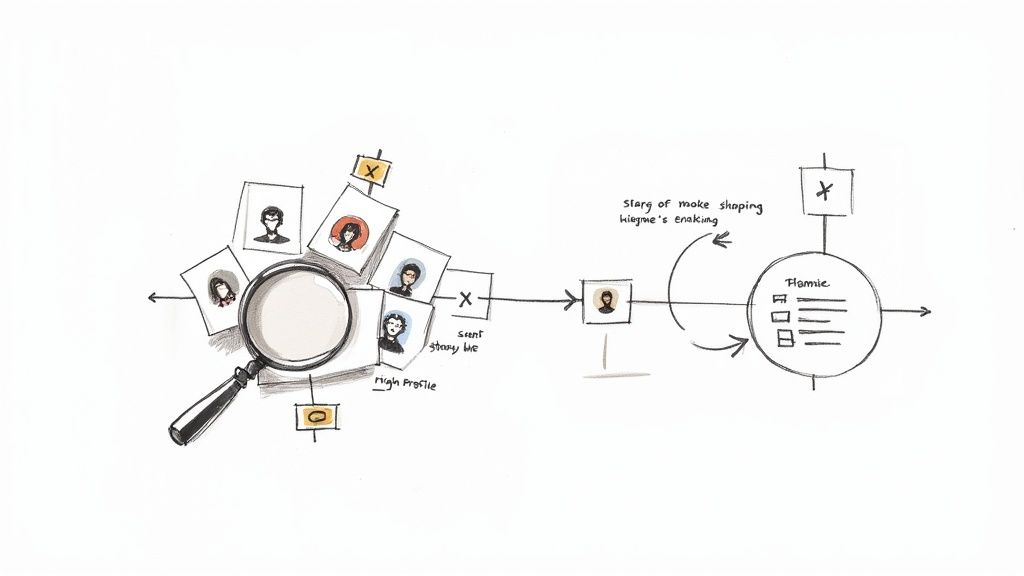
You can write the most brilliant pitch in the world, but if it lands in the wrong inbox, it’s just noise. I’ve seen it happen countless times: a fantastic story completely wasted because it was sent to a journalist who couldn’t care less about the topic.
The secret to powerful PR pitches isn't just great writing; it’s precision targeting. This means shifting your mindset from a shotgun blast to a sniper shot. The goal isn’t to reach the most people, but to reach the right people. When you show a journalist you’ve done your homework, your email instantly cuts through the clutter of lazy, mass-emailed pitches that plague their inbox every single day.
Going Beyond The Publication Name
Getting past the masthead is your first real test. Sure, you know you want to be in Forbes, but who at Forbes? The publication is the arena, but the journalist is your audience. A tech editor at a major business outlet covers a completely different world than their colleague on the finance desk.
Your first step should always be to identify individual writers, not just the big-name publications they work for. It’s about understanding their specific beat, what they’ve covered recently, and even their professional pet peeves and passions. This deep dive is what separates the amateurs from the pros who consistently land coverage.
How To Vet A Journalist Like A Pro
Before you even think about adding a name to your media list, you need to run them through a quick but critical vetting process. This simple checklist ensures every pitch you send has the best possible shot at success.
- Analyze Their Last Five Articles: Seriously, read them. What topics are they actually writing about? What’s the tone? Who are they writing for? This is the clearest signal of what they’re interested in covering right now.
- Check Their Social Media Activity: Platforms like X (formerly Twitter) and LinkedIn are intel goldmines. Journalists often share what they’re working on, comment on industry news, or even put out calls for sources. You can find your opening right there.
- Understand Their Role: Is this person a staff writer, a columnist, a freelancer, or an editor? A staff writer needs story ideas to pitch their editor, while an editor is looking for stories to assign. This context is key to framing your pitch in a way that helps them do their job.
This might feel like a lot of work for a single email, but this is the foundation. When you can genuinely reference a recent article or connect your news to a topic they clearly care about, you stop being a random stranger and start being a valuable source.
The ultimate goal of your research is to confidently answer this question: "Why would this specific journalist, and their specific audience, care about my story today?" If you don't have a crystal-clear answer, keep digging or move on.
Leveraging Social Platforms For Real-Time Insights
Social media isn't just for doom-scrolling; it's a dynamic research tool. Following your target journalists on X or connecting on LinkedIn gives you a live feed of their professional world. You’ll see the conversations they jump into and the topics that get them fired up.
This is where a good social media database can be a game-changer, helping you track and organize these contacts without losing your mind in spreadsheets. Building a curated list of journalists who are active and engaged online is one of the most powerful assets you can have.
For example, you might see a reporter repeatedly posting about the struggles of hybrid work. If your company just published a report on team productivity, you’ve found your perfect angle. You can open your pitch with something like, "Saw your discussion on X about hybrid work challenges, and it ties directly into some new data we've just uncovered."
This is all about being observant and responsive. It shows you’re paying attention and have something valuable to add to a conversation they’re already having. It’s the difference between interrupting and contributing, and it makes all the difference.
Crafting A Custom Angle They Cannot Ignore
Here’s the secret: true personalization is what turns a generic PR pitch into a story a journalist can't wait to write. It’s the magic that makes them pause, mid-inbox-cull, and think, "Okay, this person actually gets what I do." We're talking about going way beyond a simple [First Name] mail merge. It's about fundamentally connecting your story to their beat, their audience, and what they’re writing about right now.
This is where you shift from being a marketer to becoming a strategic partner. Your job isn't to just announce something; it's to frame that announcement as the perfect next piece in a puzzle they're already building for their readers.
From One Announcement To Many Angles
One of the most common missteps I see is creating a single, one-size-fits-all pitch for a big announcement. A product launch isn't just one story—it's a whole collection of potential stories, each waiting for the right home. The trick is to break down your core news and find the unique spin that will click with different types of journalists.
Let’s say your company is launching a new AI-powered budgeting app for small businesses. A generic pitch just spits out the facts. A strategic approach, however, mines that same announcement for multiple, targeted angles.
- For the TechCrunch reporter: You lead with the tech. This pitch is all about your proprietary algorithm, the engineering hurdles you cleared, and how your app is about to shake up the fintech space.
- For the Forbes business journalist: Here, the angle is the market trend. You’re not just pitching an app; you’re pitching a story about how AI is finally giving entrepreneurs the financial tools of the big guys, with your app as the prime example.
- For the local business journal writer: This becomes a human-interest story. You could frame it around the founder's journey—a local entrepreneur solving a problem they faced themselves, creating jobs, and boosting the local economy.
Sure, this takes more thought upfront, but it dramatically increases your odds of getting a yes. You're not asking journalists to do the hard work of finding the story; you’re handing them a ready-made idea on a silver platter.
Your job isn’t to just report your news. It’s to show a journalist exactly how your news fits into the narrative they are already building for their audience.
The Art Of Referencing Their Work
Nothing builds rapport faster or proves you've done your homework better than a thoughtful reference to a journalist's recent article. It's the quickest way to show you're not just blasting out emails. But be careful—there's a razor-thin line between a genuine connection and cringey flattery.
Drop the vague compliments like, "I'm a big fan of your work." Instead, get specific and tie it directly to your pitch.
Here’s how that plays out:
Imagine you’re pitching your new budgeting app to a finance reporter. Last week, she wrote a piece about the cash flow challenges small businesses are facing.
Your opening line could be something like this:
"Hi [Journalist Name], I was reading your article last week on the cash flow crisis hitting Main Street, and your point about outdated forecasting tools really stuck with me. We've just developed an AI-powered app that tackles this problem head-on by giving owners real-time financial projections, and I thought it might make for a compelling follow-up to your piece."
This kind of opening just works. Why? It instantly:
- Proves you’re a real reader, not a robot.
- Validates their expertise and past work.
- Draws a straight line between their interests and your story.
Tailoring Data And Quotes For Each Outlet
The final layer of personalization is curating your evidence. Don't send the same stats or quotes to every single person. A tech blog might geek out over a statistic on API integration speeds. A business publication, on the other hand, will care a lot more about data showing your app leads to a 30% reduction in administrative costs for its users.
The same goes for quotes from your CEO or founder. Have a few variations ready. For the tech reporter, prep a quote that hits on the technical vision. For the business writer, have one that speaks to the market opportunity and customer impact. When you customize your supporting materials, you make the journalist’s job a hell of a lot easier, turning your pitch into a story they can practically copy and paste.
How To Follow Up Without Being Annoying
So you sent out a pitch you poured your heart into. Now what? The silence can be deafening, but don't panic. The follow-up is actually where the magic often happens.
There’s a common misconception that following up is inherently annoying. It’s just not true. A well-timed, thoughtful nudge is often appreciated by a journalist juggling a dozen deadlines.
The trick is to stop thinking of it as "just checking in" or "bumping this to the top of your inbox." Each time you reach out, you have another opportunity to be helpful. This mindset shift changes everything, moving your email from a nagging interruption to a welcome resource. In fact, 51% of journalists say a single follow-up is ideal, so they're clearly open to a reminder.
Getting The Timing Right
Patience is key, but so is persistence. The sweet spot for a first follow-up is usually three to five business days. This gives a reporter enough time to actually read your pitch without you breathing down their neck.
If you still hear crickets after that first attempt, don't assume it's a hard "no." It might just be a "not right now." I usually wait about another week before sending one last, gentle nudge. If you’ve sent two follow-ups and haven't gotten a response, it's probably time to gracefully move on. The goal is polite persistence, not pestering.
A solid follow-up strategy is built on the same foundation as a great initial pitch: solid research and a tailored message.
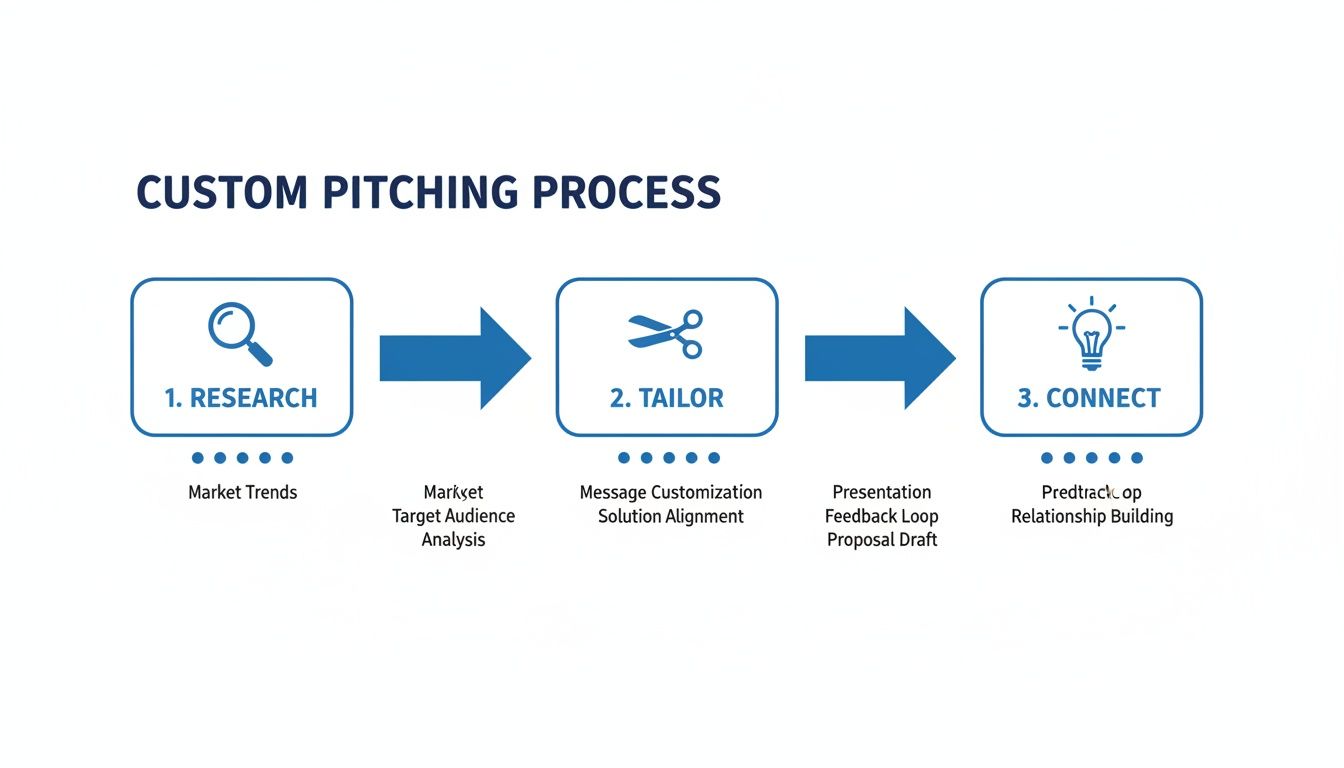
When you've done your homework, your follow-up feels like part of a real conversation, not just another automated email.
Add Value, Don’t Just Ask
The content of your follow-up is what separates the pros from the pests. Every single message needs to offer something new. Please, never send an email that just says, "Did you see my last one?"
Instead, use each touchpoint to make your original pitch even stronger. Here are a few ways to do it:
- Bring in new data: "Following up on my last email—we just pulled a fresh data set showing a surprising trend in the Midwest that I thought you'd find interesting."
- Suggest a different angle: "I saw your piece on [Topic X] and it got me thinking. Our story also has a strong connection to [Topic Y], which might be a compelling angle for your audience."
- Share a helpful resource: "Hi [Journalist Name], a new industry report just dropped that confirms the trend I mentioned. Figured it might be a useful resource for you either way."
- Offer up assets: "Just a quick note—I have high-res images and some b-roll footage ready to go if that would help bring the story to life."
Think of every follow-up as a mini-pitch. It needs its own hook and clear value. Your goal is to be seen as a helpful, credible resource, not someone demanding a response.
A great follow-up isn't just about getting a "yes" on this story. It's about building your reputation. When you're consistently helpful, journalists remember you. They'll be far more likely to open your emails next time, even if they pass on this particular pitch.
Here’s a simple timeline you can use to structure your follow-up sequence. It keeps things professional and prevents you from going overboard.
A Simple And Effective Follow-Up Blueprint
Use this timeline and content guide for a professional three-touch follow-up sequence that gets results.
| Touchpoint | Timing | Content Focus | Example Snippet |
|---|---|---|---|
| First Follow-Up | 3-5 business days after initial pitch | Add a new piece of value. | "Hi [Name], I'm following up on my note about [Topic]. We just got a new data point showing [Statistic] that adds another layer to this." |
| Second Follow-Up | 5-7 business days after first follow-up | Offer a new angle or asset. | "Just one last quick note—I realized this story also has a strong [New Angle] angle. Happy to share some exclusive quotes or photos if helpful." |
| The Break-Up | After 2 unanswered follow-ups | Politely close the loop. | "Assuming the timing isn't right for this one. I'll be sure to keep you in mind for future stories that are a good fit. All the best." |
This structured approach keeps you on a journalist's radar without crossing the line into annoying territory. It’s about being persistent, professional, and, most importantly, helpful.
Measuring Success To Improve Your Strategy
You can't fix what you don't measure. Sending out a bunch of PR pitches without tracking what happens next is just guessing. It’s like shouting into the wind—you have no idea if your message is landing or if you need to change your tune. A data-driven approach is the only way to turn decent outreach into a system that consistently delivers results.
This isn’t about fluff like "potential reach." We're talking about real, actionable numbers that tell you what’s working and what’s falling flat. By focusing on a few key metrics, you can spot the weak links in your chain, double down on what gets a response, and continuously sharpen your strategy.
Key Metrics That Actually Matter
To get a true read on your pitching performance, you have to look at the whole journey—from the second you hit "send" to the moment your story gets published.
Here are the three core metrics I always start with:
- Open Rate: This is your first test. If your open rate is low—say, under 20% for cold outreach—it's a massive red flag. The problem is almost always your subject line or a media list that isn't targeted enough.
- Reply Rate: This shows you who's actually engaged. A healthy reply rate means your pitch is relevant and interesting enough to warrant a response, even if it’s just a "not for me, thanks." That's still valuable feedback.
- Coverage Conversion Rate: This is the big one. It's the percentage of positive replies that become actual, published stories. This metric tells you which of your angles and narratives are truly connecting with journalists and their audiences.
Don't let the initial numbers get you down. The goal here isn't to be perfect overnight; it's all about making steady progress. A 1% bump in your reply rate from one month to the next is a huge win. It's proof that your tweaks are working.
Tools And Platforms For Smart Tracking
Keeping an eye on these numbers doesn't require a data science degree. You can absolutely start with a simple spreadsheet. But as you start sending more pitches, dedicated tools are a lifesaver for saving time and uncovering deeper insights. For a deeper dive on what to track, check out our complete guide on the measurement of public relations campaigns.
Modern PR platforms like PressBeat have analytics baked right into the workflow, which means you can see how your campaigns are doing in real-time without having to manually punch in numbers.
Here’s a quick look at how a platform dashboard brings all that data together.
Dashboards like this give you a command center view of your entire pitching funnel. It becomes incredibly easy to see trends, compare campaigns, and figure out what’s actually driving your best results.
When you stop guessing and start measuring, you build a repeatable process for success. You’ll spend far less time wondering why your pitches are failing and more time building relationships that lead to killer coverage. This is how you scale your PR efforts without losing the personal touch that gets you in the door.
Your Top PR Pitching Questions, Answered
Even after years in the game, some questions about pitching pop up again and again. It's usually the little things—the details that can take a pitch from the trash folder to a feature story. Let's clear up a few of the most common ones.
What’s the Perfect Length for a Pitch?
Think short. Really short. The consensus from journalists is clear: keep your pitch under 200 words. That’s about three, maybe four, small paragraphs.
Their inbox is a battlefield, and you have maybe 30 seconds to make your case. They need to instantly get the story, why it matters to their readers, and what you’re offering. Long, rambling emails scream "I don't respect your time" and are a one-way ticket to being ignored.
A pitch that gets straight to the point is a pitch that gets read. Your goal is to deliver the core idea so efficiently that they can make a decision before their next meeting starts.
How Many Times Should I Actually Follow Up?
The sweet spot is one or two follow-ups. Any more than that and you risk becoming a nuisance.
Here’s a good rhythm:
- First Follow-up: Wait three to five business days after your initial email.
- Final Follow-up: Send a last note about a week after that.
But here's the critical part: each follow-up needs to add something new. Don't just send a lazy "bumping this up." Offer a fresh statistic, a new angle on the story, or mention you have high-quality images ready to go. If you get radio silence after two genuinely helpful follow-ups, it’s time to respectfully move on.
Are Attachments a Good Idea in the First Email?
Definitely not. In fact, it's one of the fastest ways to get your pitch deleted.
Attachments are a huge red flag for spam filters and security-conscious journalists. They just won't risk opening an email with a suspicious file from someone they don't know.
Instead, mention that you have resources available. A simple line like, "I have a full press release, high-res images, and the complete data report ready if you're interested," works perfectly. Linking to your company's homepage or a relevant blog post in the email body is fine, but save the heavy files for when they ask.
Ready to stop guessing and start landing guaranteed media coverage? PressBeat uses AI to find the right journalists and craft personalized pitches that get noticed, all managed through a transparent dashboard. Learn how PressBeat can secure your next feature article.