
How Long Should a Press Release Be for Maximum Impact
December 19, 2025
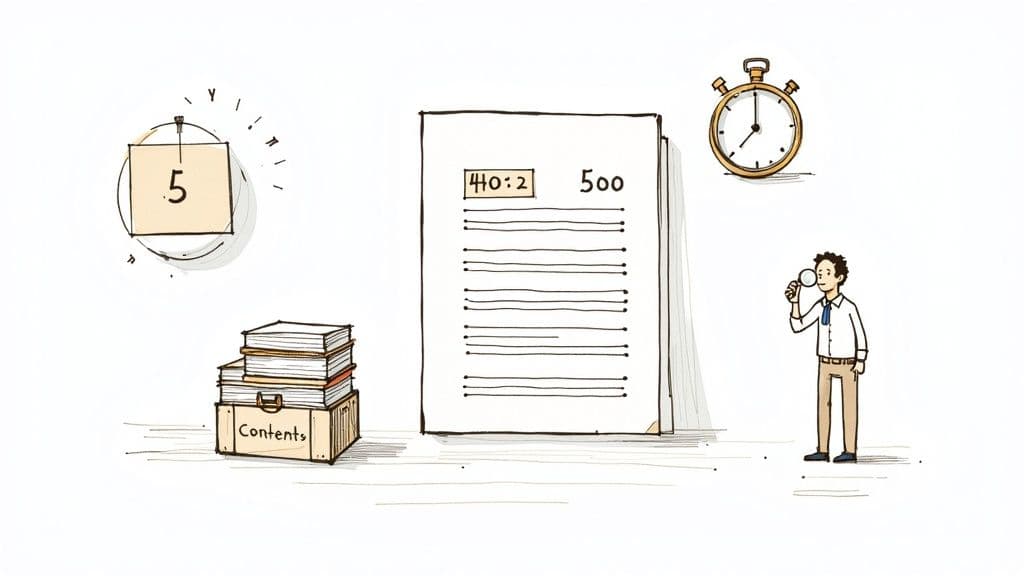
Let's get straight to the point: the ideal press release should land somewhere between 400 and 500 words. This isn't just a random number; it's a sweet spot honed by years of experience, designed to work with—not against—the realities of a modern journalist's inbox. Think of it as the perfect length to be taken seriously without getting ignored.
The Perfect Press Release Length for Journalists
Imagine your press release is an elevator pitch. You’ve got a very short window to grab a journalist's attention before they're on to the next thing. With hundreds of emails flooding their inboxes every single day, your message needs to be brief, clear, and powerful to survive.
This is what we call the "five-second scan." It's a harsh reality for anyone sending out news. Forget the long, rambling announcements of the past. Today, the industry standard is a tight, compact format that respects a reporter’s time and makes your story incredibly easy to understand at a glance.
Why Brevity Wins
The 400-500 word guideline is backed by real-world data. After analyzing thousands of press releases, we've found this range consistently performs best, especially since about 80% of journalists now source their stories from digital channels. Reporters often spend just 5-10 seconds skimming a release before deciding if it's worth their time.
A quick look at the key elements of a press release shows how this word count breaks down.
Press Release Word Count Quick Guide
| Element | Recommended Length | Key Consideration |
|---|---|---|
| Headline | 6-12 words | Punchy, active, and keyword-rich. |
| Dateline & Intro | 30-50 words | Immediately state the who, what, when, where, and why. |
| Body Paragraphs | 200-300 words | Add context, quotes, and supporting details. |
| Boilerplate | 50-100 words | A concise "About Us" section. |
| Contact Info | ~25 words | Name, title, email, phone, and website. |
As you can see, sticking to these guidelines naturally gets you into that 400-500 word sweet spot.
A release that's too short (under 300 words) can look flimsy or incomplete, while one that drags on past 600 words is practically begging to be ignored. Hitting that target signals that you're a professional who understands the game.
Sticking to this length does a few important things for you:
- Forces Clarity: It makes you cut the fluff and zero in on what's truly newsworthy.
- Respects Time: It sends a clear message to journalists that you value their attention.
- Improves Readability: A shorter document is a scannable document, helping reporters find the key facts fast.
Nailing the word count is a huge first step. But getting it in front of the right people is the other half of the battle. For practical advice on that, check out our guide on how to send a press release.
Why 400 to 500 Words Is the Gold Standard
Ever tried to get a busy person's attention? You know you have about ten seconds, max. That's a journalist's inbox in a nutshell. This is precisely why the 400 to 500-word range isn't just a suggestion for a press release—it's the gold standard.
Think of it as the perfect length to tell your whole story without wasting a single word. It’s just enough room for a punchy headline, a first paragraph that gets right to the point, a couple of body paragraphs with the essential details, and a great quote that adds some personality. It’s built for a quick scan, letting a journalist instantly see what you’ve got and decide if it's newsworthy.
Finding the Right Balance
Striking the right balance is everything. If your release is too short, it can come across as flimsy or unimportant. Too long? It's almost certainly headed for the trash folder before the journalist even gets past the third paragraph.
You need enough substance to be credible and make your point, but not so much that you overwhelm someone who's already drowning in pitches. The goal is to make their job easier, not harder.
A well-structured press release within the 400-500 word count isn't just about being brief; it's about being strategic. It sends a clear signal that you get how the media works and respect a journalist's time, which immediately boosts your chances of getting noticed.
Years of data from PR campaigns back this up. Experts have found that the 400-500 word count is the "tightest effective range" for a reason. Shorter releases often lacked the context needed to make a story compelling, while longer ones just buried the lead under a mountain of text.
As the folks over at eReleases point out, journalists are skimming hundreds of these things a day. This length is perfectly optimized for that reality. Stick to it, and you’ll hit that sweet spot between being comprehensive and being concise, giving your news the best possible shot at getting picked up.
How Word Count Influences Media Pickup Rates
To really get why press release length is such a big deal, you have to put yourself in a journalist’s shoes. Their inbox is a firehose of pitches, with some getting over 500 emails a day. In that kind of environment, being brief isn't just nice—it's essential for survival.
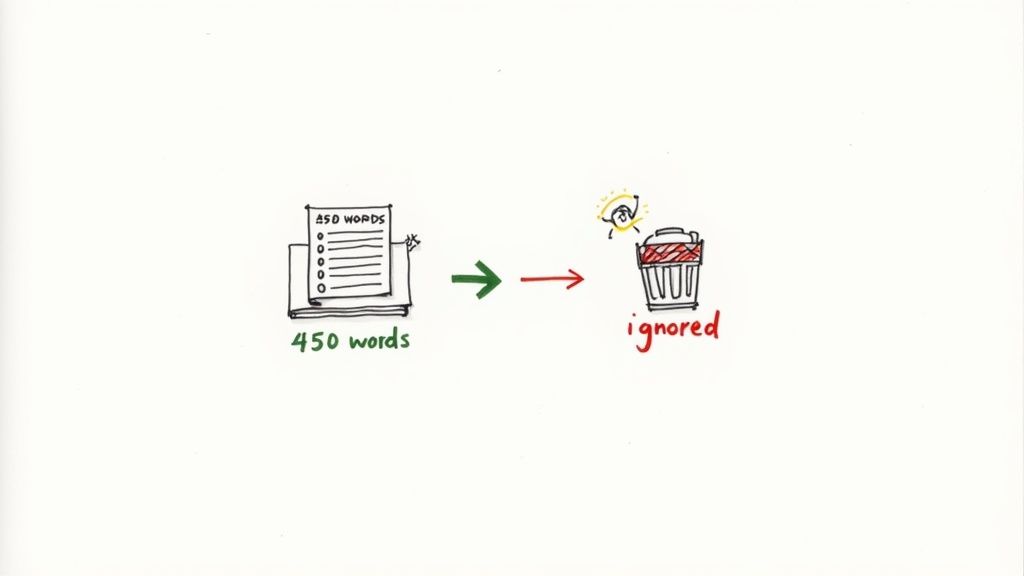
Let's picture two companies launching similar products. Company A sends over a tight, 450-word press release that immediately gets to the point. Company B, on the other hand, emails a dense, 800-word novel packed with jargon and fluff. Which one do you think actually gets read?
This isn’t just a thought experiment; it happens every single day. The sharp, concise release grabs a journalist's attention and might just land a feature in a major publication. The long one? It's instantly deleted or archived. The only difference was how well each one answered the question: how long should a press release be?
The Signal You Send with Word Count
A concise press release does more than just share information—it sends a powerful, unspoken message. It signals that you're a professional who respects a journalist's time. When a reporter opens a well-structured announcement under 500 words, they see someone who gets it. That alone builds immediate trust.
When you keep your press release focused and brief, you're not just making it easier to read. You're making it easier for a journalist to say "yes" and turn your announcement into a published story.
On the flip side, a long, rambling press release just creates more work. It forces the journalist to hunt for the real story, a job they simply don't have time to do. By staying in that optimal word count range, you turn your announcement from just another email into a compelling, ready-to-go story.
Here’s a quick breakdown of how length directly impacts your odds of getting media coverage:
- Higher Read-Through Rate: A journalist is far more likely to read a short release from top to bottom.
- Faster Decision-Making: A clear, punchy message helps them quickly decide if your story has legs.
- Increased Credibility: It shows you can communicate professionally and effectively.
At the end of the day, a shorter press release almost always gets a higher pickup rate, giving your news the attention it deserves.
Optimizing Press Release Length for SEO
Beyond catching a journalist's eye, your press release has another important audience: search engines. While Google won't give you a magic word count, that same 400-500 word range that reporters appreciate also happens to be a sweet spot for online visibility.
Why? It’s just enough space to weave in your target keywords and a few valuable links without it feeling forced or spammy. This is the key difference between a release that looks like a helpful resource and one that’s just a keyword-stuffed document, which gets ignored by both people and algorithms. Understanding the fundamental concepts of Search Engine Optimization is what helps you strike that perfect balance.
Your SEO Goal Is Not to Rank the Release
Here’s a common mistake I see people make: they think the main SEO goal is to get the press release itself to rank high on Google for their keywords. That's a myth. The real strategy is much smarter.
The true SEO value of a press release lies in widespread distribution and earning high-quality backlinks. Your release is a vehicle to get your news onto authoritative media sites, which then link back to your website.
Think of your press release as the messenger, not the final destination. Its job is to get journalists and readers interested enough to click through to your website for the complete story. That click drives valuable referral traffic and, more importantly, sends a powerful signal to search engines that your site is a credible source. If the release is too long and gives away everything, there’s no reason for anyone to visit your site.
To really nail this, you need a solid framework. You can dive deeper with our guide on building a search engine optimized press release that truly grabs attention and builds your site's authority.
Anatomy of a Perfectly Sized Press Release
Let's move from theory to reality and break down what a well-built press release actually looks like. Each part has a specific job and a word count that goes with it. When all these pieces work together, you get a concise, powerful announcement that respects a journalist's time.
Think of it as a blueprint. You don't just write until you run out of things to say; you build your announcement with precision, assigning words strategically to make the biggest splash. This structure is what makes your news easy to scan, understand, and ultimately, cover.
The Structural Blueprint
Here’s a practical framework for how to budget your word count, piece by piece:
- Headline (Under 15 words): This is your one shot to grab attention. Make it active, clear, and try to include your main keyword.
- Lead Paragraph (30-40 words): This is the most important part of the entire release. It must summarize the whole story—the who, what, when, where, and why—right away. No exceptions.
- Body Paragraphs (3-4 paragraphs, 3-4 sentences each): Now you can expand with supporting details, context, and data. Keep each paragraph tight and focused on a single idea.
- Quote (30-50 words): A sharp, insightful quote adds a human touch and gives journalists a ready-made soundbite.
- Boilerplate (50-100 words): Your standard "About Us" section. Keep it brief and use the same one across all your releases for consistency.
This visual shows how the core message of your release is held up by essential SEO elements like keywords and links.
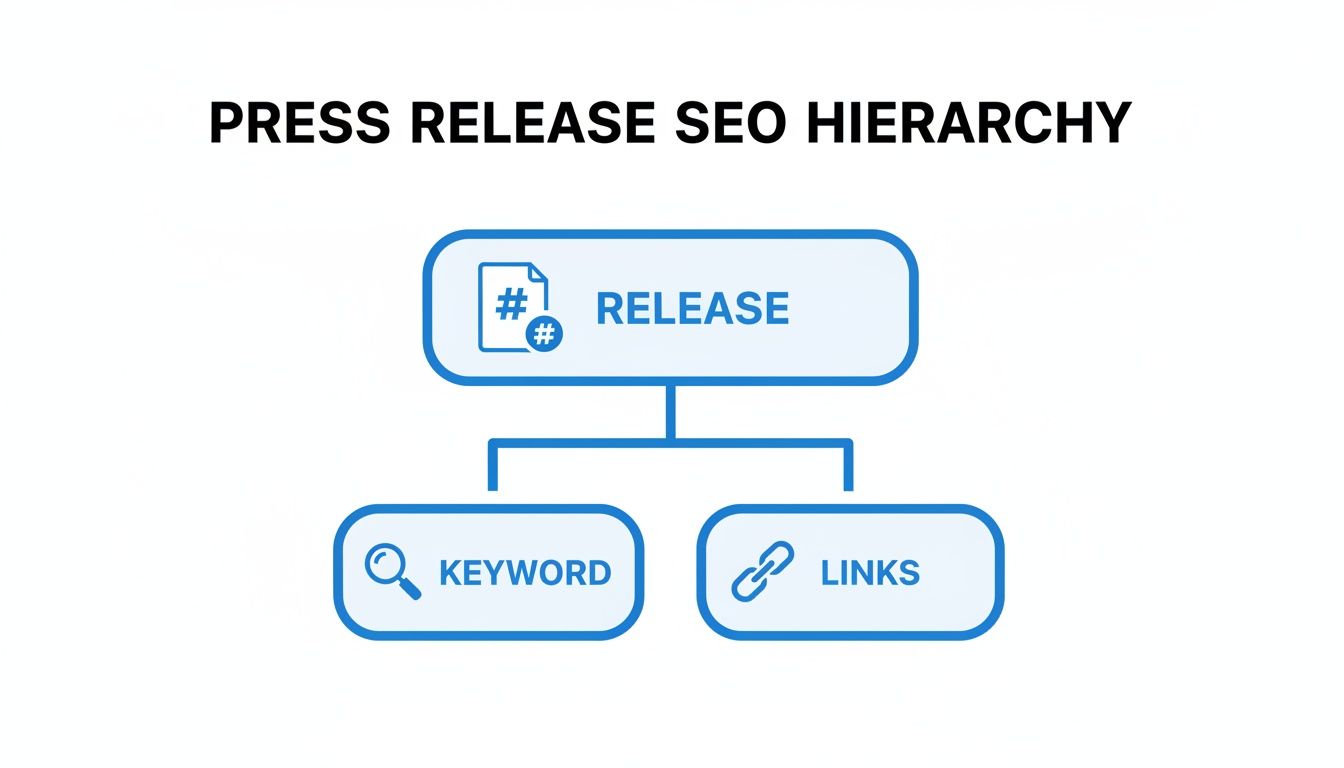
As you can see, a successful release depends on both compelling content and smart optimization working in tandem.
Putting It All Together
If you stick to this structure, you'll naturally land in that sweet spot of 400-500 words. The real key is the 3-4 sentence limit per paragraph, which is crucial for readability on any screen. Research from top distribution services backs this up, showing that this format consistently performs well across all industries.
By giving each part of your release a specific job and length, you're forced to cut the fluff and focus only on what's truly newsworthy. That discipline is what separates a professional announcement from one that gets ignored.
Mastering this breakdown gives you a reliable model you can use for any announcement you need to make. To dive deeper, you can explore our detailed guide on the ideal news release structure, which is packed with templates and real-world examples.
Answering Common Questions About Press Release Length
Even when you know the rules, real-world situations can make you second-guess your press release strategy. It's smart to have a game plan for those tricky edge cases, so every announcement you send is perfectly tuned for its audience.
The 400-500 word sweet spot is your North Star, but a few "what ifs" always seem to pop up. Knowing how to navigate these exceptions is what separates a good PR pro from a great one.
Can a Press Release Ever Be Longer Than 500 Words?
Yes, but it's the exception, not the rule. Think of situations involving highly technical news—like groundbreaking scientific research, dense quarterly financial reports, or complex legal updates. These might genuinely need more room to breathe.
Even in these cases, the best approach is to keep the main release tight and link out to the full, unabridged document. The goal is to give journalists the core story in a format they can scan in under a minute. You provide the essential facts upfront and an optional path for those who need to dig into the nitty-gritty. This respects their time and doesn't bury the lead under a mountain of text.
Think of your press release as an invitation to a deeper story, not the entire encyclopedia. For complex news, summarize the key takeaways and link to the full report for those who need it.
How Do Images and Videos Factor Into Word Count?
They don't! Multimedia elements like photos, infographics, and videos are freebies that enhance your message without adding a single word to the count. In fact, a compelling visual can often tell your story far better than a few extra paragraphs ever could.
Use your visuals to show the story, not just tell it. This strategy lets you keep the written part of your release lean and focused on the crucial facts—the who, what, when, where, and why. Your media assets can then do the heavy lifting of providing context and creating an emotional connection, making the entire package more engaging while you stay well within the ideal length.
Does the Ideal Length Change by Industry?
The 400-500 word guideline holds up remarkably well across the board, but you'll see some subtle differences from one industry to another.
- Consumer-facing industries like fashion, travel, or entertainment often do well with shorter, punchier releases around 350-400 words, letting powerful images and videos carry the message.
- Highly technical fields like biotech, finance, or enterprise software might naturally push closer to the 500-word mark to explain the "so what" behind the news.
No matter the industry, though, pushing past 600 words is almost always a mistake. The one constant across every beat is that journalists are always short on time.
Ready to get your story in front of the right journalists without the guesswork? PressBeat uses AI to find the perfect reporters for your news, craft personalized pitches, and guarantee media coverage. See how PressBeat can secure your feature story.